
Watering
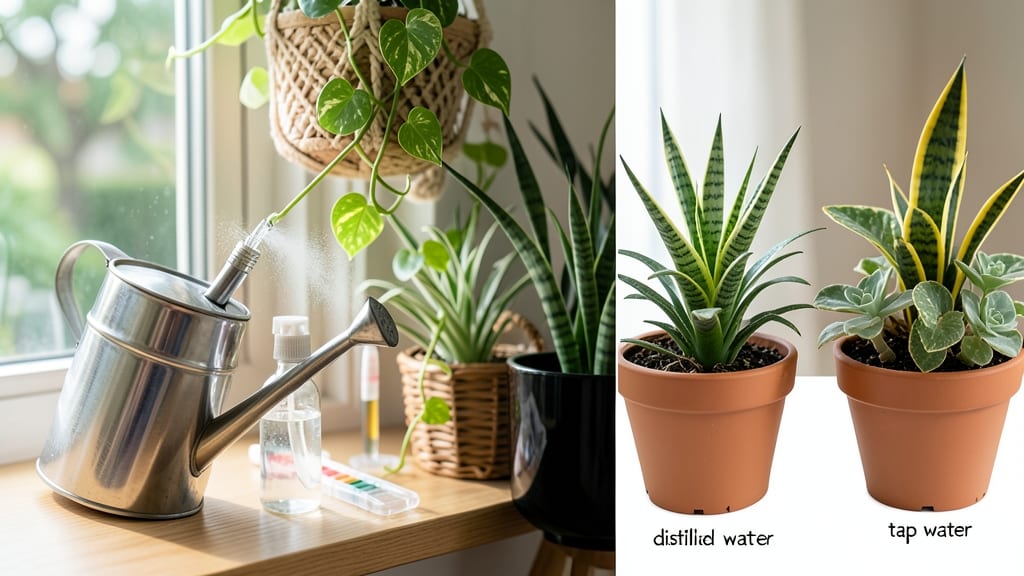
Is distilled water okay for plants? It’s generally safe in small doses, but using it long-term can stunt growth by removing essential minerals like calcium, magnesium, and potassium that roots need from regular tap or rainwater.
Distilled water is completely pure—no minerals, no impurities—but that purity comes at a cost for plants. 💧 Without natural minerals, roots struggle to absorb nutrients efficiently, leading to deficiencies like yellowing leaves or weak stems over time.
Think of it like feeding your plants a diet of just water and nothing else—it might not kill them immediately, but it won’t help them thrive either. For most houseplants, occasional distilled water is fine, but regular use can turn your soil into a nutrient desert.
What’s interesting is that some plants, like orchids or bromeliads, actually prefer softer water and might tolerate distilled water better than others. However, even these can benefit from occasional mineral supplements like a diluted Epsom salt solution or compost tea to keep their roots happy.
The key is balance—just like how you wouldn’t drink only distilled water every day, your plants need a mix of nutrients to grow strong.
💡 In This Article
- How Distilled Water Affects Plant Nutrient Uptake
- Best Alternatives to Distilled Water for Houseplants
How distilled water affects plant nutrient uptake
Distilled water is essentially pure H2O with all minerals and dissolved solids removed through a process called distillation. While this makes it safe for drinking, it strips away the very minerals plants need to thrive—calcium, magnesium, potassium, and trace elements like iron and zinc.
These minerals aren't just extras; they're essential for critical plant functions like cell wall formation, enzyme activation, and nutrient transport within the roots. Without them, roots struggle to maintain their structural integrity and absorb other vital nutrients from the soil.
The problem becomes clear when you consider how plants absorb water and nutrients. Roots rely on a process called osmosis to draw water from the soil, but they also need minerals to create the proper osmotic pressure.
Distilled water has a higher purity level (often 99.9% pure), which means it lacks the ionic balance that helps roots efficiently uptake water and nutrients.
Over time, this imbalance can lead to nutrient deficiencies, where plants show signs like yellowing leaves (chlorosis), weak stems, or stunted growth—similar to what you'd see in a plant suffering from malnutrition.
Soil chemistry also suffers when distilled water is used regularly. Minerals in tap or rainwater help buffer soil pH and provide the ionic charge needed for healthy microbial activity in the root zone.
Without these, beneficial soil bacteria and fungi—like mycorrhizae—struggle to thrive, reducing the plant's ability to access nutrients from the soil. 🌱 Imagine trying to grow a garden with only sterile soil and no compost; the results would be just as poor.
Even plants adapted to acidic conditions (like gardenias or azaleas) need some minerals to maintain their health over the long term.
One of the most visible signs of mineral deficiency from distilled water is leaf curl or browning at the tips, which often indicates a lack of calcium or magnesium. Potassium deficiencies, on the other hand, can cause weak stems and poor flower production.
These symptoms don't appear overnight—it can take weeks or even months of regular distilled water use before they become noticeable. That's why many plant owners don't realize the harm until their once-vibrant houseplants start looking lackluster and weak.
There's a silver lining, though: not all plants react the same way. Succulents and cacti, for example, are more drought-tolerant and might handle distilled water better than moisture-loving plants like ferns or peace lilies. However, even these resilient plants can benefit from occasional mineral supplements.
The key is to monitor your plants' health and adjust their watering routine accordingly—just as you'd tailor their care based on light levels or humidity.
For those who insist on using distilled water, adding a pinch of Epsom salt (magnesium sulfate) or a diluted compost tea can help restore some of the missing minerals.
This DIY approach mimics the natural mineral content found in tap or rainwater, giving your plants the best of both worlds: purity and nutrition. 💫