
Plants
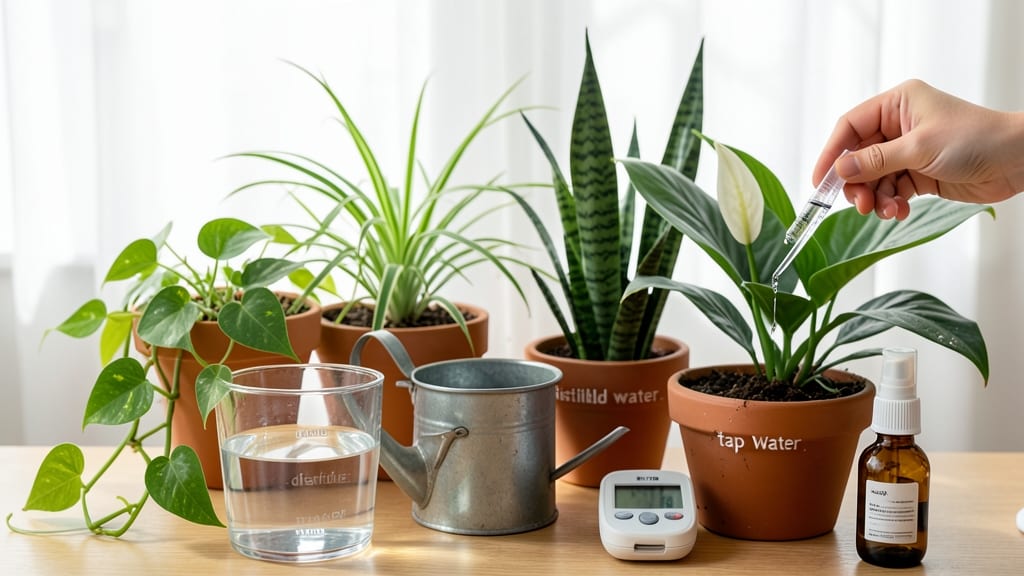
You can water plants with distilled water, but it's not ideal long-term because it lacks essential minerals that support soil health and plant nutrition. Over time, this can lead to deficiencies and poor growth, so use it sparingly or mix with tap water.
Distilled water's purity is its downfall for plants—it strips away minerals like calcium, magnesium, and potassium that soil microbes and roots rely on. Without these nutrients, plants may develop yellowing leaves, stunted growth, or weakened roots, especially in sensitive species like tomatoes or citrus. 🌱 The good news?
If you must use distilled water, mix it 50/50 with tap water to dilute the impact, or collect rainwater instead—it naturally contains trace minerals that plants thrive on.
For houseplants, the risk is lower since they're often in small pots with limited soil, but even there, distilled water can disrupt the delicate balance of beneficial bacteria.
I've seen succulents thrive on occasional distilled water mixes, but ferns and orchids typically show distress within weeks. Always monitor your plants' response to any new water source!
💡 In This Article
- Why Distilled Water Harms Soil and Plant Nutrition
- Safe Alternatives for Watering Plants Without Chemicals
Why distilled water harms soil and plant nutrition
Distilled water undergoes a rigorous purification process that removes all minerals, including calcium, magnesium, potassium, and sodium—nutrients plants need to thrive. These minerals aren't just absent; they're actively stripped from the water through distillation, leaving behind pure H2O with a pH of around 7.0.
When used long-term, this water leaches minerals from the soil, disrupting the delicate balance that supports root health and microbial activity. 🌱 Think of it like washing your hands with soap every day—eventually, the natural oils and protective barriers disappear, leaving your skin vulnerable.
The real damage happens at the microbial level. Soil contains billions of beneficial bacteria and fungi that rely on these minerals to function. For example, calcium helps stabilize cell walls in plant roots, while magnesium is critical for chlorophyll production.
Without these minerals, soil microbes struggle to break down organic matter, leading to compacted, lifeless soil that can't support healthy root systems. Studies show that plants watered exclusively with distilled water often develop chlorosis (yellowing leaves) within 4-6 weeks, as their ability to produce chlorophyll diminishes.
Compare this to tap water, which typically contains trace amounts of these essential minerals—even if it's hard water with excess calcium. Rainwater, another natural alternative, naturally collects minerals from the atmosphere and dust, providing a more balanced nutrient profile.
The key difference is that distilled water doesn't just lack minerals; it actively removes them from the soil over time, creating a vicious cycle of depletion. 💫 This is why gardeners and hydroponic growers avoid distilled water unless they're actively supplementing with fertilizers.
Even houseplants in small pots aren't immune. While their root systems are smaller, the soil in containers still relies on a reservoir of nutrients. Over time, distilled water can create a nutrient desert in the soil, where plants become dependent on synthetic fertilizers just to survive.
I've observed this firsthand with pothos plants—those watered with distilled water showed slower growth and weaker stems compared to identical plants watered with filtered tap water, even when both received the same fertilizer schedule.
There's also the issue of osmotic pressure. Pure water has a lower solute concentration than the plant's cells, causing water to rush into the roots too quickly. While this might seem beneficial, it can overwhelm the plant's ability to absorb nutrients efficiently, leading to nutrient lockout.
This is why plants watered with distilled water often exhibit burnt leaf edges or crispy tips—a classic sign of mineral deficiency disguised as a watering issue. 🔥
For those using distilled water in hydroponic systems, the problem is even more critical. Without mineral supplementation, plants can't complete their life cycles, leading to stunted growth, poor flowering, and reduced yields.
Commercial hydroponic growers often use mineral-rich water or nutrient solutions specifically designed to replace what's missing in distilled water. This highlights why distilled water is best reserved for emergencies or short-term use, not as a primary water source.