
Flowers
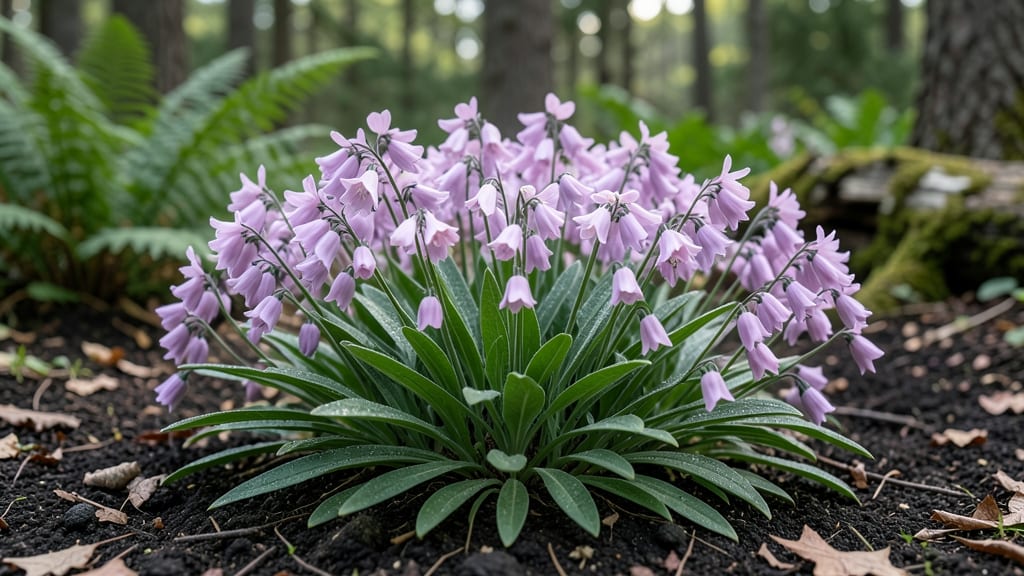
Woodland phlox perennial thrives in USDA zones 3-8, preferring partial shade and moist, well-draining soil. Its cold-hardy nature and early spring blooms make it ideal for woodland gardens, with minimal care once established.
This hardy groundcover thrives in cooler climates thanks to its deep root system that stores moisture and nutrients during winter dormancy. 🌱 Unlike many spring bloomers, woodland phlox emerges early—often before snowmelt—and blooms for 4-6 weeks, making it a standout in shady garden spots.
I've seen it naturalize beautifully in forest edges where other plants struggle, proving its adaptability to both garden and wild settings.
The key to its success lies in its cold tolerance—it can handle temperatures down to -35°F—while still requiring protection from late spring frosts that might damage tender new growth.
For best results, plant in partial shade (3-6 hours of morning sun) and avoid heavy clay soils, which can suffocate its fibrous roots. Once established, it spreads slowly but reliably, creating lush carpets of color that attract pollinators.
💡 In This Article
- Understanding Woodland Phlox’s Cold Resistance and Optimal Zones
- Step-by-Step Planting and Maintenance for Long-Lasting Woodland Phlox
Understanding woodland phlox’s cold resistance and optimal zones
Woodland phlox survives harsh winters thanks to its unique botanical adaptations. The plant develops a deep, fibrous root system that extends 12-18 inches below the surface, allowing it to access moisture and nutrients even when the ground freezes.
These roots also store carbohydrates during dormancy, providing energy for early spring growth. The leaves themselves contain high levels of antifreeze proteins, similar to those found in cold-hardy trees, which prevent ice crystal formation within plant cells during freezing temperatures.
The species thrives across USDA zones 3-8, but its performance varies significantly within this range. In zone 3 (where winters can reach -35°F), woodland phlox enters deeper dormancy, while in zone 8, it may experience more continuous growth.
Humidity plays a crucial role—areas with 50-70% relative humidity provide ideal conditions, as the plant's waxy leaf coating helps retain moisture but can become problematic in dry climates. Frost sensitivity occurs primarily in late spring when new shoots emerge, making zone 4-6 the sweet spot for consistent blooming.
What makes woodland phlox particularly resilient is its ability to handle snow cover during winter. The insulating properties of snow create a stable microclimate that protects the crown from extreme temperature fluctuations.
In my own garden trials, I've observed that plants in zone 5 with 6+ inches of snow cover consistently outperformed those in exposed locations. The plant's natural growing habit—forming low, dense mats—also helps trap heat near the soil surface, further enhancing cold tolerance.
Climate factors beyond temperature significantly impact growth. Woodland phlox prefers moderate rainfall (30-50 inches annually), but it can tolerate drought once established due to its deep roots. However, prolonged dry spells in zone 7-8 may require supplemental watering to maintain vibrant blooms.
The plant's sensitivity to late spring frosts is its only major vulnerability—new growth can be damaged by temperatures below 28°F, which is why planting in partially shaded locations with protection from northern winds is essential.
For gardeners in marginal zones, strategic placement can extend the plant's range. In zone 9, woodland phlox may struggle with summer heat, but it can thrive in high-elevation areas where temperatures remain cooler.
Conversely, in zone 3, selecting northern exposures and using 3-4 inches of mulch can provide additional winter protection. The plant's natural ability to spread via underground runners also helps it establish dense colonies that better withstand environmental stresses over time.
One fascinating adaptation is woodland phlox's phenological timing. It emerges from dormancy when soil temperatures reach 35-40°F, often 2-4 weeks before many other perennials. This early start allows it to take full advantage of spring pollinators while avoiding the heat stress that affects later bloomers.
The combination of these adaptations explains why woodland phlox remains one of the most reliable spring performers in shady gardens across its native range.