
Flowers
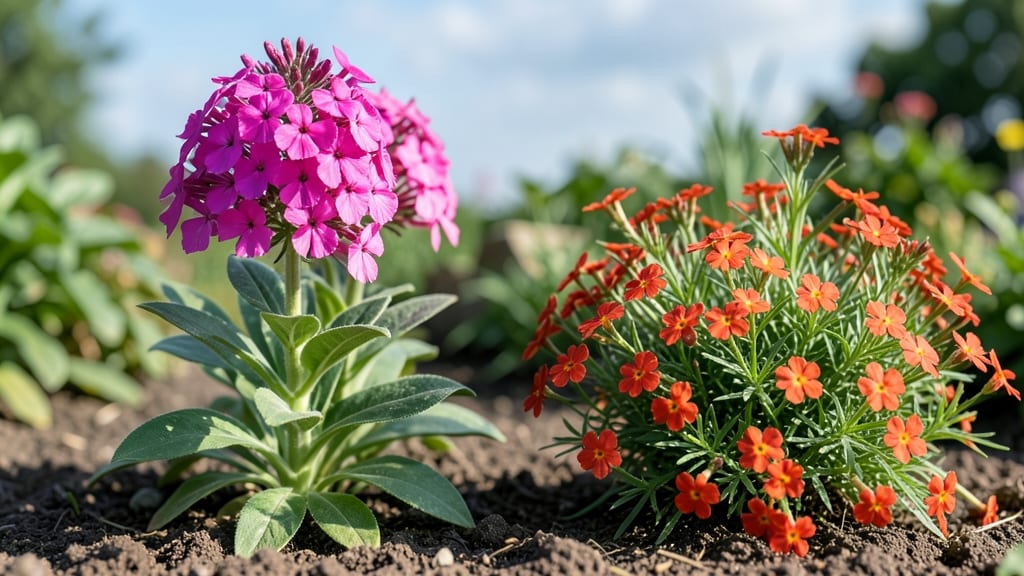
Determining whether phlox is perennial or annual depends on the species and climate—most phlox varieties thrive as perennials in temperate zones, while types like Phlox drummondii grow as annuals. Your local hardiness zone and winter temperatures are key factors in their growth habits.
Phlox's growth cycle varies dramatically between species, with perennial phlox like garden phlox (Phlox paniculata) reliably returning year after year in zones 3-8, while annual varieties complete their life cycle in a single season. 🌸 The difference often comes down to cold tolerance—perennials die back in winter but regrow from roots, while annuals rely on seeds to propagate.
For example, creeping phlox (Phlox subulata) thrives as a hardy perennial in colder regions, while drummond phlox (Phlox drummondii) blooms brightly but only lasts one season in most climates.
Understanding these distinctions helps gardeners choose the right phlox for their region. Perennial types need proper winter care—like mulching—to survive harsh conditions, while annuals may self-seed if left undisturbed. The key is matching the plant's natural tendencies to your growing conditions.
💡 In This Article
- How Climate and Phlox Species Affect Perennial vs. Annual Growth
- Tips for Growing Perennial Phlox Long-Term
How climate and phlox species affect perennial vs. annual growth
The distinction between perennial and annual phlox comes down to two critical factors: hardiness zone compatibility and species-specific survival strategies. Most phlox species evolved in temperate regions where winter dormancy is natural.
For example, garden phlox (Phlox paniculata) thrives as a perennial in USDA zones 3-8 because its root systems can withstand -30°F to -40°F temperatures.
The plant's underground rhizomes store carbohydrates during winter, fueling regrowth when temperatures rise above 50°F in spring. 🌿 This cold tolerance explains why garden phlox reliably returns year after year in northern climates.
Annual phlox varieties like drummond phlox (Phlox drummondii) lack this cold hardiness. Native to Texas and Mexico, this species completes its entire life cycle in 60-90 days, producing seeds before winter kills the above-ground growth.
The key difference lies in their reproductive strategy: perennials focus on root survival, while annuals prioritize rapid seed production. Even in mild winters (zones 9-11), drummond phlox behaves as an annual because its roots can't survive prolonged cold snaps below 25°F.
The trade-off is striking—annuals offer vibrant summer blooms but require replanting each year.
Creeping phlox (Phlox subulata) demonstrates another adaptation: its compact, mat-forming growth habit allows it to persist through winter by staying close to the ground where snow provides insulation. This species thrives in zones 3-8, with some cultivars even surviving zone 2 winters.
The secret lies in its evergreen foliage that photosynthesizes year-round, giving it a head start in spring. Unlike annuals, creeping phlox doesn't rely on seeds—its survival depends entirely on protecting its crown from freeze-thaw cycles that can damage tender new growth.
Temperature isn't the only factor—day length also plays a role. Many perennial phlox species are short-day plants, meaning they flower when daylight shortens in fall. This adaptation ensures they complete their reproductive cycle before winter.
Annual varieties often require longer daylight periods (14+ hours) to trigger flowering, which explains why they bloom profusely in summer but can't survive winter's shortened days. The contrast becomes clear when comparing garden phlox (perennial) that blooms in mid-to-late summer with drummond phlox (annual) that peaks in early summer.
What most gardeners overlook is how soil temperature affects germination timing. Perennial phlox seeds often need consistent soil temps above 60°F to germinate, while annual varieties can sprout at cooler 50-55°F ranges.
This explains why annual phlox might self-seed prolifically in warm climates—its seeds germinate earlier in spring than perennial varieties. The result? A garden filled with volunteer annual phlox where gardeners expected perennials to return. 🌱
Understanding these biological differences helps explain why phlox behaves differently across regions. In zone 5, garden phlox thrives as a perennial, while drummond phlox acts as an annual. But in zone 9, even garden phlox might behave more like an annual if winter temperatures dip below 28°F for extended periods.
The solution? Choose phlox species matched to your climate's extremes—perennials for cold winters, annuals for warm regions where cold snaps are rare.