
Watering
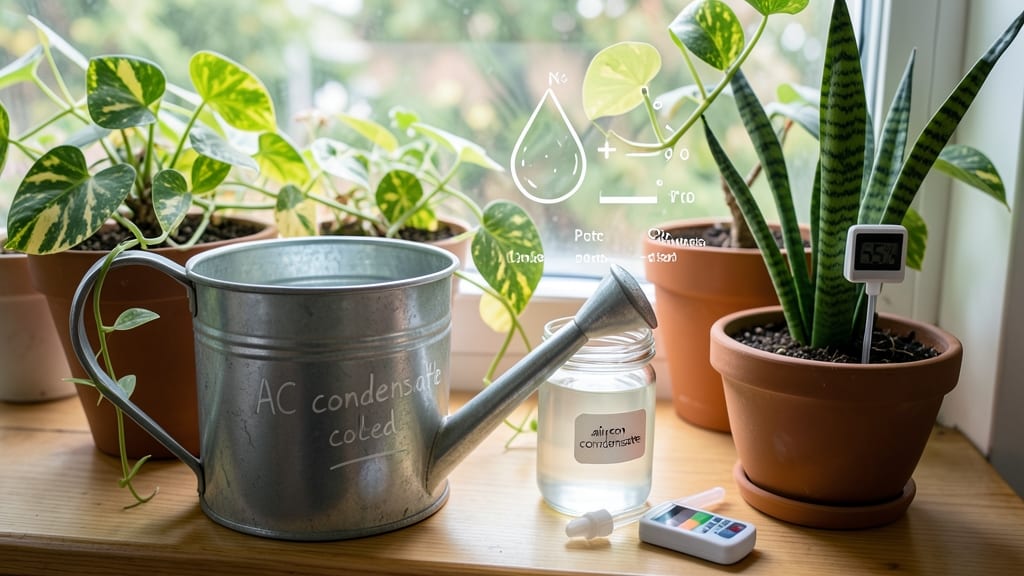
Aircon water is generally safe for plants in small amounts but contains higher levels of chlorine, minerals, and potential chemical residues that can harm roots and soil over time. Use it sparingly or let it sit uncovered for 24 hours before watering to reduce risks.
While aircon water won't kill most plants immediately, the concentrated chlorine and mineral deposits can build up in soil over time, disrupting nutrient absorption and even promoting fungal growth. 🌱 The evaporation process leaves behind higher concentrations of these chemicals than regular tap water, which is why many gardeners avoid using it directly.
A simple solution is to collect aircon condensate in a bucket and let it sit for a full day before using—this allows chlorine to dissipate naturally.
For sensitive plants like orchids or succulents, I always recommend using rainwater or filtered tap water instead. If you're dealing with hard water issues, a DIY purification method like boiling and cooling water can help reduce mineral content.
Testing your water's pH and conductivity with an affordable kit gives you precise control over what your plants receive.
💡 In This Article
- Chemical Risks in Aircon Water for Plant Health
- Best Alternatives to Aircon Water for Healthy Plants
Chemical risks in aircon water for plant health
The core issue with aircon water lies in its chlorine concentration, which can reach 2-3 times higher than regular tap water due to evaporation. When air conditioners cool air, water vapor condenses on coils, leaving behind dissolved chlorine and minerals.
This process creates a hyper-concentrated solution—think of it like a mini distillation process that amplifies impurities. 💫 The chlorine itself isn't immediately toxic, but its accumulation in soil disrupts beneficial microbial ecosystems that help roots absorb nutrients.
Mineral buildup is another silent threat. Aircon water often contains elevated levels of calcium, magnesium, and fluoride—up to 40% more than standard tap water in some cases.
These minerals precipitate out as the water evaporates, forming a crusty residue that alters soil pH. For example, a pH shift from 6.5 (ideal for most plants) to 7.5 or higher can lock out essential nutrients like iron and manganese, causing yellowing leaves—a condition called chlorosis.
The texture of affected soil becomes denser, reducing aeration and root penetration.
Long-term exposure to these chemicals also creates an environment ripe for fungal infections. The chlorine residue can weaken plant defenses, while mineral deposits create moisture pockets that trap humidity. I've seen this firsthand with ferns and calatheas, where yellow spots appeared along leaf veins after consistent aircon water use.
The fungi thrive because the altered soil chemistry disrupts the natural balance between beneficial bacteria and pathogens. 🌱
Another critical factor is the electrical conductivity of aircon water, which often measures 1,200-1,800 µS/cm compared to 500-800 µS/cm for ideal plant water. High conductivity means excessive salts that dehydrate root cells through osmosis, similar to how salt draws moisture from food.
This "osmotic stress" forces plants to expend energy to filter out impurities, stunting growth. In extreme cases, roots may even develop brown, mushy tips—a clear sign of salt damage.
For container plants, the risks are amplified because there's no leaching through deeper soil layers. The confined environment means minerals and chlorine accumulate faster, creating a toxic cycle.
I recommend monitoring plants watered with aircon condensate by checking for white crusts on soil surfaces or stunted new growth—both are red flags. 🚨