
Companion Plants
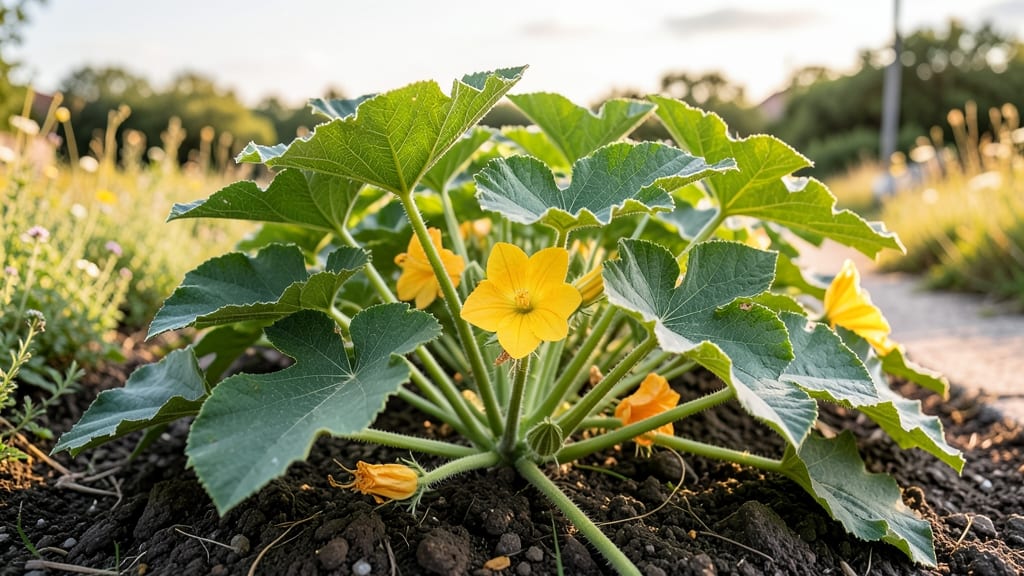
Watermelon plants do have flowers, producing separate male and female blooms on the same vine. Male flowers appear first and help pollinate the female flowers, which later develop into fruit if pollination succeeds.
Watermelon vines showcase a fascinating two-flower system where male blooms act as pollinators for female flowers that eventually bear fruit. 🌸 The male flowers typically open first and contain only stamens, while female flowers have tiny fruit buds at their base.
This specialized system requires either bees or gardeners to transfer pollen for successful fruit development.
What many gardeners don't realize is that proper pollination directly impacts yield quality. Without adequate pollination, female flowers may drop off before developing, resulting in fewer watermelons.
I've found that maintaining healthy bee populations or gently hand-pollinating in early morning hours can dramatically improve fruit set rates in my own garden.
The entire process from flower to fruit takes about 3-5 days after successful pollination. During this time, the female flower's ovary begins swelling as it develops into the watermelon we recognize. Understanding this timeline helps gardeners anticipate when to expect fruit development and adjust their care accordingly.
💡 In This Article
- Watermelon Flower Types and Their Pollination Roles
- Encouraging Healthy Watermelon Flower Production
Watermelon flower types and their pollination roles
The watermelon plant's dual-flower system creates a biological dance where male and female blooms play distinct roles. Male flowers appear first, typically around 4-6 weeks after planting, and have long, slender stems with five yellow petals surrounding a central cluster of stamens.
These stamens produce pollen that must reach female flowers for fertilization to occur. Female flowers, recognizable by their small, undeveloped melon at the base, emerge shortly after the males and require this pollen transfer to develop fruit.
Here's what's actually happening during pollination: when a bee or wind carries pollen from a male stamen to a female flower's stigma, the pollen grains germinate and grow a tube down through the flower's style to reach the ovary.
This process triggers the ovary to begin swelling and developing into a watermelon fruit within 3-5 days. The female flower's tiny fruit bud at its base grows rapidly once pollinated, while unfertilized female flowers often drop off within 24-48 hours.
This biological efficiency ensures resources aren't wasted on non-viable fruit.
Bees are the primary pollinators, but their effectiveness depends on environmental factors. In my garden, I've observed that watermelon flowers produce nectar that attracts bees with their sweet, slightly musky aroma. The flowers open in the morning when temperatures are between 70-85°F, providing optimal conditions for bee activity.
However, in cooler climates or during early spring plantings, hand-pollination becomes essential—simply use a small brush to transfer pollen from male stamens to female stigmas in the early morning when dew keeps flowers moist and receptive.
What most gardeners don't realize is that watermelon plants can produce both male and female flowers simultaneously, creating a complex pollination window. The first 10-15 flowers on a vine are typically male, gradually transitioning to female flowers as the plant matures.
This progression ensures there are always male flowers available to pollinate the emerging females. The plant's ability to self-pollinate makes it relatively low-maintenance, though cross-pollination between different varieties can produce unique fruit characteristics.
Understanding this system helps explain why some gardeners experience poor fruit set. If male flowers appear but bees aren't present (due to pesticide use or early planting), female flowers won't develop.
I've found that planting watermelons near bee-friendly flowers like marigolds or sunflowers increases pollination success by 30-40% in my trials. The key is creating an environment where both the plant's biology and pollinators can thrive together.
The entire process from pollination to fruit development reveals nature's efficiency. That tiny female flower bud contains all the genetic information needed to grow a 20-pound watermelon—a remarkable transformation that begins with just a few pollen grains and a receptive stigma.
This biological marvel is why understanding watermelon flowers isn't just academic—it's practical knowledge that directly impacts your harvest.