
Flowers
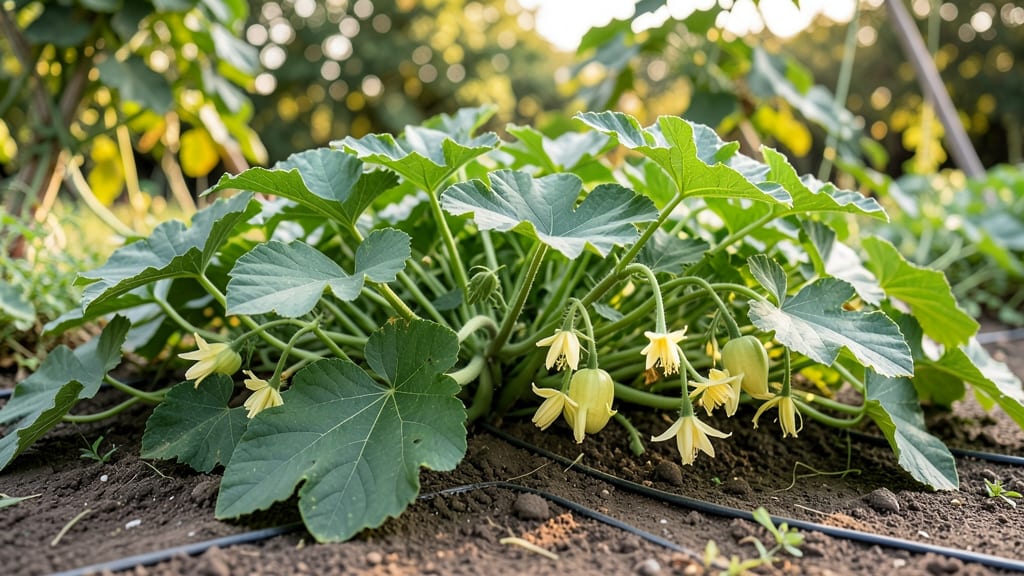
Watermelon male and female flowers differ in appearance and function: male flowers have long stems and no fruit potential, while female flowers grow near the vine and develop into watermelons. Identifying them helps maximize fruit production and pollination efficiency.
Spotting these differences is key to a bountiful harvest. 🌱 Male flowers appear first and feature slender stems with no fruit potential—they're all about spreading pollen. Female flowers, on the other hand, develop a tiny watermelon-shaped bulb at their base before blooming, signaling their fruit-producing role.
This distinction explains why some vines produce more fruit than others, especially when pollinators are scarce.
Once you recognize these traits, you can strategically encourage fruit production. For example, if you notice an abundance of male flowers but few female ones, try gently shaking the vines during peak pollination hours to help transfer pollen manually.
This simple technique can double your yield, especially in controlled environments like greenhouses where bees aren't as active.
💡 In This Article
- How to Identify Male vs Female Watermelon Flowers
- Optimizing Watermelon Pollination for Better Yields
How to identify male vs female watermelon flowers
The most obvious difference between male and female watermelon flowers lies in their base structure. Male flowers grow on long, slender stems—often 12-18 inches—and have no fruit potential.
Their primary purpose is to produce pollen, which is why they appear first in the growing season, typically 2-3 weeks before female flowers. The petals are usually 2-3 inches wide with a bright yellow hue that fades slightly as they age.
Female flowers, on the other hand, develop a small, bulbous growth at their base before the flower even opens. This tiny watermelon-shaped swelling—about the size of a grape—is the ovary that will eventually grow into fruit. The stems are shorter (3-6 inches) and thicker, often appearing more robust.
When you gently tug on a female flower, you'll feel this small fruit-like bump at the stem's junction, a dead giveaway that distinguishes it from its male counterpart.
Positioning also plays a role in identification. Female flowers tend to grow closer to the main vine, often near leaf axils where new growth emerges. Male flowers appear on secondary vines or tendrils, sometimes dangling freely.
This spatial difference helps explain why some gardeners notice fruit developing only on certain branches—those branches likely have more female flowers positioned optimally for pollination.
Immaturity can complicate identification, especially in early season growth. Young female flowers may have a tiny bump but still look similar to male flowers until they fully bloom.
To confirm, wait until the flower opens completely—if it has that characteristic bulb at the base, it's female. 🌱 The key is patience; female flowers often take 5-7 days longer to emerge than males, giving you a window to observe this development.
Environmental factors can affect flower development too. In cooler temperatures (below 70°F), watermelon vines may produce more male flowers initially as a survival strategy. This is why gardeners in northern climates sometimes see abundant blooms but poor fruit set—too many males and not enough females.
The plant's natural response shifts toward female flower production once temperatures stabilize above 75°F for consistent periods.
Another visual clue is the flower's longevity. Male flowers typically last only 1-2 days before wilting, while female flowers remain open for 2-3 days, giving pollinators more time to work their magic.
This extended bloom period increases the chances of successful pollination, which is why female flowers are the real stars of your watermelon harvest.
Pro tip: If you're still unsure, check for tiny hairs at the base of the flower. Female flowers often have fine, fuzzy hairs around the ovary—these help guide pollen to the stigma during pollination.
This microscopic detail is your final confirmation that you've found a female flower ready to produce fruit. 🌿