
Flowers
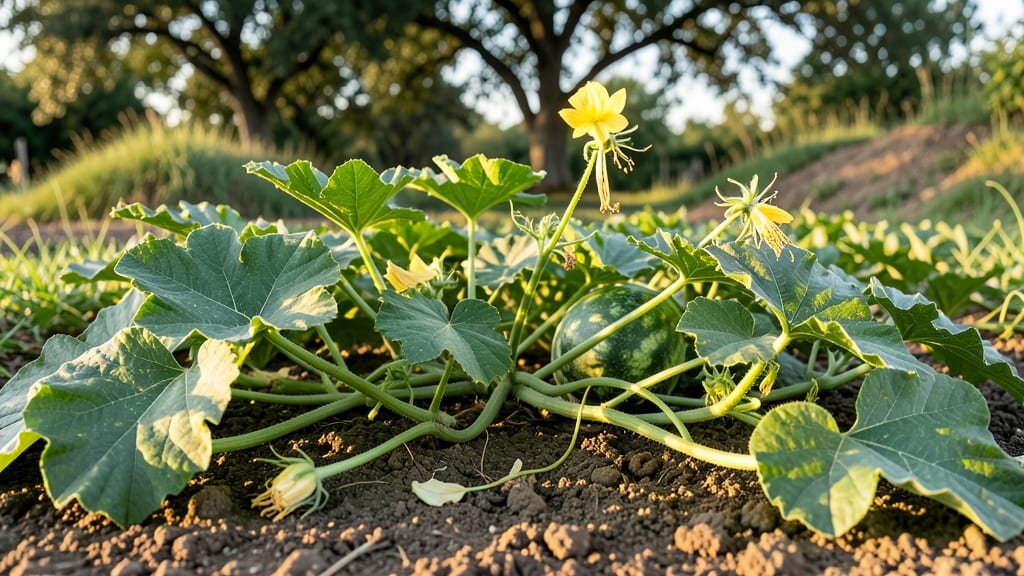
The difference between male and female watermelon flowers lies in their structure: male blooms have slender stems without fruit at the base, while female flowers grow directly from vines and develop tiny watermelons behind the blossom. Look at the stem and base for instant identification.
The key to spotting these differences is understanding their reproductive roles.
Male flowers produce pollen and appear first, often in clusters along the vine, while female flowers contain the ovules that will develop into fruit. 🌱 This distinction is crucial for gardeners—if you're growing watermelons in containers or greenhouses where pollinators are scarce, knowing which flowers are female helps you focus pollination efforts efficiently.
Female flowers also tend to open slightly later in the season, giving you a small window to identify them before fruit sets.
Here's a pro tip: female flowers sometimes show a tiny bump where the fruit will form, even before pollination occurs. This early sign can help you prioritize which blossoms to pollinate manually.
The longer stems on male flowers make them easier to spot from a distance, while female flowers often blend more naturally into the vine's growth pattern.
💡 In This Article
- How to Identify Male vs Female Watermelon Flowers by Anatomy
- Best Practices for Hand-Pollinating Watermelon Flowers
How to identify male vs female watermelon flowers by anatomy
Watermelon flowers exhibit distinct anatomical differences tied directly to their reproductive functions. Male flowers feature long, slender stems (often 3-6 inches) that lack any fruit development at the base. Their primary role is pollen production, with five prominent stamens that release pollen when mature.
Female flowers, in contrast, grow directly from the vine with a short, thick stem and immediately display a small, undeveloped watermelon (about pea-sized) behind the blossom.
The fruit bump on female flowers is your most reliable visual clue—it appears as a tiny, rounded swelling where the ovary will develop.
Male flowers never develop this feature since they lack ovaries entirely. 🌱 The flower structure also differs: female blooms have a single pistil (the female reproductive organ) at the center, while males have five stamens radiating outward.
This anatomical contrast explains why male flowers appear first in the season—they don't need to wait for fruit development.
Understanding these differences matters because female flowers are the ones that will produce fruit. If you're growing watermelons in controlled environments (like greenhouses), recognizing female flowers helps you prioritize pollination efforts. Male flowers typically bloom in clusters of 3-5 flowers, while female flowers appear more sporadically along the vine.
The stem length is another key identifier: male stems are noticeably longer and more flexible, while female stems are shorter and sturdier to support the developing fruit.
Here's a quick visual checklist for identification:
- Male flowers: Long stems (3-6 inches), no fruit bump, five stamens visible
- Female flowers: Short stems, tiny watermelon bump behind blossom, single pistil at center
- Timing clue: Female flowers often appear 1-2 weeks after male flowers in the growing season
What most gardeners don't realize is that the fruit bump on female flowers can sometimes be visible even before the flower fully opens. This early sign lets you identify potential fruit sites before pollination occurs, giving you a head start on managing your crop.
The thickness of the stem is another subtle but reliable indicator—female stems feel slightly thicker due to the developing ovary.
For those growing watermelons in containers or areas with limited pollinators, this anatomical knowledge becomes even more valuable. By focusing your pollination efforts on female flowers, you can maximize fruit yield.
The pistil in female flowers is also slightly more prominent than the stamens in male flowers, making it easier to spot once you know what to look for. 💡 This detail can help you distinguish between the two types even when flowers are still in bud form.