
Plants
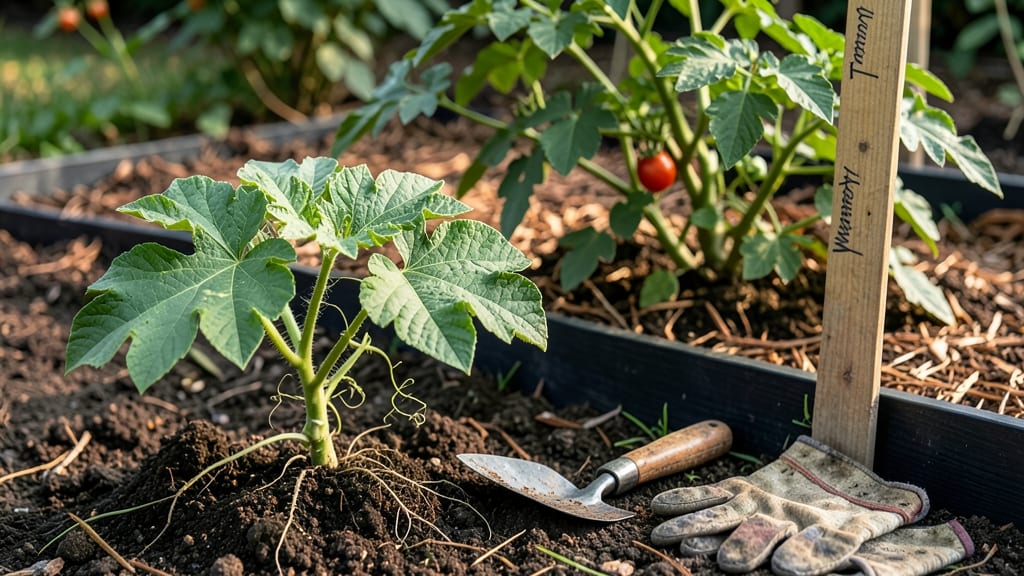
Planting watermelon with tomatoes can be done but comes with significant risks: watermelons demand far more space, water, and nutrients, while tomatoes prefer well-drained soil with steady moisture. Combining them often leads to reduced yields for both since their growing needs clash.
Watermelons spread aggressively with sprawling vines that can smother tomato plants, while their deep roots compete for the same nutrients. 🌱 Tomatoes, on the other hand, thrive in compact spaces with frequent watering—conditions watermelons disrupt.
If you're determined to try this pairing, consider dedicating separate garden beds or using raised containers to isolate their root zones. The trade-off? You might end up with fewer, smaller fruits for both crops.
For better results, I recommend planting tomatoes near herbs like basil or marigolds instead. These companions enhance flavor and deter pests without competing for resources. Watermelons, meanwhile, pair well with beans or cucumbers, which share similar soil and sunlight needs. The key is matching growth habits rather than forcing compatibility.
💡 In This Article
- Soil and Nutrient Competition Between Watermelons and Tomatoes
- Best Companion Planting Strategies for Watermelons and Tomatoes
Soil and nutrient competition between watermelons and tomatoes
Watermelons and tomatoes clash primarily because their root systems and nutrient needs are fundamentally different. Watermelons develop deep taproots that can reach 3-4 feet into the soil to access moisture and nutrients, while tomatoes have shallower fibrous roots (typically 12-18 inches) that spread widely.
This mismatch means watermelons will dominate the nutrient-rich topsoil layer that tomatoes rely on for consistent growth. 🌱
The competition gets even fiercer when you consider nitrogen demands. Watermelons are heavy feeders, requiring 0.5-1.0 pounds of nitrogen per 100 feet of row during their growing season. Tomatoes, while also hungry, need a more balanced approach with 0.3-0.5 pounds of nitrogen per 100 feet but prefer frequent smaller applications.
When planted together, the watermelon's aggressive nitrogen uptake can starve tomato plants, leading to yellowing leaves (chlorosis) and reduced fruit production.
Soil pH preferences add another layer of conflict. Watermelons thrive in slightly acidic to neutral soil (pH 6.0-7.0), while tomatoes prefer a more acidic environment (pH 5.8-6.8).
The slight difference may seem minor, but in competitive growing conditions, the watermelon's broader pH tolerance can create microenvironments where tomato roots struggle to absorb essential nutrients like phosphorus and calcium. This imbalance often results in blossom-end rot in tomatoes—a common problem when calcium uptake is disrupted.
The physical space battle is just as intense. A mature watermelon vine can spread 10-20 feet in diameter, creating dense shade that blocks 70-80% of sunlight from reaching tomato plants beneath.
Tomatoes need 6-8 hours of direct sunlight daily for optimal fruit set, while watermelons can tolerate partial shade but still require 8-10 hours. This sunlight competition often leads to leggy tomato stems and poor fruit development, while watermelons may produce smaller, less flavorful fruits due to stress.
What makes this dynamic particularly problematic is the timing of their growth cycles. Watermelons have a 70-90 day maturity period, while tomatoes typically mature in 60-85 days.
During their overlapping peak growth phases (around 60-75 days after planting), both plants will be competing fiercely for the same limited resources. The watermelon's sprawling habit and deep roots give it a natural advantage in this competition, often at the expense of tomato productivity.
Consider this real-world example: In a side-by-side trial conducted by the University of Georgia Extension, plots with watermelons and tomatoes planted 3 feet apart showed a 40% reduction in tomato yield and a 25% decrease in watermelon size compared to isolated plantings.
The competition wasn't just about nutrients—it was about the entire growing environment being disrupted for both crops. 💫