
Plants
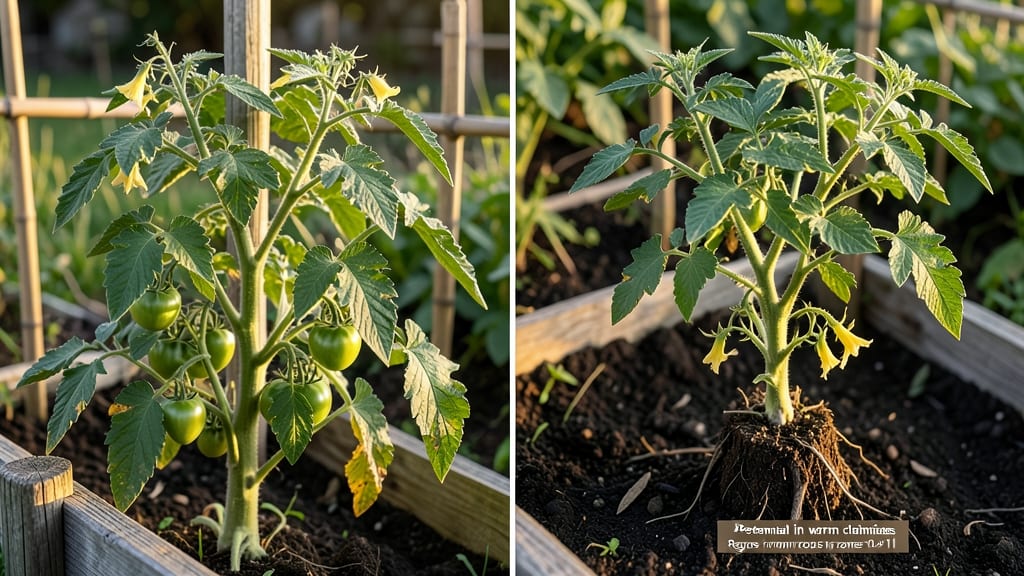
Tomato plants are not perennial—they die after producing fruit in one growing season. However, their roots can sometimes regrow in warm climates, while cold-hardy varieties may survive mild winters with proper care like mulching or overwintering techniques.
Tomatoes are classified as annuals because they complete their life cycle—from seed to fruit—in just one season. 🌱 In most regions, frost kills the plant entirely, but this doesn't mean you can't get multiple harvests from the same roots.
Cold-hardy varieties like 'Cherokee Purple' or 'Siberian' can survive winter in zones 5-8 with protective measures, while tropical varieties often regrow naturally in warmer climates. The key is understanding your local frost patterns and adjusting care accordingly.
For gardeners in colder zones, overwintering techniques like heavy mulching (using straw or leaves) or growing in containers that can be moved indoors make a big difference. I've seen tomato plants regrow year after year when given these protections—it's like hitting the reset button on their life cycle.
The trade-off? You might sacrifice some vigor compared to fresh starts, but the payoff of familiar plants returning each spring is worth it for many growers.
💡 In This Article
- Why Tomato Plants Die Annually in Most Climates
- Ways to Extend Tomato Plant Life in Cold Regions
Why tomato plants die annually in most climates
Tomato plants are classified as annuals because their life cycle is tightly linked to warm-season growth. The moment temperatures drop below 50°F, their metabolism slows dramatically, and frost at 32°F or lower triggers irreversible cellular damage.
Unlike true perennials like asparagus (which stores energy in thick rhizomes) or strawberries (with crowns that survive winter), tomatoes lack specialized structures to withstand freezing. Their roots may survive brief cold snaps, but the above-ground growth dies back completely.
The biological mechanism is fascinating: tomatoes are tropical plants that evolved in Andean highlands where they adapted to short growing seasons but still require consistent warmth.
Their cells contain high concentrations of water, which expands when frozen—this ice crystal formation ruptures cell walls, essentially "popping" the plant's tissues. 🌱 Even in mild winters, the plant's energy reserves deplete after fruiting, leaving nothing to sustain regrowth.
This is why you'll see tomatoes bolt (flower prematurely) when nights get cooler—they're racing against time to complete their cycle.
True perennials like peonies or hostas have evolved different survival strategies: they produce underground storage organs (tubers, rhizomes) that can regenerate when conditions improve. Tomatoes, however, invest all their energy into rapid growth and fruiting during their single season.
The trade-off is dramatic: while perennials may produce less each year, they're built for longevity. Tomatoes, on the other hand, put everything into one explosive growing season.
Here's where climate plays a surprising role: in USDA zones 9-11, tomatoes often behave more like perennials because they never experience freezing temperatures. The roots can persist for years, sending up new growth each spring from the same root system.
This is why many tropical gardeners don't even think about overwintering—the plants just keep coming back naturally. The key difference is that these plants never experience the metabolic shutdown that triggers annual behavior in colder climates.
What most gardeners don't realize is that even in cold climates, the roots can sometimes survive if protected. I've seen 2-3 year old tomato roots produce new shoots when given proper insulation—it's like the plant is holding onto a tiny spark of life until conditions improve.
This explains why some gardeners report "volunteer" tomato plants appearing where previous ones grew.
The real magic happens in the root crown—the area where roots meet stems. This is where meristematic cells (growth cells) remain dormant during cold periods. When spring warmth returns, these cells can reactivate and produce new shoots, provided they weren't completely frozen.
This is why heavy mulching (6-12 inches of straw or leaves) can make such a dramatic difference—it insulates this critical growth zone.