
Watering
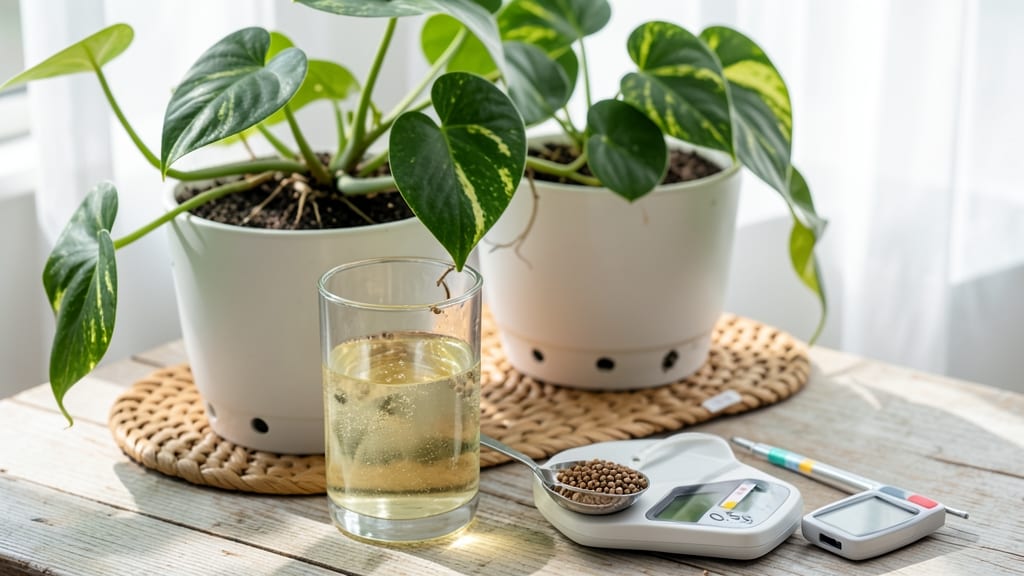
10-10-10 fertilizer will dissolve in water when mixed correctly, breaking down into its essential nutrients—nitrogen, phosphorus, and potassium—for plants to absorb quickly, though incomplete mixing can leave gritty residue behind.
When you mix 10-10-10 fertilizer with water, the granules break down through a process called dissolution, where the nutrients separate into ions that plants can absorb through their roots. 🌱 The solubility improves with warmer water and thorough stirring—cold water or quick pouring often leaves undissolved particles that clog irrigation systems or settle at the bottom of containers.
I've learned that using a clean bucket with a stirring stick (not just shaking) ensures even distribution, preventing nutrient loss or plant burn from concentrated spots.
For best results, follow the ratio on your fertilizer bag (typically 1 tablespoon per gallon of water) and apply it as a liquid feed during watering. This method works well for both soil applications and foliar sprays, though foliar feeding requires finer filtration to avoid clogging spray nozzles.
The key is consistency—regular, diluted applications prevent salt buildup in the soil while delivering steady nutrition.
💡 In This Article
- How 10-10-10 Fertilizer Dissolves and Releases Nutrients
- Best Practices for Mixing and Applying Water-Soluble 10-10-10 Fertilizer
How 10-10-10 fertilizer dissolves and releases nutrients
When you add 10-10-10 fertilizer granules to water, they undergo dissolution through a chemical process where the solid particles break apart into individual ions.
The "10-10-10" refers to the percentage of nitrogen (N), phosphorus (P), and potassium (K) by weight, which are bound in water-soluble salts like ammonium nitrate, diammonium phosphate, and potassium chloride. These compounds dissociate in water, releasing ions that plants can absorb through their roots.
The solubility varies—nitrogen salts dissolve fastest, while phosphorus compounds may require slightly more agitation to fully break down.
Temperature plays a critical role in this process. Warm water (70-80°F) increases the kinetic energy of water molecules, helping them surround and separate the fertilizer particles more efficiently.
I've noticed that mixing 10-10-10 in cold water (50°F) often leaves a gritty residue at the bottom of containers, while warm water ensures nearly complete dissolution.
Agitation matters too—gentle stirring with a clean stick creates microcurrents that help break up clumps, whereas shaking can create air bubbles that trap undissolved particles.
The nutrient release happens in stages. Nitrogen converts to nitrate form within hours, while phosphorus and potassium remain available for weeks, depending on soil conditions. This dual-release system makes 10-10-10 ideal for both quick uptake and sustained growth.
However, if you notice white crusty deposits after application, it's likely undissolved potassium chloride—a sign you need to mix more thoroughly next time or use finer granules. 🌱
For container gardens, this solubility becomes especially important. The closed system means any undissolved particles can accumulate, potentially clogging drainage holes or creating nutrient hotspots that burn plant roots.
I always recommend pre-mixing a small batch in a separate container to ensure complete dissolution before transferring to watering cans or irrigation systems. This extra step prevents wasted nutrients and keeps your plants thriving.
What most gardeners don't realize is that pH levels also affect solubility. The ideal range for 10-10-10 is 6.0-7.5. In acidic soils (pH 5.0), phosphorus becomes less available, while alkaline conditions (> 8.0) can cause potassium to precipitate out of solution.
Testing your soil's pH before application ensures you're maximizing nutrient uptake rather than wasting fertilizer.
One practical tip I've learned is to use a 5-gallon bucket with a stirring stick for mixing. The wider surface area helps distribute the granules evenly, while the depth allows for proper agitation without spilling.
For larger gardens, consider a wheelbarrow with a shovel for mixing—just be prepared to wear gloves, as concentrated fertilizer can irritate skin. The goal is to create a uniform, cloudy solution where no granules remain visible.