
Watering
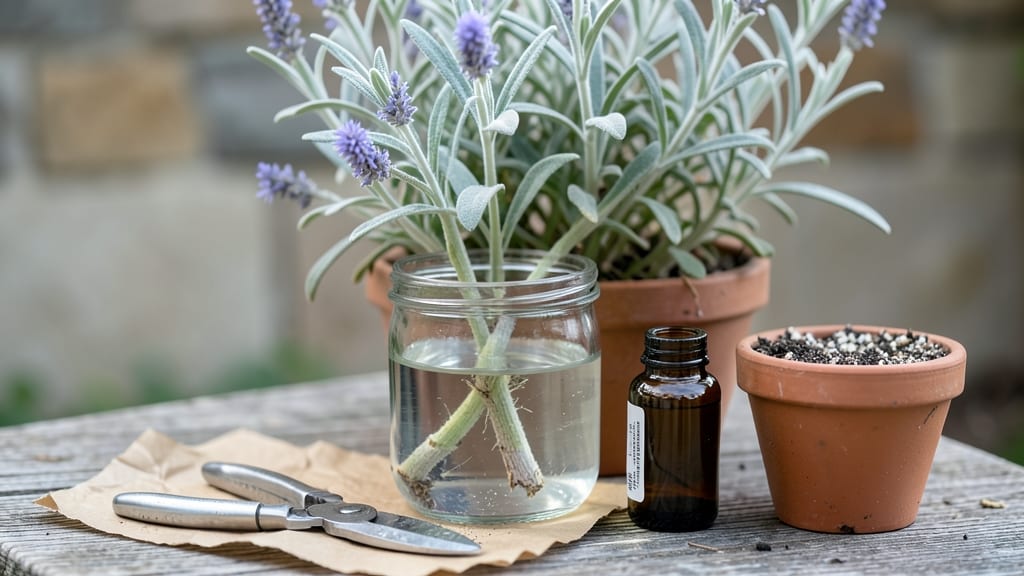
You can propagate Texas sage in water, but it's risky and often fails due to rot. The plant prefers dry conditions, so soil-based methods with bottom heat (70-75°F) and high humidity yield better results—roots typically appear in 4-8 weeks.
Texas sage (Leucophyllum frutescens) thrives in arid climates, which is why water propagation rarely works for it. 🌵 The plant's thick, waxy leaves and woody stems resist moisture absorption, making cuttings prone to bacterial or fungal rot when submerged.
Instead, I recommend using a fast-draining cactus/succulent mix with perlite or sand—this mimics its natural rocky soil environment. The key is patience: even with ideal conditions, only about 30% of cuttings successfully root in soil, compared to near-zero success in water.
For best results, take 4-6 inch tip cuttings in late spring or early summer when the plant is actively growing. Dip the cut end in rooting hormone, then plant in a container with a clear plastic bag to maintain humidity.
Place the pot in a warm spot with indirect light, and avoid overwatering—the soil should dry completely between waterings. Once roots form, transplant outdoors after hardening off for a week.
💡 In This Article
- Why Texas Sage Struggles in Water Propagation
- Best Soil-Based Propagation Methods for Texas Sage
Why Texas sage struggles in water propagation
Texas sage's natural habitat in rocky, arid regions explains why water propagation fails. Its thick, waxy leaves have a cuticle layer that repels moisture—perfect for desert survival but deadly for rooting in water.
When submerged, the cut end absorbs too much water, creating anaerobic conditions that breed Pythium fungi, causing rot within 3-5 days. Unlike tropical plants that thrive in water, Texas sage's stems lack the vascular adaptations to handle prolonged submersion.
The real issue is oxygen deprivation. Roots need air to develop, but water displaces oxygen at the stem's base. Studies show Texas sage cuttings in water develop black, mushy stems within a week, while soil-grown cuttings form callus tissue and roots in 4-8 weeks under ideal conditions.
The plant's natural response to drought—thickened stems and reduced leaf surface area—makes it ill-suited for water-based propagation methods.
What works instead is mimicking its native environment. Use a cactus/succulent mix with 50% perlite to prevent compaction. The high porosity allows excess water to drain immediately, keeping the cutting's base dry while providing just enough moisture for root initiation.
This approach aligns with Texas sage's evolutionary adaptations—drought tolerance and rapid root growth when conditions are right.
Temperature plays a critical role too. Texas sage roots best at 70-75°F soil temperatures, which you can achieve with a simple heat mat. At cooler temps (60°F), root formation slows dramatically.
The plant's native range in Texas experiences these warm soil temps during summer, which is why propagation attempts should mirror this seasonal pattern.
Visual clues help identify healthy cuttings. Choose stems with green, flexible tips—woody stems root poorly. After planting, maintain 80% humidity with a plastic bag, but remove it daily for 10 minutes to prevent mold.
Successful cuttings will show new growth at the leaf nodes within 3-4 weeks, signaling root development.
For those determined to try water propagation, limit submersion to 1-2 inches of water and change it every 2 days. Even then, success rates drop below 10%. The better alternative?
Use a soil block method with coconut coir and perlite—this keeps the base dry while providing moisture through capillary action, closely replicating Texas sage's natural soil conditions.