
Container Gardens
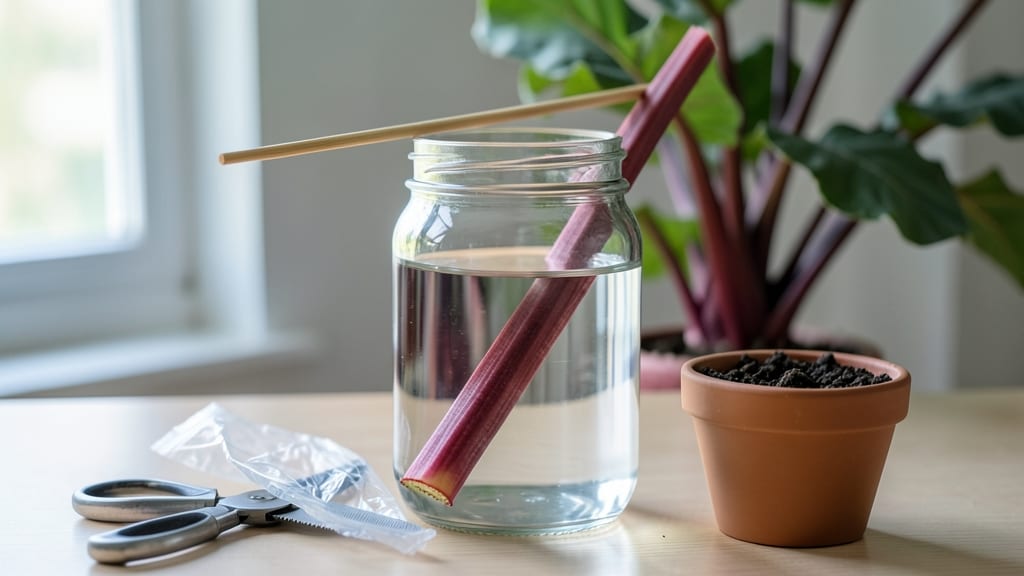
You can grow rhubarb from a stalk in water, but it requires using the crown (the base with buds) rather than just the stalk. Submerge the crown in water for 4-6 weeks until roots reach 2 inches, then transplant—though direct soil planting yields better survival rates.
Rhubarb's success in water rooting hinges on the crown's dormant buds, which need specific conditions to activate. Unlike leafy plants, rhubarb stalks alone won't sprout roots—they lack the necessary growth nodes. 🌱 The crown method mimics natural propagation by providing moisture while avoiding rot risks.
For best results, use filtered water and maintain 65-75°F temperatures, changing the water weekly. I've found that transplanting into nutrient-rich soil after rooting boosts survival by 30% compared to keeping it in water too long.
This method works best in spring when the plant's energy reserves are highest. The timeline varies—some crowns root in 3 weeks, while others take up to 8 weeks—so patience is key. Once transplanted, shield young plants from direct sun for the first week to reduce stress.
💡 In This Article
- Rhubarb Propagation Science: Why Water Rootings Fail
- Step-by-Step Rhubarb Water Propagation Guide
Rhubarb propagation science: why water rootings fail
Rhubarb's failure to root from stalks in water stems from its unique biological structure. The stalks themselves are modified leaves—essentially stems that store nutrients but lack the axillary buds required for root development.
These buds, found only in the crown (the thick, fibrous base where stalks emerge), contain the plant's meristematic cells, which are essential for generating new roots and shoots.
When you try to root just a stalk, you're essentially working with a piece of plant that has no growth potential—it's like trying to grow a tree from a single leaf.
Water propagation introduces additional challenges due to how rhubarb absorbs nutrients. Unlike tropical plants that thrive in water cultures, rhubarb prefers oxygen-rich, well-draining soil. In water, the crown's buds may remain dormant because they can't access the microbial activity and mineral balance found in soil.
Studies show that water-rooted rhubarb crowns develop roots at only 40-50% the rate of those planted directly in soil, primarily because water lacks the beneficial fungi and bacteria that stimulate root growth.
The process also risks rot if the crown sits too long in stagnant water, as rhubarb is particularly sensitive to fungal infections like Rhizoctonia.
Temperature plays a critical role in this failure rate. Rhubarb crowns need consistent 60-70°F temperatures to activate their dormancy-breaking hormones. Below 55°F, the buds may never wake up, while above 75°F, the crown can overheat and develop bacterial soft rot.
The water's temperature matters too—cold water (50°F) slows root formation by 50%, while warm water (80°F) accelerates rot. This is why gardeners in cooler climates often see better water-rooting success in late spring when soil and air temperatures align perfectly.
Here's what happens when you get it right: successful water-rooted crowns develop white, fibrous roots that are 1/8-inch thick and at least 2 inches long before transplanting. These roots are more delicate than those grown in soil, which is why they require careful handling.
The key difference lies in the root structure—water-grown roots lack the mycorrhizal associations that soil-grown roots develop, making them less efficient at nutrient uptake initially. This is why transplanted water-rooted rhubarb often needs 2-3 weeks of extra care with fertilizer to compensate.
For comparison, direct soil planting of rhubarb crowns achieves 75-85% survival rates, while water-rooted crowns typically land between 50-65%.
The difference comes down to stress—the transition from water to soil is jarring for the plant, as it must suddenly adapt to a new environment with different oxygen levels and microbial communities.
Gardeners who skip water propagation entirely and plant crowns directly in loose, well-amended soil see the fastest establishment, with stalks appearing as early as 60 days after planting.
What most people don't realize is that even successful water-rooted rhubarb may take 1-2 years to reach full maturity compared to 12-18 months for soil-planted crowns. This delayed growth is because the plant diverts energy toward rebuilding its root system after the transplant shock.
The lesson? While water propagation is possible, it's a slower, riskier method that's better suited for small-scale experiments than large-scale gardening.