
Watering
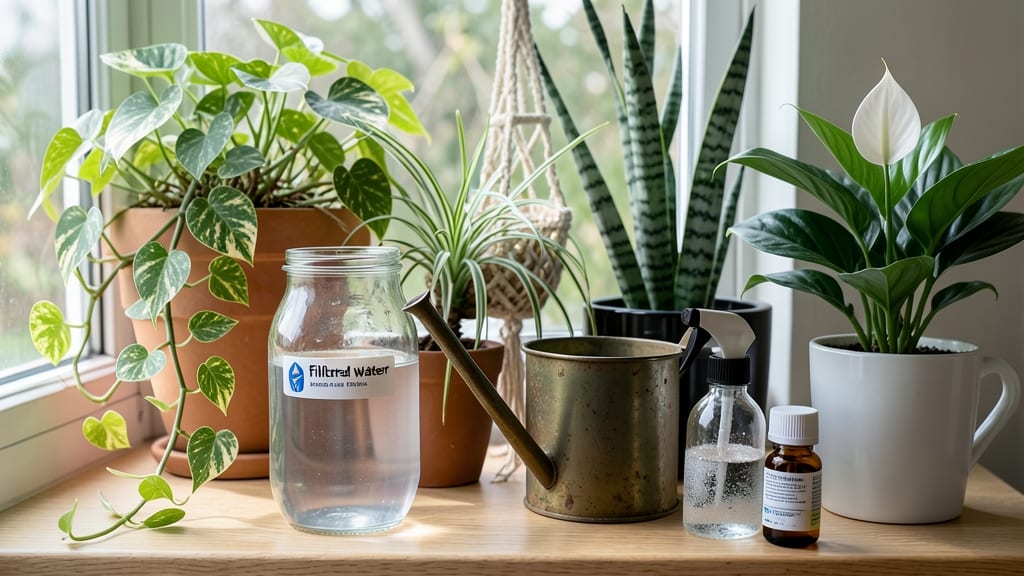
Filtered water can be good for plants if it retains essential minerals like calcium, magnesium, and potassium, but tap water with chlorine or heavy metals may harm growth. Test water quality and supplement minerals if needed for optimal plant health.
Filtered water's impact on plants depends entirely on what gets removed during processing. 💧 Many modern filters strip away chlorine and heavy metals—great for your health, but potentially harmful to plants that need those minerals to thrive.
The key is balance: while you want to avoid chlorine buildup in soil, you also need to ensure your plants get their daily dose of calcium for cell wall strength and magnesium for photosynthesis.
For container plants or sensitive species like orchids, I always recommend testing your filtered water first—simple pH strips from garden centers reveal whether you need to add a pinch of Epsom salt or liquid fertilizer to restore those missing nutrients.
Here's the tricky part: not all filters behave the same. Reverse osmosis systems, for example, remove 90-99% of minerals, leaving water so pure it can actually leach nutrients from soil over time.
If you're using this type of filtration, consider collecting the "reject" water (the mineral-rich waste stream) and using it sparingly for watering—it's like a free mineral supplement for your plants.
For standard carbon filters, the mineral loss is usually minimal, but they still can't replace the natural mineral content found in untreated spring water.
💡 In This Article
- Key Minerals Plants Need in Water and How Filtering Affects Them
- How to Use Filtered Water Safely for Houseplants and Gardens
Key minerals plants need in water and how filtering affects them
Plants absorb essential minerals through their roots, and water acts as the primary delivery system for these nutrients.
Calcium, magnesium, and potassium are the "big three" that most plants crave—calcium strengthens cell walls (especially important for young, rapidly growing plants), magnesium is the center of chlorophyll molecules (critical for photosynthesis), and potassium regulates water balance and disease resistance. 🌱 For example, a tomato plant deprived of potassium will show yellowing leaves and weak stems, while magnesium deficiency causes interveinal chlorosis (yellowing between leaf veins).
The problem with many filtered waters is they remove these minerals along with contaminants.
Standard tap water typically contains 20-50 parts per million (ppm) of calcium and 5-15 ppm of magnesium, which is perfect for most plants.
But reverse osmosis systems can reduce these levels to nearly 0 ppm, creating what scientists call "demineralized water" that actually pulls existing minerals out of your soil over time. This is why you might notice slower growth or yellowing leaves when using heavily filtered water long-term. The good news?
Most carbon filters preserve 80-90% of minerals while removing chlorine, making them a safer choice for regular watering.
Nitrogen is another critical mineral that often gets overlooked in water discussions. While plants primarily get nitrogen from soil organic matter, water can carry small amounts that contribute to leafy growth.
Chlorine-free filtered water won't provide nitrogen, but it won't leach existing nitrogen from your soil either—unlike distilled water, which can create a nutrient vacuum. 💧 For container plants, this means you'll need to rely more on balanced fertilizers to compensate.
The mineral balance in water is like a puzzle: remove too much, and your plants become malnourished; remove just the right things, and you create an ideal growing environment.
Here's what happens at the cellular level: When roots absorb water, they also take in dissolved minerals through specialized channels called aquaporins. Without sufficient calcium, these channels can malfunction, leading to poor water uptake and stunted growth.
Magnesium deficiency disrupts the photosynthetic process at its core, while potassium helps regulate the opening and closing of stomata (those tiny pores on leaves that control gas exchange). The result? Plants stressed by mineral-deficient water often show symptoms similar to drought stress—even when the soil appears moist.
For visual learners, think of it this way: Healthy plant water should look slightly cloudy with tiny suspended particles when held up to light (this indicates mineral content), while distilled or overly filtered water appears completely clear.
This clarity comes at a cost—your plants miss out on the natural mineral cocktail that makes water more than just H2O. The key is finding that sweet spot where your water is clean enough for your plants' health but still contains enough minerals to support vigorous growth.
Consider this real-world example: My neighbor's orchids thrived on rainwater collected from their roof (naturally filtered and mineral-rich) until they switched to distilled water for "purity." Within weeks, the leaves developed brown tips—a classic sign of mineral deficiency.
The solution? Adding a pinch of Epsom salt (magnesium sulfate) to their watering can revived the plants within a month. This simple fix shows how much plants rely on those dissolved minerals we often filter out.