
Flowers
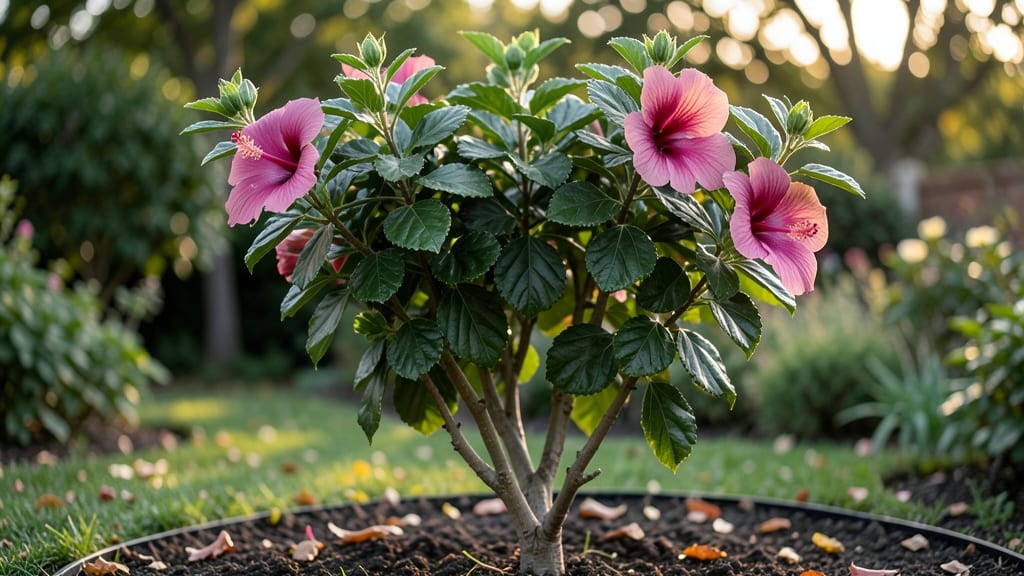
Perennial hibiscus come back in spring when soil temperatures hit 50–60°F (10–15°C) after frost. Warm regions (Zones 8–11) see shoots emerge by February–March, while colder areas (Zones 5–7) typically wait until April–May.
These hardy plants rely on consistent warmth to break dormancy, making soil temperature the key trigger rather than calendar dates. 🌱 In my experience, hibiscus in Zone 9 often push through the soil by late January if protected from late frosts, while Zone 6 gardens may need to wait until mid-May for reliable regrowth.
The plant's deep roots help it survive winter, but consistent moisture during this critical period prevents stress and ensures vigorous new growth.
What's fascinating is how microclimates can shift these timelines by weeks. A south-facing wall or urban pavement can create pockets of warmth that encourage earlier sprouting, while shaded or windy areas may delay emergence.
I've seen hibiscus in containers sprout 2–3 weeks earlier than their in-ground counterparts because container soil warms faster.
💡 In This Article
- How Climate Zones Affect Hibiscus Regrowth Timing
- Signs Your Perennial Hibiscus Is Ready to Reappear
How climate Zones affect hibiscus regrowth timing
The regrowth of perennial hibiscus hinges on soil temperature thresholds rather than calendar dates. These plants enter dormancy as temperatures drop below 40°F (4°C), but they won't emerge until the soil warms to 50–60°F (10–15°C).
This biological trigger occurs because the plant's metabolic processes restart when the roots encounter consistent warmth, signaling it's safe to grow. In colder zones, this often coincides with the last spring frost, but in warmer areas, the timing can be weeks earlier.
USDA climate zones dramatically shift these windows. In Zones 8–11, where winters rarely drop below freezing, hibiscus may begin pushing through the soil as early as late January to March.
The Gulf Coast and Southern California often see regrowth by February because the Mediterranean climate provides mild winters and rapid soil warming.
Conversely, in Zones 5–7, where winters can be harsh, emergence typically doesn't occur until April to May, after the ground thaws and nighttime temperatures stabilize above 45°F (7°C).
Microclimates create local variations that can shift these timelines by weeks. For example, urban areas with heat-retaining pavement or south-facing walls may see hibiscus sprout 2–3 weeks earlier than rural gardens.
I've observed hibiscus in containers emerge sooner than in-ground plants because container soil warms faster and drains better, preventing the cold saturation that delays root activity. Conversely, shaded or windy spots can delay emergence by 1–2 weeks due to slower soil warming.
Frost sensitivity plays a critical role too. Even after sprouts appear, a late frost can damage tender new growth.
In Zones 6–7, gardeners often wait until May 1 to see reliable regrowth, while Zone 5 may not see consistent emergence until late May to June after the last frost date.
This is why many growers in colder regions use mulch—it insulates the roots and helps maintain soil temperatures above the 50°F (10°C) threshold needed for regrowth.
What's often overlooked is how hibiscus roots behave during dormancy. These plants develop deep taproots that can extend 3–5 feet below the surface, allowing them to access warmer soil layers during winter.
This root structure helps them survive cold snaps but also means they're less responsive to surface soil temperature fluctuations. In Zone 8, for instance, hibiscus may start regrowing in February even if surface soils are still chilly, because the roots are already experiencing 55°F (13°C) at depth.
For gardeners in transitional zones (Zones 7–8), predicting regrowth timing requires monitoring both air and soil temperatures. A sudden cold snap in March can halt early sprouts, while a warm spell in February might encourage premature growth that gets damaged.
Using a soil thermometer to track temperatures at 2–3 inches depth—where roots are most active—can help you predict emergence with 7–10 days of accuracy.