
Plants
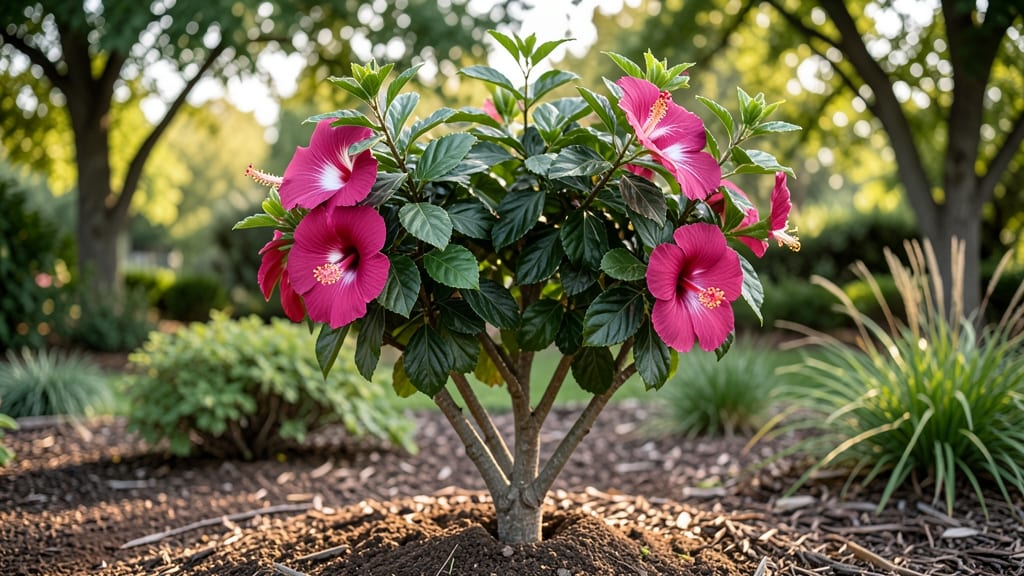
Hibiscus plants are perennials in USDA Zones 8-11, where they grow back reliably each spring with proper care. In colder climates like Zones 3-7, they’re often grown as annuals or tender perennials because frost kills most varieties. Hardy types like Hibiscus moscheutos can survive mild winters with protection.
Whether hibiscus thrives as a perennial depends entirely on your climate. 🌱 In warmer regions, these plants naturally regrow each year, sometimes even blooming year-round with consistent care. But in colder zones, most hibiscus varieties—especially tropical types—won’t survive winter without protection.
The key difference lies in their root systems: hardy hibiscus like Hibiscus moscheutos develop deeper roots that can withstand brief cold snaps, while tropical species like Hibiscus rosa-sinensis are frost-sensitive and will die back to the ground.
For gardeners in colder areas, overwintering strategies like mulching, container storage, or digging up tubers can extend a hibiscus’s lifespan beyond a single season. This is why you’ll often see them treated as annuals—they simply can’t handle freezing temperatures without intervention.
The good news? With the right approach, even cold-climate gardeners can enjoy perennial hibiscus for years.
💡 In This Article
- Hibiscus Cold Hardiness by Species and Variety
- Winterizing Hibiscus for Cold Climates: Step-by-Step Guide
Hibiscus cold hardiness by species and variety
The cold hardiness of hibiscus varies dramatically between species, with some thriving in sub-freezing temperatures while others wilt at the first frost.
At the heart of this difference lies their natural habitats: tropical hibiscus like Hibiscus rosa-sinensis evolved in warm climates where temperatures rarely drop below 50°F, making them highly frost-sensitive. Their thin leaves and shallow root systems can’t withstand freezing, causing cell damage at just 32°F.
In contrast, hardy hibiscus such as Hibiscus moscheutos (swamp hibiscus) and Hibiscus syriacus (rose of Sharon) developed thicker, waxy leaves and deeper root systems to survive colder winters. H. moscheutos can handle temperatures down to 15°F with proper protection, while H. syriacus thrives in Zones 4-9.
The key mechanism here is their ability to enter dormancy—thick stems and roots store energy, allowing regrowth once temperatures rise. 🌿
Leaf structure plays a critical role: tropical hibiscus leaves contain high moisture content, which freezes and ruptures cells, while hardy varieties have tougher, more leathery foliage that resists ice crystal formation. For example, Hibiscus syriacus leaves have a waxy coating that repels moisture, preventing frost damage.
Even within hardy species, growth habits differ—H. moscheutos grows as a shrub with sturdy stems, while H. syriacus has a more tree-like structure that better withstands wind and snow.
Root depth is another game-changer. Tropical hibiscus roots stay shallow (typically 12 inches deep), making them vulnerable to freeze-thaw cycles that lift and damage them. Hardy hibiscus, however, develop roots that extend 3-4 feet deep**, accessing warmer soil layers and insulating the plant.
This is why mulching becomes essential in colder zones—it mimics the natural ground insulation these plants evolved with.
Consider these cold tolerance benchmarks for common hibiscus types:
- Tropical hibiscus (H. rosa-sinensis): Dies at 32°F; Zones 9-11 only
- Swamp hibiscus (H. moscheutos): Survives 15°F with protection; Zones 5-9
- Rose of Sharon (H. syriacus): Tolerates 10°F; Zones 4-9
- Chinese hibiscus (H. rosa-sinensis hybrids): 28°F tolerance; Zones 8-11
The takeaway? If you're in Zones 3-7, tropical hibiscus are out—unless you're willing to bring them indoors during winter. Hardy varieties, however, can become true perennials with the right winter care, rewarding you with years of vibrant blooms.
The secret lies in understanding each species' natural adaptations and working with them, not against their evolutionary history. 🌸