
Propagation
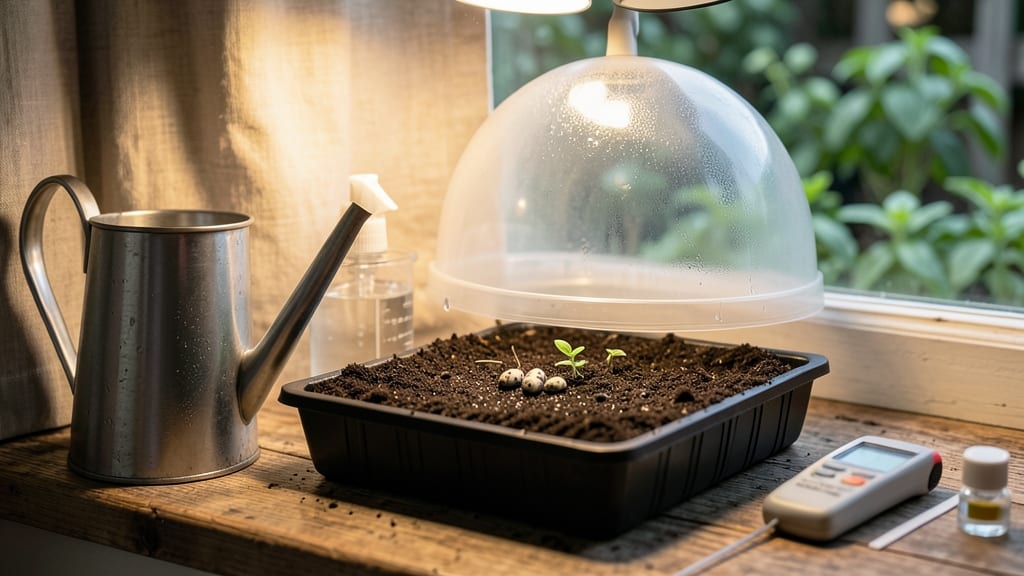
Water in seed germination activates enzymes that break down stored nutrients, with ideal moisture levels maintaining consistent dampness—not saturation—around the seed to prevent rot while ensuring oxygen reaches the embryo. Aim for 50-60% soil moisture retention for most seeds.
Germination starts when water kickstarts biochemical reactions inside the seed. 💧 The right moisture level softens the seed coat while dissolving stored nutrients like starches into sugars, fueling the embryo's growth.
Too little water halts these reactions, while too much creates anaerobic conditions that suffocate the seed—think of it like drowning at the microscopic level. Different seeds have unique needs, but most thrive when their growing medium feels like a wrung-out sponge.
For practical application, I recommend using a spray bottle for delicate seeds and bottom-watering trays for larger ones. Always check moisture by touch—damp but not soggy is the gold standard. A simple moisture meter can help if you're growing high-value seeds where precision matters.
💡 In This Article
- How Water Triggers Seed Germination at the Cellular Level
- Optimal Watering Techniques for Germination Success
How water triggers seed germination at the cellular level
When water enters a dormant seed, it initiates a cascade of biochemical reactions that transform the seed from a static storage unit into an active growth engine.
The seed coat, which acts like a protective barrier, begins to soften as water molecules disrupt its rigid structure through a process called imbibition.
This allows oxygen to diffuse inward while simultaneously activating enzymes like amylase, which break down stored starches into simple sugars that serve as immediate fuel for the embryo.
The magic happens at the cellular level where water triggers the synthesis of new proteins and nucleic acids. For example, in bean seeds, water activates α-amylase enzymes that convert starch into maltose within just 12-24 hours of proper hydration.
This biochemical activation creates an energy surge that powers cell division in the embryonic root (radicle) and shoot (plumule). However, the process is exquisitely sensitive—water levels must stay between 30-60% moisture content in the growing medium to avoid creating anaerobic conditions that would suffocate the seed.
What most gardeners don't realize is that water also plays a critical role in seed coat rupture. The expanding embryo creates internal pressure that eventually cracks the seed coat open—a process called seed coat rupture.
This typically occurs when the seed reaches about 50% of its maximum water absorption capacity. Too much water causes the seed to swell uncontrollably, leading to cell damage, while too little prevents the necessary pressure buildup.
Think of it like a balloon that needs just enough air to pop—neither too little nor too much.
The oxygen-water balance is equally crucial. Seeds require oxygen for aerobic respiration, which provides the energy needed for growth. When soil becomes waterlogged (above 70% moisture content), oxygen levels drop below 10% of atmospheric concentration, triggering anaerobic respiration that produces toxic ethanol.
This is why seeds planted in soggy soil often rot before they can germinate—a phenomenon called imbibitional death. The ideal scenario maintains oxygen levels above 15% while keeping the seed hydrated.
Different seed types have evolved unique water requirements based on their natural habitats. For instance, desert-adapted seeds like those from mesquite trees can germinate with as little as 10% moisture content, while tropical seeds often need 70-80% humidity to break dormancy.
This explains why some seeds sprout quickly after a single rain while others require prolonged moisture. Understanding these variations helps explain why your tomato seeds might germinate faster than your pepper seeds under identical conditions.
Here's a practical way to visualize this: imagine the seed as a tiny factory. Water is the raw material that activates the machinery (enzymes), while oxygen is the fuel that keeps everything running.
Too much water floods the factory, while too little leaves the machinery idle. The sweet spot is where both elements work in perfect harmony—like a well-tuned engine ready to power growth. 💧