
How To
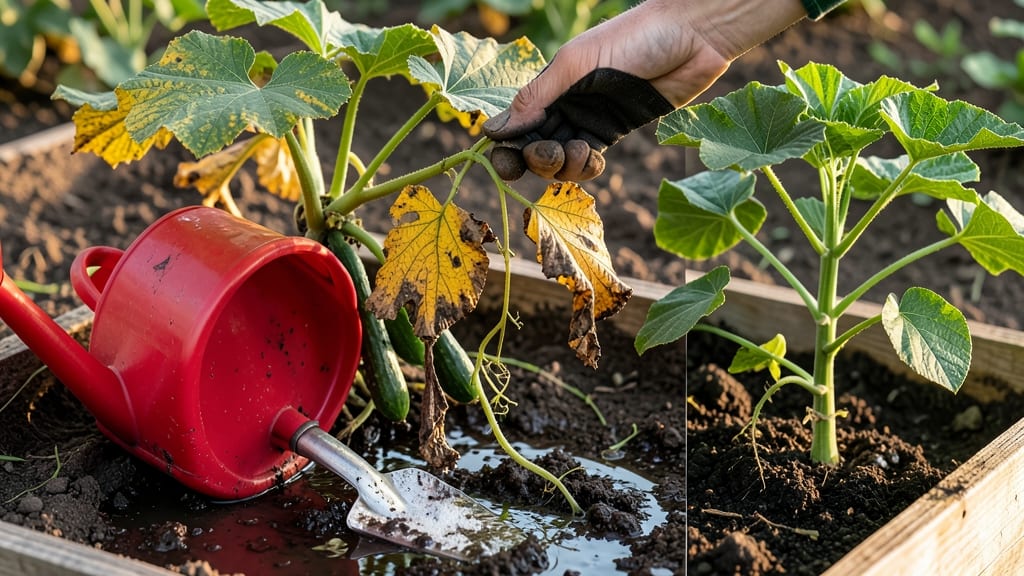
When cucumbers get too much water, they develop yellowing leaves, mushy stems, and bitter-tasting fruit that's often bloated. Correct the problem fast by cutting back on watering, improving soil drainage, and trimming damaged foliage to help the plant recover.
Overwatered cucumbers suffer from root stress that blocks nutrient uptake, causing those telltale yellow patches and weak stems. 🌱 The real danger is hidden—excess moisture creates anaerobic soil conditions that invite fungal diseases like powdery mildew, which can wipe out your entire harvest if ignored.
I’ve seen plants recover in just 5-7 days when you combine proper drainage with a strict watering schedule (like every 2-3 days instead of daily). The key is balancing moisture without drowning the roots—think of it like giving your cucumbers a spa day rather than a flood.
Start by testing your soil’s drainage: if water pools after 30 minutes, you need to amend it with perlite or coarse sand. For container growers, ensure pots have drainage holes and elevate them slightly to prevent waterlogging.
Pruning isn’t just about looks—removing yellowed leaves improves airflow and redirects the plant’s energy to healthy growth. And here’s a pro tip: harvest any swollen, bitter fruit immediately, as it won’t improve and may attract pests.
💡 In This Article
- How Overwatering Damages Cucumber Plants
- Step-by-Step Recovery Plan for Waterlogged Cucumbers
How overwatering damages cucumber plants
Excess water triggers a cascade of problems starting with the roots. When soil stays saturated for more than 48 hours, oxygen levels drop below 10%—the critical threshold for root health. This creates anaerobic conditions where beneficial soil microbes suffocate, and harmful bacteria like Pythium thrive, causing root rot.
The roots turn brown and mushy, unable to absorb water or nutrients efficiently, which is why your cucumber leaves suddenly yellow (a classic sign of chlorosis from nutrient starvation). 🌱
The damage doesn’t stop there—waterlogged soil leaches essential nutrients like nitrogen and potassium, which cucumbers need for vigorous vine growth. Without these, new leaves develop weak cell walls, making them curl or develop brown patches along the edges.
Even more frustrating is how excess moisture disrupts the plant’s hormonal balance, leading to blossom-end rot (those dark, sunken spots on fruit) or swollen, bitter cucumbers. The bitterness comes from cucurbitacin compounds that spike when the plant stresses, making even edible fruit inedible.
What’s especially insidious is how quickly symptoms appear after overwatering. Within 24-48 hours, you’ll see wilting despite wet soil—a paradox called "drought stress from excess water." The plant’s vascular system gets clogged with air bubbles, preventing water transport to leaves.
This is why your cucumber might look thirsty even when the soil is soggy. The key is catching these signs early: drooping leaves that don’t perk up after watering, stems that feel soft when squeezed, or fruit that develops a glossy sheen from excess moisture.
Temperature amplifies the damage. In 80°F+ weather, water evaporates faster, but the roots can’t keep up, leading to heat stress. Meanwhile, cooler soils (60°F) slow microbial activity, making recovery even harder.
The worst-case scenario? Fungal infections like powdery mildew, which spread rapidly in humid, waterlogged conditions. These infections don’t just yellow leaves—they create a white, powdery coating that blocks sunlight, further weakening the plant.
Here’s the science behind the swollen fruit: cucumbers absorb water faster than they can metabolize it, causing cells to burst and fruit to become waterlogged and bitter.
The excess moisture also dilutes the natural sugars in the cucumber, making them taste bland or even soapy. 💧 This is why overwatered cucumbers often feel heavier than normal—sometimes up to 30% more water content—but lack the crisp texture gardeners love.
Don’t overlook the soil’s role. Compacted clay soils hold water like a sponge, while sandy soils drain too quickly. The ideal mix for cucumbers is 40% soil, 30% compost, and 30% perlite or vermiculite—this balance ensures roots get oxygen while retaining just enough moisture.
Without it, even "light" watering can drown your plants, creating a vicious cycle of stress and decline.