
Watering
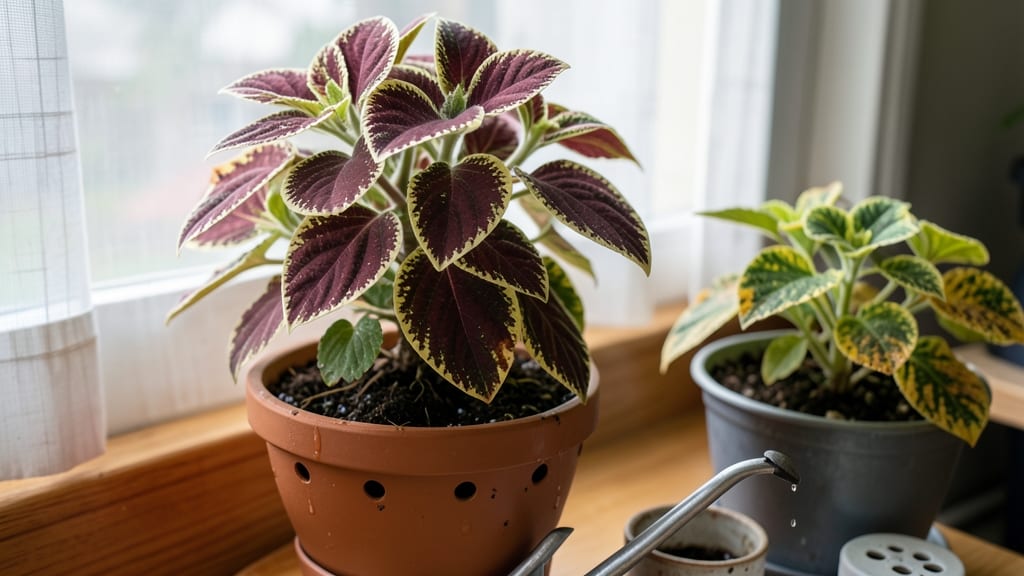
Coleus plants don't need a lot of water—they actually prefer consistent moisture without becoming waterlogged. Water when the top inch of soil feels dry, and avoid letting them sit in soggy conditions to prevent root rot.
Coleus plants are surprisingly drought-tolerant once established, but their vibrant foliage thrives best with balanced moisture.
The key is mimicking their natural tropical environment—think of a rainforest understory where water is frequent but never pools. 💧 I've found that using well-draining potting mix and watering at the base (rather than overhead) helps prevent fungal issues while keeping roots happy.
In hotter months, you might water every 3-4 days, but always check soil moisture first—coleus leaves will start curling or yellowing if they're either thirsty or drowning.
What many beginners miss is how quickly these plants show stress. Wilting leaves often signal underwatering, but yellowing or mushy stems mean you're overdoing it.
The secret to happy coleus is patience—let the topsoil dry out slightly between waterings, and you'll reward yourself with those stunning variegated leaves all season long.
💡 In This Article
- How Coleus Soil Moisture Affects Plant Health
- Best Watering Practices for Healthy Coleus Growth
How coleus soil moisture affects plant health
Coleus roots thrive in a delicate balance where soil moisture stays consistent but never stagnant. These tropical plants evolved in environments with frequent, gentle rainfall—not heavy downpours. Their root systems are fibrous and spread horizontally, which means they need well-aerated soil to prevent suffocation.
When soil stays too wet, oxygen can't reach the roots, triggering anaerobic conditions that lead to root rot within just 48-72 hours. The key is maintaining 50-60% soil moisture—enough to keep roots hydrated but allowing excess water to drain freely.
The soil composition plays a huge role in how quickly water drains or evaporates. Sandy soil dries out faster, requiring more frequent watering (every 2-3 days in summer), while clay-heavy mixes hold moisture longer and may only need watering every 5-7 days.
I've noticed that coleus in loamy soil (a balanced mix of sand, silt, and clay) handles moisture best—it drains well but retains enough water to prevent stress. The ideal potting mix should include 30-40% perlite or orchid bark to improve aeration while maintaining moisture.
Signs of stress appear quickly when moisture levels are off. Overwatering causes leaves to yellow first, often starting at the edges, while underwatering makes them crispy and curl inward like a parchment.
The stems become soft and mushy when roots rot, but wilting with dry, papery leaves means the plant is thirsty. 💧 What's fascinating is how coleus leaves actually fold upward during the day (a process called nyctinasty) to reduce water loss, but stressed plants lose this natural rhythm.
Temperature also affects moisture needs—coleus transpires (loses water through leaves) 20-30% faster in 80°F+ conditions than in cooler weather. This is why summer watering often requires daily checks, while winter care might only need weekly attention.
The plant's natural drought tolerance kicks in after the first 2-3 weeks of establishment, but established plants still need consistent moisture to maintain their vibrant foliage.
One common misconception is that coleus need "a lot of water" like tropical plants in rainforests. In reality, they prefer the understory conditions where dappled sunlight and moderate humidity create a microclimate with 60-70% relative humidity.
This is why misting leaves (rather than just watering soil) can help maintain optimal conditions—it mimics the natural humidity their roots experience without over-saturating the soil.
Here's what actually happens at the cellular level: When soil moisture drops below 40%, coleus cells lose turgor pressure (the internal water pressure that keeps leaves firm), causing wilting. Conversely, excess water triggers ethylene production—a plant hormone that signals stress and accelerates leaf drop.
The sweet spot is keeping soil moisture between 50-60%, which maintains cell turgor while preventing anaerobic conditions.
To test soil moisture, stick your finger 1 inch deep—if it feels dry, it's time to water. For visual learners, imagine a damp sponge: that's the ideal moisture level for coleus roots.
The goal is to keep them hydrated but never soggy, because once roots suffocate, even the hardiest coleus can't bounce back. 💫