
Companion Plants
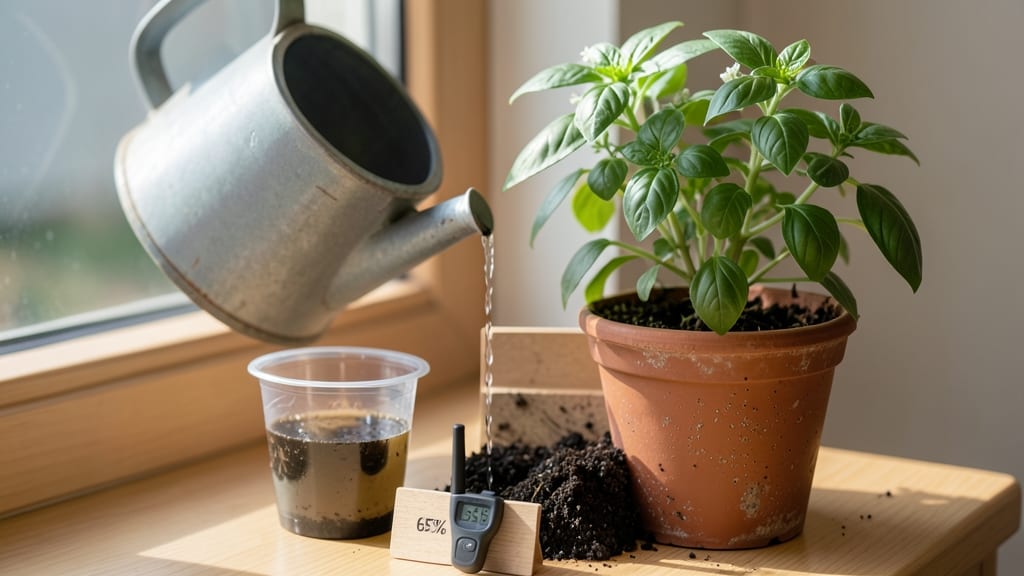
How much of a plant is water depends on its growth stage: seedlings and actively growing plants contain 85-95% water, while mature trees average 50-60%, and dried seeds or bulbs drop to just 5-15%. These variations reflect how plants adapt their hydration levels to age, species, and environmental factors like sunlight and humidity.
This wide range reveals how plants manage their internal water balance—think of it like a living sponge that adjusts its moisture content based on needs. 💧 Young plants, like basil or tomato seedlings, need that high water percentage to fuel rapid cell division and leaf expansion, while woody perennials like oak trees conserve water more efficiently as they mature.
Even within a single plant, water levels shift dramatically: a hydrangea's blooms might hold 90% water when fresh but shrink to 20% as they dry on the stem. Understanding these patterns helps gardeners troubleshoot issues like wilting or yellowing leaves, which often signal hydration imbalances.
What's fascinating is how plants regulate this internally. Xylem vessels act like straws, pulling water from roots to leaves, while stomata on leaf surfaces control evaporation rates.
Succulents, for instance, have evolved specialized cells to store water like tiny reservoirs, explaining why they can survive with just 10-20% moisture during droughts. Meanwhile, tropical plants like ferns maintain their high water content through constant transpiration—losing water vapor through leaves to create the humid microclimates they thrive in.
💡 In This Article
- Water Composition in Plants by Species and Growth Stage
- Optimizing Plant Water Content for Health and Growth
Water composition in plants by species and growth stage
Plants aren't just "watery" - their hydration levels are a dynamic system that shifts dramatically based on biology and environment. Take a young tomato plant: during its vegetative stage, its leaves and stems contain a staggering 92-95% water, while the roots hold 85-90%.
This high moisture content fuels rapid photosynthesis and cell expansion. Compare that to a mature oak tree, where the bark and woody tissues drop to 30-50% water as cellulose and lignin structures replace water-heavy cells during maturation.
The most extreme examples reveal nature's adaptations.
A freshly picked cucumber registers at 95-97% water, while its seeds contain just 5-8% when fully dried. 🌱 Succulents like aloe vera operate at 80-85% water when hydrated but can survive with 15-20% during droughts by converting their parenchyma cells into water storage compartments.
Even within a single plant, water percentages vary: a hydrangea's petals may hold 88% water while its woody stems contain 45%.
This variation stems from cellular specialization. Parenchyma cells in herbaceous plants act like water balloons, holding up to 90% water to maintain turgor pressure. In contrast, sclerenchyma cells in woody tissues have thickened walls that reduce water storage capacity.
The science gets fascinating when you consider that 90% of a plant's water is lost through transpiration - the process where water vapor escapes through stomata, creating the negative pressure that pulls moisture upward from roots.
Seasonal changes amplify these differences. During spring growth flushes, a maple tree's leaves may contain 93% water, but by autumn, that drops to 75% as sugars are transported to roots for winter storage.
Tropical plants like philodendrons maintain 85-90% water year-round thanks to their dense stomata coverage, while desert-adapted plants like cacti can fluctuate between 70-90% depending on rainfall patterns.
What most gardeners overlook is how water content affects plant behavior. A wilting basil plant might appear 80% water instead of its normal 92%, signaling cellular dehydration. Conversely, overwatered plants can develop waterlogged tissues with 98%+ moisture, cutting off oxygen and triggering root rot.
This delicate balance explains why succulents thrive with 10-20% water while tropical ferns demand 85-90% to prevent leaf scorch.
Even dormant plants reveal surprising water dynamics. A potato tuber in storage maintains 75-80% water to prevent desiccation, while a dried seed might contain just 5-10% - enough to trigger germination when rehydrated.
This range from 5% to 97% demonstrates how plants have evolved to optimize their hydration strategies across all life stages and environments.