
Companion Plants
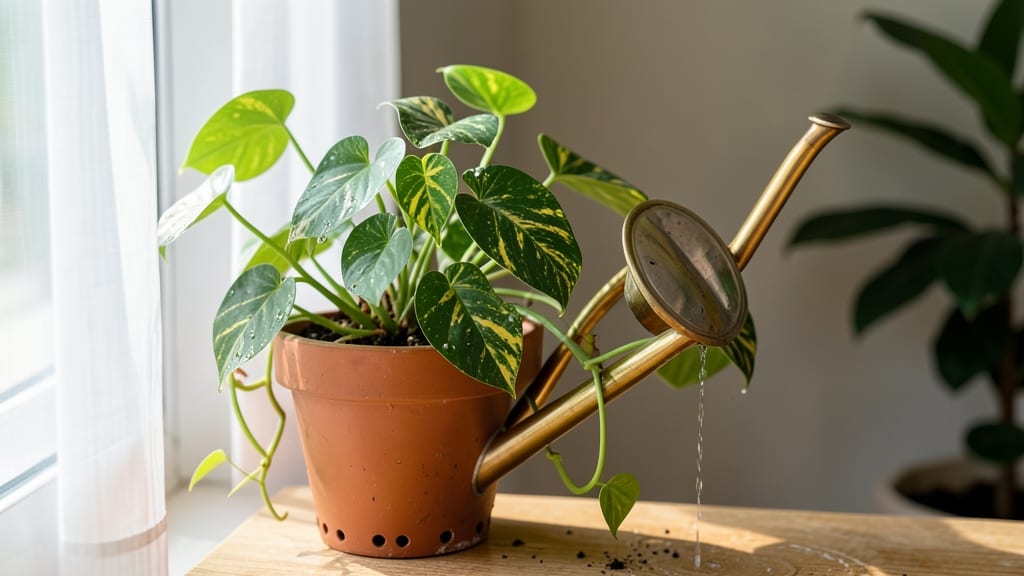
To determine how often Chinese money plants need to be watered, check soil moisture every 1-2 weeks by inserting your finger 1-2 inches deep—water only when dry. Adjust frequency in winter or cooler months to prevent root rot while avoiding drought stress.
Chinese money plants thrive on a drought-tolerant schedule that balances their succulent nature with sensitivity to overwatering. 🌱 Unlike thirsty houseplants, these plants store water in their coin-shaped leaves, so they prefer slightly dry conditions between waterings.
In warmer months, I typically water mine every 7-10 days, but I always check the soil first—if it's still damp at 1-2 inches down, I wait another week. The key is mimicking their natural arid habitat while accounting for indoor humidity levels, which can vary dramatically between homes.
What makes this tricky is that overwatering is the #1 killer of Chinese money plants—yellowing leaves or mushy stems are red flags. I've learned to trust the finger test over rigid schedules, especially in winter when growth slows.
A pro tip: Use a moisture meter for accuracy if you're unsure, or try the "lift test"—if the pot feels heavy, it's still wet. The goal is to keep the roots happy without drowning them.
💡 In This Article
- Understanding Chinese Money Plant Water Needs
- The Finger-Poke Test and Best Watering Practices
Understanding Chinese money plant water needs
Chinese money plants (Pilea peperomioides) evolved in the humid, shaded forests of Yunnan Province, where they experience seasonal moisture shifts. Their thick, coin-shaped leaves store water like tiny reservoirs, allowing them to survive 3-4 weeks without water in ideal conditions.
This drought tolerance comes from their succulent-like structure—each leaf contains specialized cells that swell with moisture and contract when dry. However, their root systems are delicate, with shallow, fibrous roots that absorb water quickly but also rot easily when overwatered.
The plant's water needs shift dramatically with humidity and temperature. In dry indoor air (common in homes with 30-40% humidity), moisture evaporates faster, requiring watering every 7-10 days.
But in humid environments (like bathrooms with 60%+ humidity), the soil stays damp longer, stretching watering intervals to 2-3 weeks.
Seasonally, growth slows in winter, reducing water needs by 30-50%—a plant that needs water every 7 days in summer might only need it every 14-21 days in winter when temperatures drop below 60°F.
Indoor vs. outdoor conditions create another layer of complexity. Outdoors in partial shade, Chinese money plants may need watering every 5-7 days due to wind and sun exposure, while indoors they often thrive on bi-weekly watering.
The key difference is airflow—indoors, stagnant air traps moisture, while outdoors, breezes help soil dry faster. I've noticed my outdoor plants develop a slightly darker green hue when thirsty, while indoor plants show crispy leaf edges first. This visual cue helps me adjust my schedule before stress signs appear.
Soil type plays a crucial role in moisture retention. A well-draining mix (like 60% potting soil, 30% perlite, 10% orchid bark) keeps roots aerated and prevents waterlogging, while heavy garden soil can keep moisture trapped for weeks.
The ideal mix mimics the plant's natural forest floor environment—light, airy, and slightly acidic (pH 6.0-6.5). When repotting, I always add 10-20% coarse sand to improve drainage, which directly impacts how often I need to water.
What most people don't realize is how light intensity affects thirst levels. Bright, indirect light (like 2-3 feet from an east-facing window) encourages faster growth and higher water needs, while lower light slows metabolism and reduces evaporation.
I've experimented with moving my plant between locations and found that in low light, watering needs drop by nearly half—from weekly to bi-weekly. This is why winter watering schedules often align with shorter daylight hours, even if temperatures stay mild.
For optimal care, consider these environmental factors when planning your watering routine:
- Humidity levels: Use a hygrometer to monitor—below 40% means more frequent watering
- Seasonal changes: Reduce watering by 50% in winter months (November-March)
- Light exposure: Move plants 1-2 feet closer to windows in winter for better moisture regulation
- Pot material: Terracotta dries faster than plastic—adjust frequency accordingly
The secret to perfect watering lies in understanding these interconnected factors. By observing your plant's environment and making small adjustments, you'll create a schedule that keeps those coin-shaped leaves plump and happy without risking root rot. 💧