
Watering
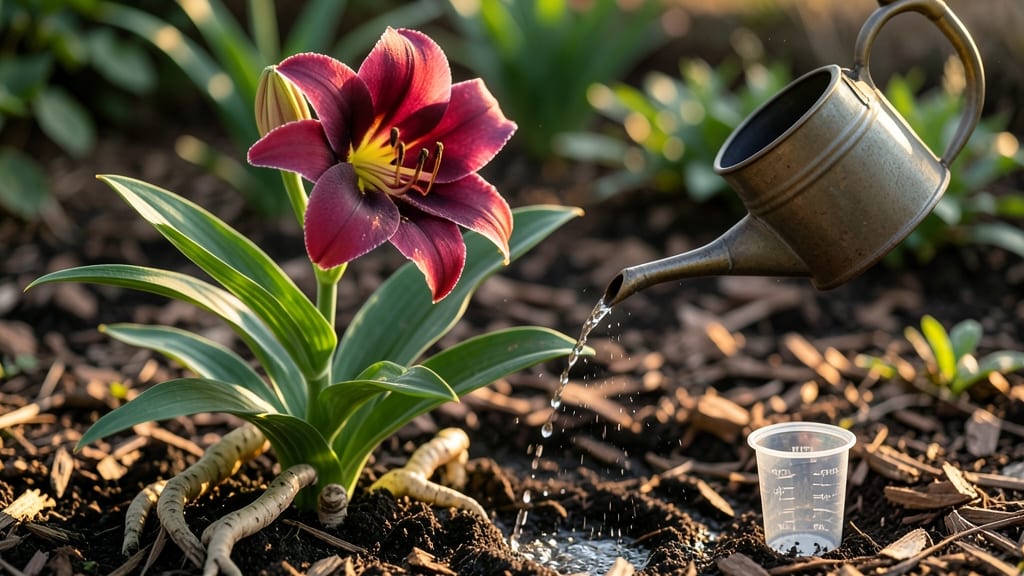
Understanding lily water requirements means keeping soil consistently moist with 1-1.5 inches of water weekly, ensuring it stays damp but never waterlogged. Summer demands daily moisture checks, while winter reduces needs to every two weeks, with proper drainage and mulching to protect roots.
Lilies thrive when their roots stay hydrated but never suffocate—think of it like a sponge that needs to breathe. 💧 The right balance prevents root rot while supporting those stunning blooms, and mulch acts like a natural insulator, locking in moisture during heatwaves.
I’ve found that using a moisture meter helps avoid guesswork, especially in clay-heavy soils that drain poorly.
Seasonal shifts matter too: in summer, lilies drink heavily, while in winter, they barely need anything. Overwatering shows up as yellow leaves, while thirsty plants wilt dramatically. The key is adapting your watering rhythm to match the weather and your soil’s behavior.
💡 In This Article
- How Lily Roots and Soil Interact with Water
- Seasonal Lily Watering Adjustments and Tools
How lily roots and soil interact with water
Lily roots thrive in a delicate balance where they need both moisture and oxygen to function properly. The roots absorb water through tiny hair-like structures called root hairs, but when soil stays too wet, these hairs suffocate from lack of oxygen—a condition called hypoxia.
This is why 1-1.5 inches of water per week keeps the soil evenly damp without creating waterlogged pockets. Sandy soils drain faster and require more frequent watering, while clay soils hold moisture longer and need less frequent but deeper watering sessions.
The texture of lily roots is surprisingly sensitive—when overwatered, they turn mushy and brown due to fungal growth, while underwatered roots shrink and pull away from the soil. You'll notice yellow leaves as the first sign of overwatering, since excess moisture blocks oxygen, preventing the plant from absorbing nutrients.
Conversely, wilting leaves indicate thirst, often accompanied by dry soil that pulls away from the pot edges. Mulch plays a critical role here by acting as a moisture barrier, reducing evaporation by up to 30% while keeping roots cool in summer and insulated in winter.
Soil composition dramatically affects how lilies absorb water. In sandy soils, water drains within hours, requiring you to check moisture daily during hot spells. Clay soils, however, can stay soggy for days, increasing the risk of root rot unless amended with organic matter like compost.
The ideal mix is a loamy soil that retains moisture without compacting—think of it like a well-drained sponge that still holds water for the roots to sip gradually. This balance is what turns a struggling lily into a blooming powerhouse.
What most gardeners overlook is how mulch regulates temperature and moisture simultaneously. A 2-3 inch layer of organic mulch (like shredded bark or straw) keeps soil temperatures stable, preventing the rapid evaporation that occurs in bare soil.
During summer, mulch can reduce watering needs by up to 50%, while in winter, it protects roots from freezing temperatures. The key is to keep mulch a few inches away from the plant stem to prevent rot and allow airflow to the base.
Here's a quick visual guide to soil moisture levels:
- Perfect moisture: Soil feels damp like a wrung-out sponge—lightweight but not dripping
- Too wet: Soil stays clumpy and releases water when squeezed (sign of poor drainage)
- Too dry: Soil crumbles easily and feels powdery (roots struggle to absorb water)
The science behind this is simple: lilies evolved in temperate climates where summer rains provide consistent moisture followed by drier autumns. Mimicking this natural cycle in your garden—watering deeply when dry, then letting the top inch of soil dry out between sessions—ensures your lilies grow strong and healthy. 🌱