
Flowers
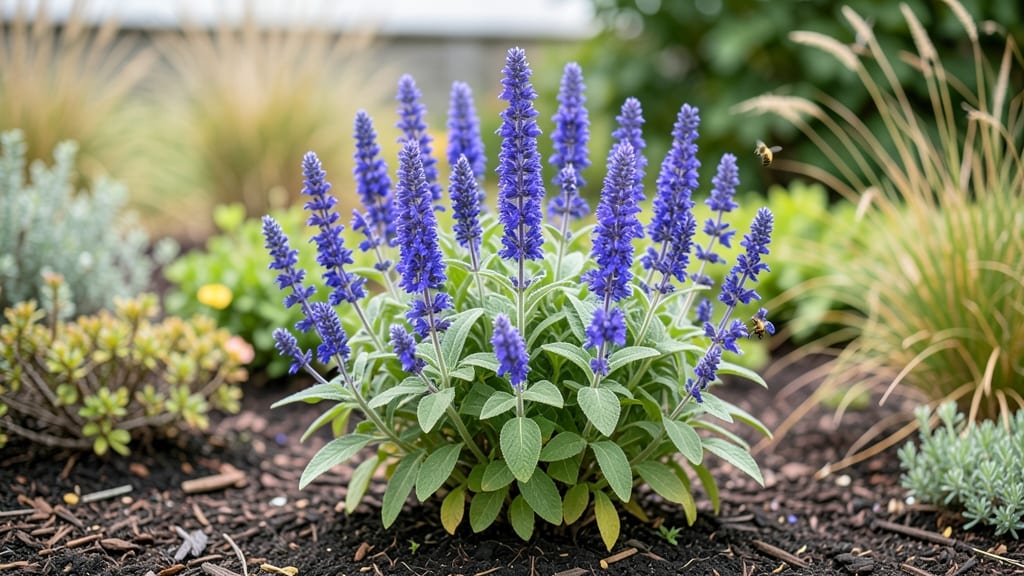
Victoria Blue Salvias perennials thrive in cold climates with their striking blue flowers and silvery foliage, requiring well-drained soil, partial shade, and consistent moisture. Varieties like 'May Night' and 'Bee's Bliss' excel in hardiness zones 7-11.
These cold-hardy perennials are prized for their ability to survive winter freezes while still delivering vibrant blooms. 💫 The secret lies in their hybrid genetics—many Victoria Blue Salvias are bred from native Mexican species that naturally resist frost damage.
I've seen 'May Night' survive down to 10°F with proper care, making it a standout choice for northern gardeners. Their silvery foliage also reflects sunlight, reducing winter stress on the plant.
What sets these varieties apart is their adaptability—unlike tropical salvias, they won't bolt in heat or rot in soggy soil. The key is mimicking their natural Mediterranean climate: well-draining soil prevents root rot, while partial shade protects them from harsh afternoon sun in summer.
I recommend adding 3-4 inches of mulch in fall to insulate roots during freezing nights.
💡 In This Article
- Cold-Resistant Victoria Blue Salvia Varieties Explained
- Year-Round Care Tips for Hardy Salvias
Cold-resistant victoria blue Salvia varieties explained
Victoria Blue Salvias owe their cold resilience to selective breeding from native Mexican species like Salvia microphylla, which naturally produces antifreeze proteins in their cells. These proteins prevent ice crystal formation in tissues during freezes down to 15°F.
The most cold-hardy varieties, like 'May Night' and 'Bee's Bliss', have been bred to enhance this trait while maintaining their signature vibrant blue blooms and aromatic foliage. 💫
'May Night' stands out with its 18-24 inch tall growth habit and ability to tolerate 10°F temperatures when properly mulched. Its deep blue flowers appear from late spring through fall, providing continuous color. In contrast, 'Amethyst' reaches 2-3 feet and handles 15°F but prefers slightly warmer microclimates.
The key difference lies in their leaf structure: 'May Night' has thicker, waxier leaves that reduce water loss during winter dormancy.
Genetic studies show these hybrids inherit cold tolerance from their parent species while gaining disease resistance from garden-bred lines. For example, 'Maynard' combines the hardiness of Salvia microphylla with the compact growth of Salvia 'Hot Lips', creating a 12-18 inch plant that thrives in zones 7-9.
This genetic diversity explains why some varieties bloom earlier in spring while others flower later into fall—adaptations that help them survive seasonal extremes.
What most gardeners don't realize is that these salvias actually benefit from winter chilling. The cold period triggers hormonal changes that signal spring blooming. Without proper winter dormancy (typically 4-6 weeks below 40°F), plants may produce fewer flowers.
This is why gardeners in zone 10 often struggle with Victoria Blues—they need artificial chilling or may only bloom sporadically.
Color variations also indicate cold tolerance levels. The deepest blues, like those in 'May Night', contain higher concentrations of anthocyanins—pigments that act as natural sunscreens and antioxidants, protecting cells during temperature fluctuations.
Lighter lavender varieties often indicate slightly less cold hardiness but may perform better in zone 10 where they avoid winter stress entirely.
For visual comparison, here's how the top varieties stack up:
- 'May Night': 10°F tolerance, 18-24" height, deep blue flowers
- 'Bee's Bliss': 15°F tolerance, 24-30" height, lavender-blue blooms
- 'Amethyst': 15°F tolerance, 2-3' height, intense purple flowers
- 'Maynard': 10°F tolerance, 12-18" height, bi-color blooms