
Watering
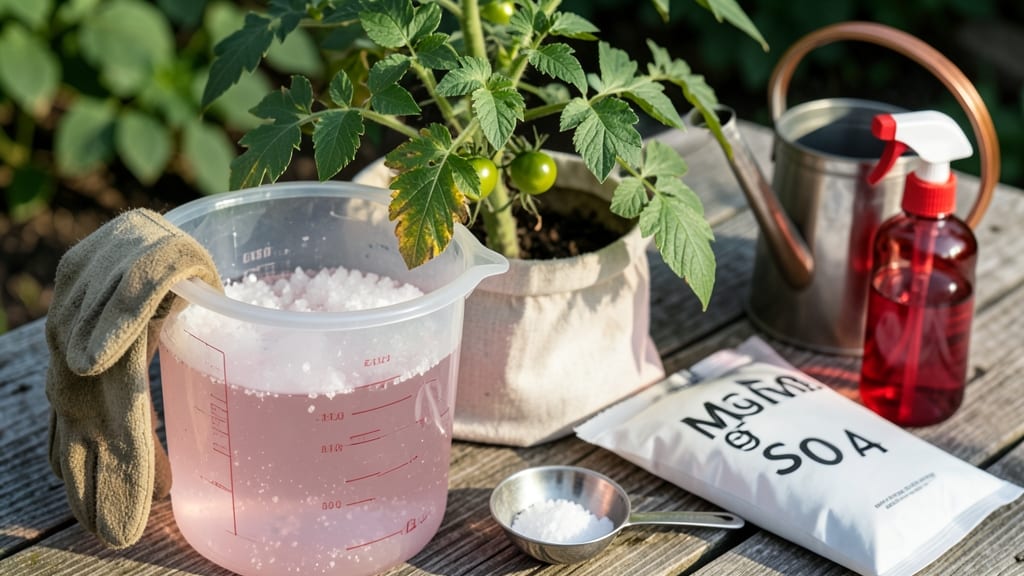
To determine how much Epsom salts per gallon of water for plants, start with 1 tablespoon per gallon for most flowering plants and vegetables, but increase to 2 tablespoons per gallon for magnesium-hungry crops like tomatoes or peppers. Always dilute carefully and use sparingly to prevent soil damage.
Epsom salts provide magnesium and sulfur—two nutrients plants need for vibrant growth and chlorophyll production. 🌱 For most plants, the standard ratio of 1 tablespoon per gallon delivers enough magnesium without overwhelming the soil.
However, heavy feeders like tomatoes or peppers often crave more, which is why the dosage doubles to 2 tablespoons per gallon for these varieties. The key is balance: overuse can disrupt soil pH and harm beneficial microbes, so always monitor your plants' response after application.
When applying, consider whether you're treating the soil or leaves. Foliar sprays (mixed with water and sprayed directly on leaves) work faster for deficiency symptoms like yellowing leaves, while soil applications provide long-term benefits.
I recommend testing your soil first—if it's already rich in magnesium, you might not need Epsom salts at all. 💫
💡 In This Article
- How Epsom Salts Boost Plant Growth: Magnesium and Sulfur Mechanics
- Plant-Specific Epsom Salt Dosage Guide: When and How to Apply
How Epsom salts boost plant growth: magnesium and sulfur mechanics
Epsom salts—chemically known as magnesium sulfate (MgSO₄)—work by delivering two essential nutrients plants can't produce on their own: magnesium and sulfur. Magnesium sits at the heart of chlorophyll, the pigment that gives plants their green color and powers photosynthesis.
When plants lack magnesium, they develop interveinal chlorosis (yellowing between leaf veins) because chlorophyll production stalls. The sulfur component complements this by supporting protein synthesis and enzyme activation, which are critical for plant metabolism.
Magnesium absorption happens primarily through the roots, but plants also uptake it through leaves via foliar sprays.
The 1 tablespoon per gallon ratio dissolves into approximately 12.5 grams of Epsom salts per 3.8 liters, providing roughly 9.8 grams of magnesium and 4.1 grams of sulfur—enough to temporarily boost levels in most soils.
For heavy feeders like tomatoes, doubling the dose to 2 tablespoons per gallon delivers 19.6 grams of magnesium, addressing their higher demand during fruiting stages. 🌿
Overuse becomes problematic because excess magnesium displaces other essential nutrients like calcium and potassium in the soil. This nutrient imbalance stresses plants, leading to stunted growth or even death. The salts also raise soil salinity, which damages root systems by disrupting water uptake.
Unlike organic magnesium sources (like dolomitic lime), Epsom salts provide an immediate but temporary fix—ideal for correcting deficiencies quickly but not for long-term soil enrichment.
Soil microbes play a crucial role here. Beneficial bacteria and fungi help convert magnesium into forms plants can absorb, but high salt concentrations can inhibit their activity. This is why organic gardeners often prefer slow-release magnesium sources.
For example, 1 tablespoon per gallon applied monthly is safer than weekly treatments, giving microbes time to recover and maintain soil health. The key is precision: too little won't help; too much will harm.
Visual signs of magnesium deficiency appear first on older leaves because plants prioritize nutrient delivery to new growth. Look for yellow patches between veins that eventually turn brown and crispy. In contrast, sulfur deficiency shows as overall pale green or yellowing leaves, often starting on younger foliage.
These symptoms help you gauge whether your 1 or 2 tablespoons per gallon ratio is sufficient or if you need to adjust.
For a real-world example, consider a tomato plant showing early chlorosis. A 2 tablespoons per gallon foliar spray applied every 2 weeks during fruiting can restore magnesium levels within 4-6 weeks, as seen in University of Florida studies.
However, if the soil is already rich in magnesium, this treatment could backfire by creating an imbalance. Always test your soil first—it's the best way to avoid guesswork. 💡
Think of Epsom salts as a plant vitamin shot: effective in the right dose but risky if overused. The 1 tablespoon per gallon baseline works for most plants, but magnesium-hungry varieties need the stronger dose.
The goal is to supplement, not replace, proper soil nutrition—because healthy soil means healthier plants. ✨