
Tools
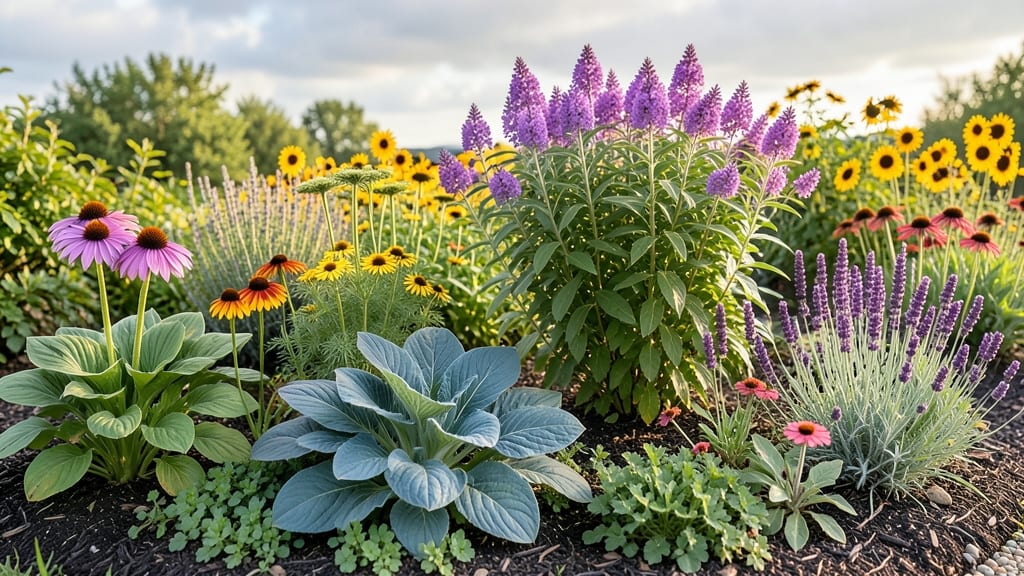
A perennial garden in Zone 5 thrives with cold-resistant plants like coneflowers, black-eyed Susans, and hostas, which return yearly despite winter temperatures dipping below zero. Focus on hardy perennials with deep root systems and frost tolerance for year-round beauty and minimal replanting.
Zone 5's frigid winters (average lows of -10°F to -20°F) demand perennials that can survive freezing ground and late spring frosts. 🌱 The key is selecting plants with deep root systems that insulate against cold, like peony roots or Russian sage, which can withstand 30°F temperature drops without damage.
Unlike annuals, these plants store energy underground, allowing them to rebound quickly in spring. I always prioritize native species—they've evolved alongside Zone 5's climate and require less fuss than tropical imports.
What sets Zone 5 apart is its variable frost dates: first frost can arrive as early as October, while last frost may linger until May. This means perennials must handle both early winter chilling and late-season freezes.
Mulching with 3-4 inches of shredded leaves in fall creates an insulating blanket that protects roots during temperature swings. For example, coral bells (Heuchera) thrive in Zone 5 because their rhizomes stay dormant yet viable through winter's harshest months.
💡 In This Article
- Understanding Zone 5’s Climate and Plant Hardiness
- Top 15 Cold-Hardy Perennials for Zone 5 Gardens
Understanding Zone 5’s climate and plant hardiness
Zone 5's climate is defined by its USDA hardiness zone classification, where average annual minimum temperatures range from -20°F to -10°F. This extreme cold forces perennials to develop specialized survival mechanisms.
Plants like Russian sage (Perovskia atriplicifolia) and catmint (Nepeta) thrive because their woody stems contain antifreeze proteins that prevent ice crystal formation in their cells during winter dormancy.
These proteins bind to water molecules, lowering their freezing point by up to 10°F—a biological adaptation that keeps their tissues alive even when air temperatures plummet.
The real challenge in Zone 5 isn't just surviving winter but enduring the temperature fluctuations that occur throughout the season.
For instance, a 20°F temperature swing in a single day isn't uncommon, and plants must handle both deep freezes and thaw cycles that can cause moisture stress. Deep-rooted perennials like peony (Paeonia) (with roots extending 2-3 feet deep) fare better because they access soil moisture from layers that remain unfrozen.
Shallow-rooted plants, however, risk desiccation when winter winds dry out the topsoil. Mulching with wood chips or straw helps by insulating roots and maintaining even soil temperatures.
Microclimates play a crucial role in plant survival. A south-facing slope, for example, can be 5-10°F warmer than a north-facing area, creating pockets where marginally hardy plants like lavender (Lavandula) can thrive.
Conversely, low-lying areas trap cold air, making them ideal for cold-loving plants like sedum (Sedum) or heuchera (Coral Bells), which prefer temperatures below 32°F. Even within a single garden, these microclimates can shift plant survival rates by 20-30%.
Understanding these variations lets you strategically place plants where they'll face the least stress during winter.
Soil composition is another critical factor. Zone 5's heavy clay soils often freeze solid, cutting off oxygen to roots.
Amending with compost or sand improves drainage and prevents waterlogging when spring thaws arrive. Organic matter also enhances soil structure, allowing roots to penetrate deeper and access nutrients stored in lower soil layers.
For example, black-eyed Susan (Rudbeckia) grows best in well-draining soil because its roots need to avoid waterlogged conditions that lead to rot during freeze-thaw cycles. Testing your soil's pH (ideal range: 6.0-7.0) ensures nutrients like nitrogen and phosphorus are available when plants resume growth in spring.
Timing is everything when it comes to frost dates. Zone 5 gardens typically experience their first frost in late October and last frost in mid-May, giving perennials a 180-day growing season.
This short window means plants must establish strong root systems early to store enough energy for winter. Early bloomers like bleeding heart (Dicentra) rely on quick root development to survive, while late-season performers like asters (Symphyotrichum) benefit from extended sunlight.
Planting in early spring (as soon as soil is workable) gives roots a head start before summer heat arrives.
One surprising adaptation is how some perennials use carbohydrate reserves to survive winter. Studies show that plants like daylilies (Hemerocallis) store up to 30% more starch in their roots by fall, which fuels regrowth when temperatures rise.
This is why dividing perennials in early spring (before they send up new shoots) minimizes stress—they're already stocked with energy. Conversely, dividing in fall can weaken plants, leaving them vulnerable to winter dieback. Understanding these biological rhythms helps you time garden tasks for maximum success.