
Flowers
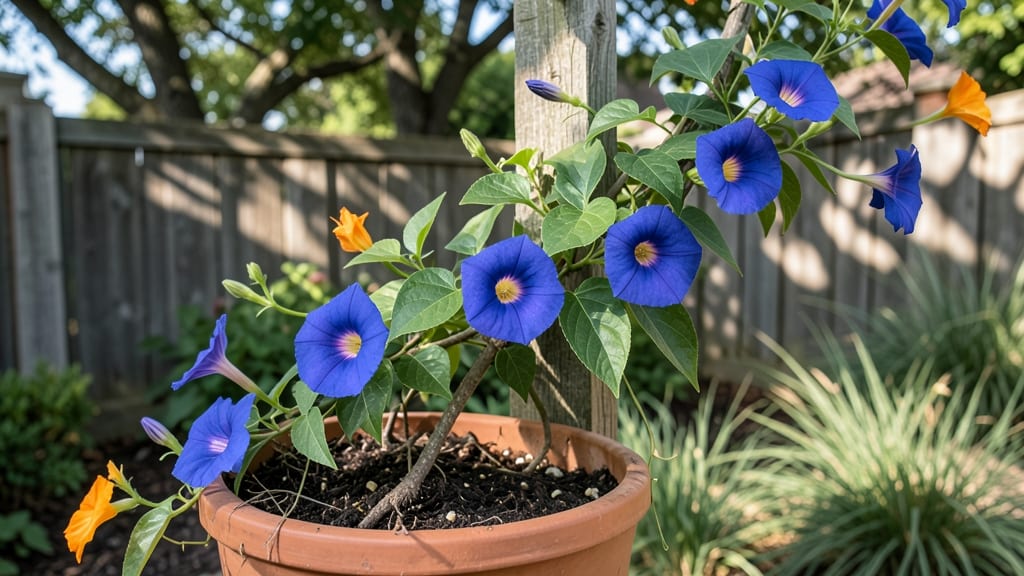
Thunbergia behaves as a perennial in frost-free zones like USDA Zones 10-11, where its tuberous roots remain dormant underground through winter and sprout fresh growth each spring. In colder regions, gardeners often assume it's an annual because it dies back completely above ground.
This tropical vine's true nature as a perennial comes down to its underground storage system. 🌱 Unlike true annuals that complete their lifecycle in one season, Thunbergia stores energy in thick, potato-like tubers that can survive frost-free winters.
Even if the vines blacken and fall away in colder climates, those tubers hold the key to next year's blooms—given the right conditions. The confusion stems from how dramatically it recedes in fall, making it look more like an annual that needs replanting each spring.
What sets Thunbergia apart is its adaptability. In ideal conditions—where winter temperatures rarely drop below 30°F—it will naturally return year after year without human intervention. This makes it a rewarding plant for patient gardeners willing to learn its seasonal rhythms.
The key to unlocking its perennial potential lies in understanding both its natural habitat preferences and how to protect its root system when frost becomes a factor.
💡 In This Article
- Thunbergia’s Perennial Growth Cycle Explained
- Overwintering Thunbergia in Cold Climates: A Gardener’s Guide
Thunbergia’s perennial growth cycle explained
Thunbergia’s perennial nature hinges on its specialized tuberous root system, which stores nutrients and energy like a natural battery. These thick, potato-like roots can swell to 2-3 inches in diameter during the growing season, packed with starches that sustain the plant through dormancy.
In frost-free zones (USDA 10-11), these tubers remain dormant underground through winter, protected by the soil’s insulation—similar to how dahlias or cannas survive.
The confusion arises because Thunbergia’s aboveground growth completely dies back in fall, leaving only the tubers. This dramatic transformation tricks gardeners into thinking it’s an annual, but the roots remain viable for 2-5 years if undisturbed. 🌱 The key difference?
True annuals produce seeds and die entirely, while Thunbergia’s tubers hold genetic instructions for regrowth—like a biological reset button. In mild winters, shoots may even emerge as early as late February in Zone 10.
This growth cycle mirrors that of sweet potatoes, another tuberous plant. Both store energy underground while the top growth withers. The main distinction is Thunbergia’s woody vines, which can climb 10-15 feet in a single season—demonstrating its perennial potential when conditions permit.
The plant’s native tropical origins explain why it thrives in warmth but struggles with frost, which is why gardeners in cooler zones must intervene.
Temperature thresholds reveal the science: Thunbergia tubers begin to degrade when exposed to consistent temperatures below 30°F for more than 24 hours. This is why mulching with 4-6 inches of straw or leaves can raise soil temps by 5-10°F, creating a microclimate that mimics its natural habitat.
The plant’s ability to regenerate from these tubers is what truly classifies it as a perennial—even if it looks dead above ground.
Consider this comparison: A true perennial like lavender survives winter with its foliage intact, while Thunbergia survives with only its roots. This dormant phase isn’t failure—it’s an energy-conservation strategy perfected over millennia.
The plant’s vibrant blue, purple, or orange trumpet-shaped flowers return each spring because those tubers remain alive, ready to burst forth when conditions warm again.
What most gardeners miss is how light exposure triggers regrowth. Thunbergia tubers need at least 6 hours of sunlight daily to break dormancy, which is why they often fail to resprout when buried too deeply.
This light requirement explains why overwintering tubers in containers (where they can be moved to sunny spots) works better than leaving them in dark soil.
The bottom line? Thunbergia’s perennial nature is latent—it’s always there, waiting for the right conditions to reveal itself. With proper care, those tubers can produce lush vines and blooms for decades, making it one of gardening’s best-kept secrets for long-term color and beauty. 💫