
Planting
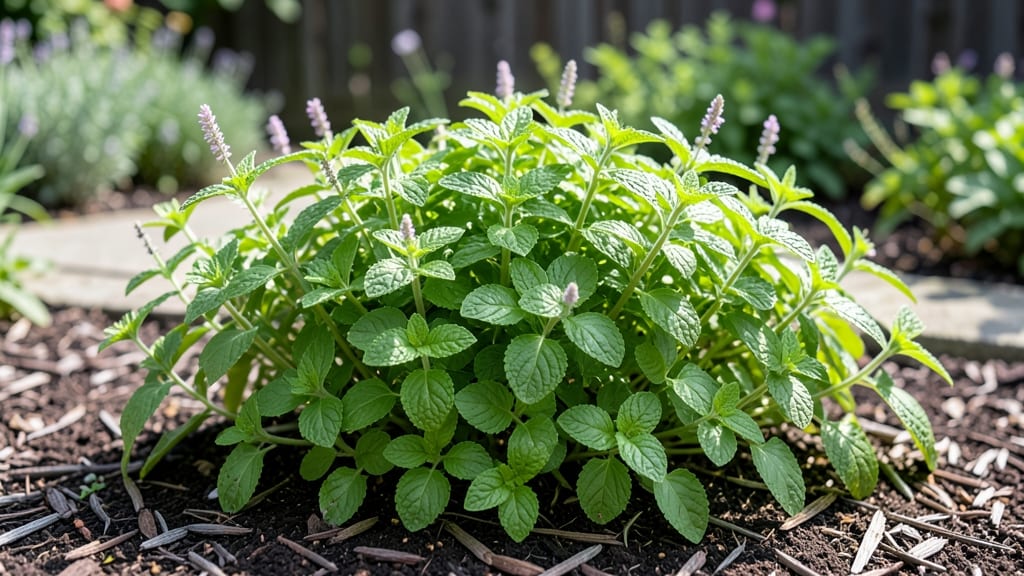
The mint plant is a perennial in USDA zones 5-9, surviving winters with proper mulching, though it may die back to the ground before regrowing in spring. In colder climates, it often behaves as an annual or requires indoor overwintering.
Mint's perennial status depends heavily on your growing zone.
In warmer regions like zones 5-9, mint's hardy root system lets it survive winter dormancy, often returning stronger in spring. 🌱 However, outside these zones, frost can kill the plant back to the ground, making it appear annual unless you take protective steps.
The key difference lies in how mint handles freezing temperatures—its roots can endure brief cold snaps, but prolonged frost without protection will damage or kill the plant entirely.
This resilience explains why gardeners in colder areas often treat mint as a seasonal plant or move it indoors during winter.
The plant's ability to regrow from roots after dieback is what classifies it as a perennial in suitable climates, but this trait becomes less reliable when temperatures drop below 20°F.
Understanding your local frost dates helps determine whether to mulch heavily, grow mint in containers, or bring it inside before the first freeze.
💡 In This Article
- How Mint Plant Perennial Traits Vary by Climate Zone
- Extending Mint’s Lifespan in Cold Climates: Growing Tips
How mint plant perennial traits vary by climate zone
Mint's perennial classification stems from its deep, fibrous root system that stores energy and nutrients underground. In USDA zones 5-9, where winter temperatures rarely drop below -15°F, these roots can survive dormancy by slowing metabolic processes and conserving moisture.
The plant's ability to regenerate from just a few inches of root explains why it often returns each spring in these zones, even after complete above-ground dieback.
Botanically, mint's cold hardiness hinges on its crown (the base where stems meet roots) which can tolerate brief exposures to 15-20°F without permanent damage.
However, prolonged temperatures below 10°F begin causing cellular damage through ice crystal formation in plant tissues. 🌡️ This explains why mint in zone 4 or colder often dies back completely—its roots simply can't endure the extended freeze without protection.
The key difference between zones 5-9 and colder areas lies in this temperature threshold: a few weeks below 20°F might be survivable with proper mulching, while months of sub-zero temperatures will kill even the hardiest mint varieties.
The plant's growth habit also plays a role in its perennial behavior. Mint spreads aggressively through stolons (horizontal stems), creating dense mats that insulate the crown during winter.
This natural mulching effect helps maintain soil temperatures just above freezing, which is why established mint patches often survive better than newly planted ones. In contrast, young plants with shallow root systems lack this protective layer and are more vulnerable to cold damage.
What most gardeners don't realize is that mint's dormancy period isn't true hibernation like bulbs experience. Instead, it enters a state of cold acclimation, where growth stops but roots remain metabolically active at reduced levels.
This explains why mint can regrow so quickly in spring—it's not starting from scratch but rather resuming growth from stored energy reserves. The tradeoff is that this system requires consistent moisture during dormancy, which is why heavy mulching becomes critical in zones 5-9 during winter.
Comparing mint to other perennial herbs reveals its unique resilience. While rosemary (zone 7+) and thyme (zone 4) have more cold tolerance, mint's ability to regenerate from minimal root tissue makes it more adaptable in marginal zones.
For example, spearmint can survive down to 10°F with protection, while peppermint's slightly less hardy at 15°F. This variation explains why some gardeners successfully grow mint in zone 4 with careful winter care, while others in similar climates treat it as an annual.
Understanding these botanical mechanisms helps explain why mint behaves differently across zones. In warmer areas, its perennial nature is straightforward—roots survive winter and regrowth begins naturally. In colder climates, the same plant becomes annual unless you intervene with protection, demonstrating how environmental factors can override a plant's inherent classification. 🌿