
Planting
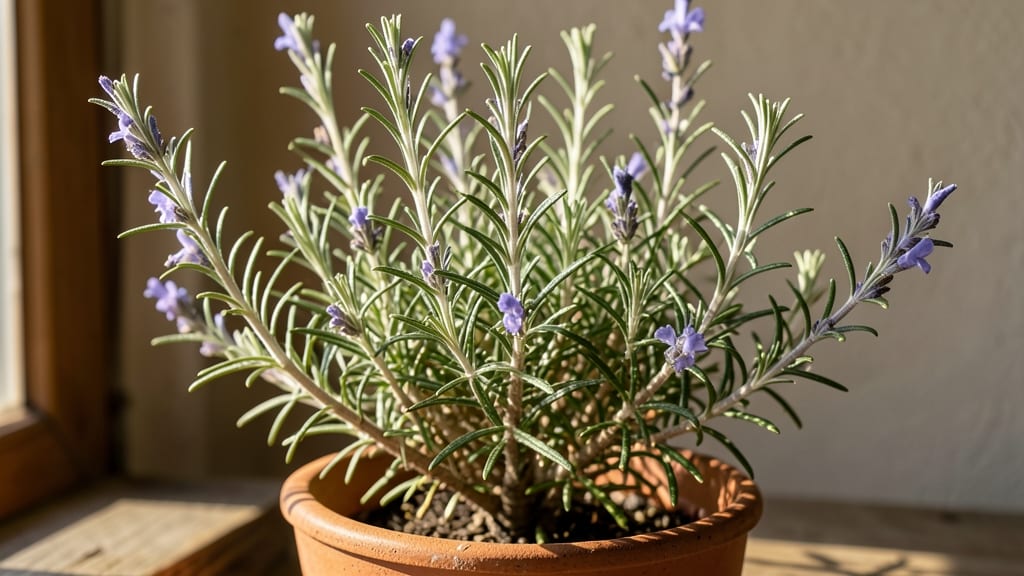
A rosemary plant acts as a perennial in USDA zones 8 through 11, where it grows continuously with minimal care, but in colder regions it must be treated as an annual or brought indoors during winter to survive. With proper protection, it can even endure zone 7 winters while maintaining its semi-evergreen nature.
A rosemary plant's perennial status depends entirely on climate.
In warmer zones (8-11), it thrives outdoors year-round, developing woody stems that regrow each spring. 🌿 However, when temperatures drop below 20°F, even hardy varieties struggle—this is why gardeners in zones 6 and below often overwinter rosemary in containers or protected spaces.
The key difference lies in its cold tolerance: while it may survive brief freezes, prolonged frost will kill back the foliage, though the roots often persist if properly insulated.
What's fascinating is how rosemary adapts: in mild winters, it remains semi-evergreen, while in harsher climates, it enters dormancy. This explains why some gardeners report their rosemary "coming back" after winter—it's not dead, just waiting for warmer temperatures.
For those in colder zones, the solution is simple: treat it like a houseplant during winter months while keeping it in bright light.
💡 In This Article
- Rosemary’s Perennial Lifespan by USDA Hardiness Zones
- Overwintering Rosemary in Cold Climates: Step-by-Step Guide
Rosemary’s perennial lifespan by USDA hardiness zones
Rosemary's perennial nature hinges on its native Mediterranean origins, where it thrives in USDA zones 8-11 with consistent warmth. In these zones, rosemary develops woody stems that can live for decades, with new growth emerging each spring from the same root system.
The plant's evergreen foliage remains vibrant year-round because temperatures rarely drop below 20°F, preserving its cellular structure and oil glands that give it that signature piney aroma.
The magic happens in zones 7 and below, where frost becomes the deciding factor. Rosemary's survival threshold sits at around 15°F—below this, its tender new growth and leaves freeze and turn brown.
However, the woody stems often survive, which is why many gardeners see their rosemary "come back" after winter. In zone 7, with proper protection like thick mulch or windbreaks, rosemary can maintain its semi-evergreen nature, though it may lose some foliage during harsh winters. 🌿
Here's what's actually happening at the cellular level: rosemary's leaves contain high concentrations of volatile oils that act like antifreeze, protecting cell membranes from freezing. But when temperatures plummet, these oils can't compensate for prolonged frost exposure, causing the leaves to desiccate.
The roots, however, remain dormant but alive, ready to regenerate when temperatures rise above 50°F in spring.
In colder zones (6 and below), rosemary's perennial status becomes more of a challenge. Without protection, the entire plant will die back to the ground, though the roots may survive in well-drained soil.
This is why many gardeners in these areas treat rosemary as an annual or take special overwintering measures. The key difference between zones lies in how quickly the plant can recover: in zone 7, regrowth may begin within weeks of frost ending, while in zone 6, it might take months.
Consider these survival thresholds for rosemary by zone:
- Zones 8-11: Fully perennial with no protection needed; grows continuously
- Zone 7: Semi-perennial with protection; may lose foliage but survives winters
- Zone 6: Perennial with special care; requires overwintering indoors or in greenhouses
- Zone 5 and below: Treated as annual unless overwintered indoors
The woody stems play a crucial role in rosemary's perennial nature. In warmer zones, these stems thicken over time, creating a more robust plant that can withstand minor temperature fluctuations.
In colder areas, these same stems become your best friend for propagation—simply cut a stem, let it dry, and plant it to grow a new rosemary plant, ensuring you always have a backup! 🌱