
Planting
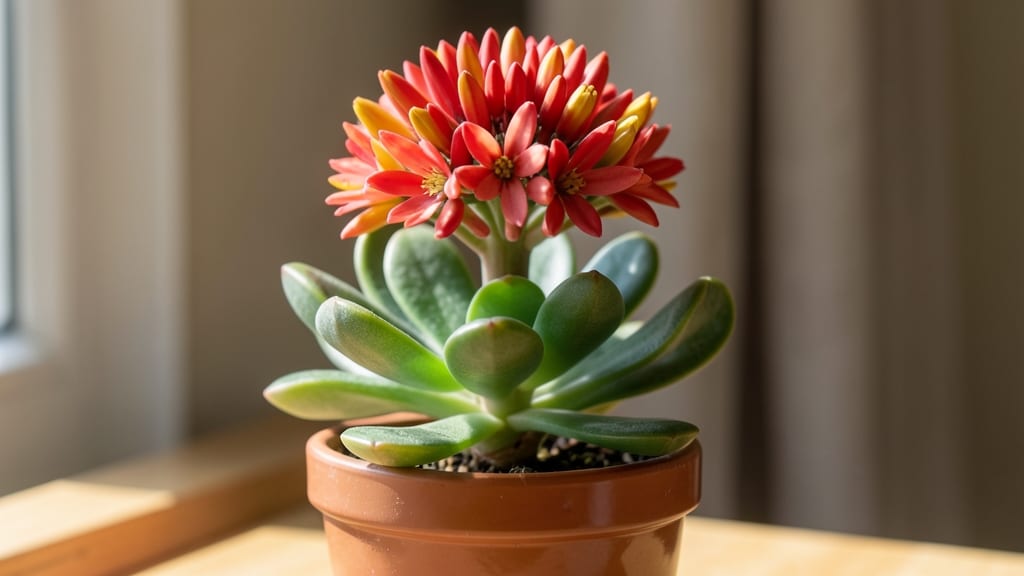
The kalanchoe plant acts as a perennial in warmer climates but experiences seasonal dieback in cooler areas, regrowing from its base each spring when temperatures rise.
The kalanchoe's resilience comes from its succulent nature, which allows it to store water and survive dry spells. 🌱 In colder regions, it sheds leaves to conserve energy, then bursts back to life with new growth when warmth returns.
This cycle makes it a long-lived plant—with proper care, some varieties can thrive for years, even through winter dormancy. The key is understanding its natural rhythm: while it may look dormant, the roots remain alive beneath the soil, ready to rebound.
For gardeners in cooler climates, this means treating kalanchoe more like a seasonal plant than a traditional perennial. Moving potted plants indoors during winter or providing frost protection can help maintain their health.
The plant's ability to regenerate from its base also makes propagation simple—just snip a stem and replant it in fresh soil when spring arrives.
💡 In This Article
- How Kalanchoe Plants Adapt to Seasonal Dieback
- Growing Kalanchoe Perennially in Different Climates
How kalanchoe plants adapt to seasonal dieback
Kalanchoe plants employ a clever survival strategy called seasonal dormancy, where they shed leaves and appear dormant during cold months. This isn't true death—it's a metabolic slowdown triggered by temperatures below 50°F (10°C).
The plant redirects energy from leaf production to preserving its root system, which remains alive underground, storing nutrients and water in specialized cells called parenchyma. Think of it like a bear hibernating: the roots stay active while the above-ground parts rest.
The leaf drop is a protective mechanism. Each leaf contains valuable water and sugars, so shedding them conserves resources when photosynthesis becomes inefficient in cooler light. Studies show kalanchoe leaves can contain up to 90% water content when fully hydrated, making them prime targets for freezing damage.
By dropping leaves, the plant prevents irreversible cell rupture. The remaining stems and roots maintain just enough metabolic activity to survive, with growth resuming when daytime temperatures consistently exceed 60°F (15°C).
What triggers regrowth is a fascinating interplay of photoperiodism (light exposure) and temperature. As daylight hours lengthen in spring, the plant detects increased sunlight through its phytochrome pigments, while warmer soil temperatures stimulate root activity.
Within 2-4 weeks of consistent warmth, new shoots emerge from the base, often from dormant buds called axillary meristems. This process is why kalanchoe can bounce back so vigorously—it's not starting from scratch but continuing growth from a preserved foundation.
Interestingly, different kalanchoe species exhibit varying degrees of dormancy. For example, Kalanchoe blossfeldiana (common flowering kalanchoe) may lose all leaves in winter, while Kalanchoe daigremontiana (mother of thousands) retains some foliage. The variation depends on their native habitats—species from drier climates tend to be more extreme in their dormancy cycles.
This adaptability is why kalanchoe thrives across such diverse growing conditions, from desert gardens to indoor windowsills.
One often overlooked detail is how the plant's water storage leaves (called succulent leaves) play a dual role. During active growth, they store moisture; during dormancy, they release stored sugars into the roots to fuel survival.
This two-way system explains why kalanchoe can remain viable for months without visible growth—it's essentially living off its own reserves. The same mechanism allows some varieties to survive brief frost exposures, though prolonged freezing will still kill the plant.
For gardeners, understanding this cycle means you don't need to panic if your kalanchoe looks dead in winter. The roots are often still alive, waiting for spring's signal. A simple test: gently tug on the stem—if it resists, the roots are active.
Place the pot in bright indirect light and maintain soil moisture (but not soggy) to encourage regrowth. With this knowledge, you can treat your kalanchoe like the resilient perennial it is, even in cooler climates. 🌿