
Flowers
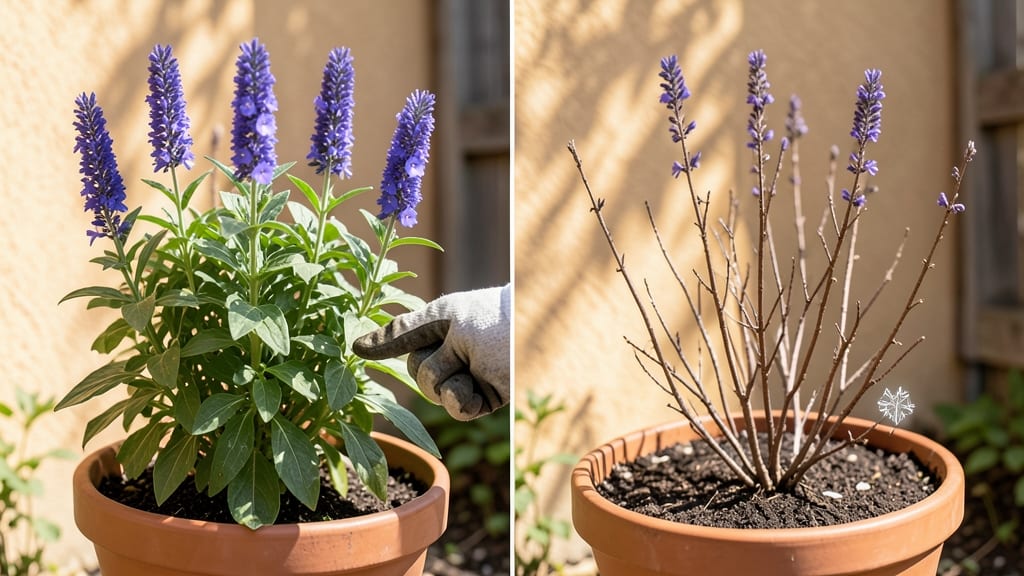
Angelonia behaves like a perennial only in frost-free zones, since it dies back completely when temperatures fall below 30°F (-1°C). While it may regrow from roots in milder winters, true cold-hardy perennials survive intact through freeze-thaw cycles.
This classification as a tender perennial means Angelonia thrives as an annual in colder regions but can persist year-round in USDA zones 8-11 with minimal care. 🌱 The key difference from true perennials lies in its root system—while Angelonia's roots often survive light freezes, the above-ground growth always succumbs to frost, requiring replanting each spring in northern climates.
The plant's resilience comes from its deep taproots, which store energy for regrowth when conditions warm. In my experience, gardeners in marginal zones (like zone 7b) sometimes get lucky with regrowth, but it's not reliable enough to count on—hence the "tender" label.
For colder areas, treating it as an annual simplifies planning while still delivering those signature angelonia blooms from late spring through fall.
💡 In This Article
- Angelonia’s Perennial Behavior in Different Climates
- Extending Angelonia’s Lifespan: Overwintering Tips
Angelonia’s perennial behavior in different climates
The classification of angelonia as a tender perennial comes down to its biological response to temperature fluctuations. Unlike true perennials such as salvia or verbena, which maintain above-ground growth through winter, angelonia's stems and foliage die back completely when exposed to sustained temperatures below 30°F (-1°C).
However, its deep root system—typically extending 12-18 inches below the soil—contains stored carbohydrates that allow for regrowth once temperatures rise again in spring. This root hardiness explains why angelonia often reappears in milder winters, even when the plant appears dead at the surface.
The plant's survival mechanism relies on its woody root crown, which acts as an energy reserve. In USDA zones 8-11, where winters rarely drop below 30°F (-1°C) for extended periods, angelonia can maintain continuous growth throughout the year.
In these frost-free regions, it behaves like a true perennial, producing continuous blooms from late spring to frost—a trait that sets it apart from annual varieties.
The key difference lies in the plant's ability to regenerate from its root system rather than relying on seed propagation, which is why it's classified as a "tender" rather than a "hardy" perennial.
For gardeners in colder zones (7 and below), the lack of reliable winter survival means angelonia must be treated as an annual.
The plant's dieback cycle follows a predictable pattern: as temperatures drop below 40°F (4°C), growth slows dramatically, and by 30°F (-1°C), the above-ground portions blacken and collapse.
However, the roots often remain viable in well-drained soil, which is why some gardeners report regrowth in zone 7b during mild winters. This inconsistency is why botanists classify it as a tender perennial—it's not reliably cold-hardy like salvia or lavender, but it's not a true annual either.
What makes angelonia unique is its ability to produce multiple flushes of blooms throughout the growing season, a trait more common in perennials than annuals. Each flowering cycle draws on the root reserves, which is why well-established plants in frost-free zones can continue blooming for 4-6 months without interruption.
In contrast, annual varieties typically produce a single burst of flowers before setting seed. This extended bloom period is one reason why angelonia is so popular in perennial gardens, despite its cold sensitivity.
Comparing angelonia to other tender perennials like coleus or tender salvias reveals similar survival strategies. All three rely on root systems to persist through cold snaps, but angelonia's roots are particularly resilient to brief freezes.
The difference is that angelonia's roots can tolerate 2-3 weeks of temperatures around 25°F (-4°C) before suffering permanent damage, whereas coleus roots typically die back at 28°F (-2°C). This slight edge in cold tolerance is why angelonia sometimes surprises gardeners in marginal zones.
For those in USDA zones 8-11, angelonia's perennial behavior becomes apparent in its ability to self-seed and spread over time. The plant's deep roots allow it to access moisture in dry conditions, while its woody stems provide structural support for the 2-3 foot tall plants.
In these warmer climates, angelonia doesn't just survive winter—it thrives, often becoming a dominant feature in perennial borders due to its prolonged bloom time and drought tolerance once established.