
Flowers
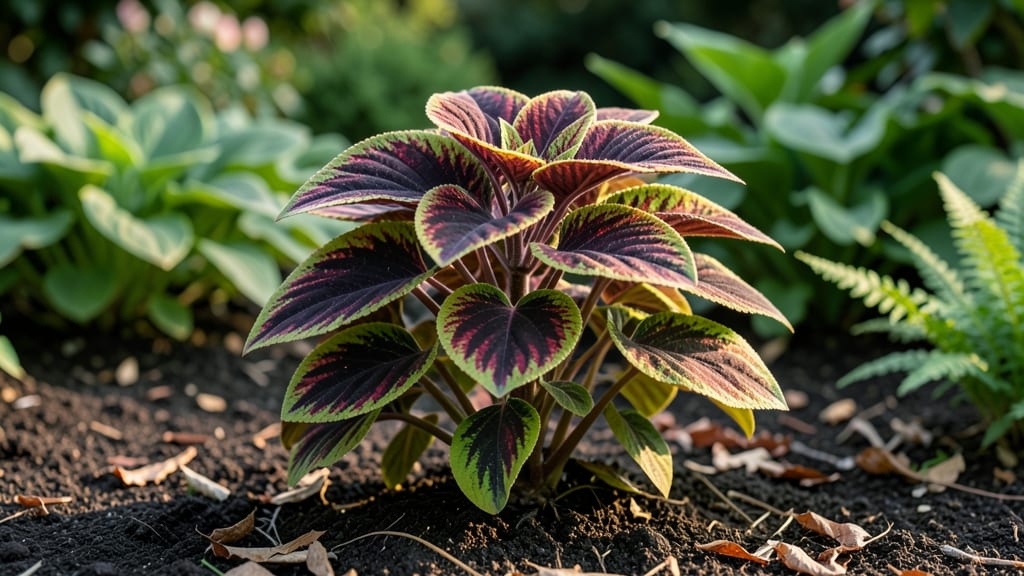
Deciding whether kong coleus is annual or perennial depends on your climate: it acts as an annual in frost-prone zones but can become a perennial with proper winter protection like mulching or indoor overwintering. The plant's dieback in cold weather is normal dormancy, not death.
Kong coleus thrives as a tropical perennial in USDA zones 10-12, where freezing never occurs. 🌱 In colder regions (zones 5-9), its thick roots can survive winter if protected by 4-6 inches of mulch or dug up and potted indoors.
The key difference between annual and perennial behavior lies in how well you shield the roots from freezing—the plant will regrow from the same rootstock if protected properly, even after winter dieback.
What sets kong coleus apart is its tuberous root system, which stores energy for regrowth. When temperatures drop below 30°F, the foliage dies back to protect these roots, but they remain alive underground—ready to sprout new growth when warmth returns.
This makes it a semi-perennial in marginal climates with proper care.
💡 In This Article
- Why Kong Coleus Dies Back in Cold Weather
- Proven Methods to Overwinter Kong Coleus
Why kong coleus dies back in cold weather
The dramatic dieback of kong coleus in cold weather isn't a sign of death—it's a survival strategy. When temperatures drop below 32°F, the plant's cells begin to freeze, causing ice crystals to form within them.
These crystals rupture delicate leaf and stem tissues, triggering the plant to shed foliage as a protective measure. This process conserves energy in the root system, which can withstand colder temperatures than the above-ground growth.
Kong coleus stores energy in its tuberous roots, which can survive down to 20°F when properly insulated. These roots contain starch reserves that fuel regrowth when spring arrives.
The plant's ability to regenerate from these roots is why it behaves as a perennial in warmer climates (zones 10-12) but as an annual in colder regions without protection. In zone 9, for example, roots may survive winter but only if protected by 4-6 inches of mulch.
The key difference between annual and perennial behavior lies in the plant's ability to regrow from the same rootstock. When kong coleus dies back completely in winter, it's entering a state of dormancy similar to how peonies or daylilies behave.
The critical temperature threshold for root survival is 25°F—below this, even protected roots may suffer damage. This is why gardeners in colder zones must take extra steps to maintain soil temperatures above this threshold.
What makes kong coleus unique is its variable hardiness based on root protection. Unlike true annuals that die completely, kong coleus roots can remain viable for years if kept cool and moist.
The plant's foliage will regrow from these roots as soon as soil temperatures reach 55°F in spring. This makes it a semi-perennial in marginal climates where winter conditions are borderline for survival.
Visual clues can help distinguish between dormancy and true death. Healthy roots will appear firm and white when cut open, while dead roots will be mushy and dark. The presence of buds at the base of stems is another good sign that the plant is still alive underground.
These buds contain meristematic cells that will develop into new shoots when conditions improve.
Understanding this biological process helps gardeners make informed decisions about winter care. The plant's ability to regenerate from roots means that even after complete winter dieback, it can return stronger than before—if given the right conditions to survive the cold period.
This makes proper winter protection the key factor in determining whether kong coleus will behave as an annual or perennial in your specific climate zone. 🌱