
Plants
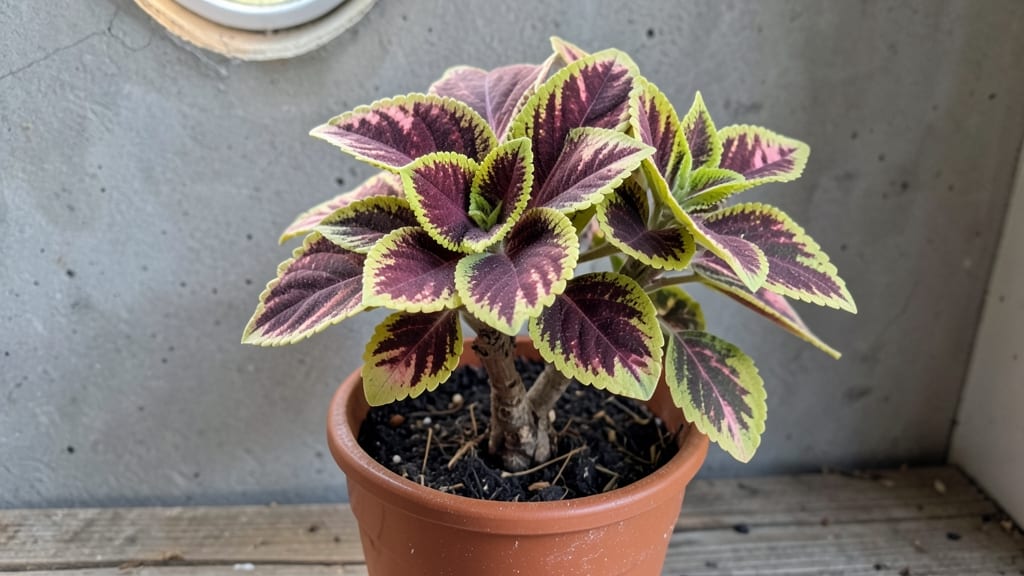
Deciding whether a coleus plant is annual or perennial depends on your climate: it thrives as a perennial in warm, tropical regions but behaves like an annual in colder areas where frost kills its foliage. The plant's woody stems survive winter dormancy, ready to sprout fresh leaves when temperatures rise.
This dual nature comes from coleus's tropical origins—it evolved to handle seasonal changes by shedding leaves when temperatures drop below 40°F, but its roots and stems remain alive underground. 🌱 The key difference from true annuals (like marigolds) is that coleus doesn't die completely; it simply enters dormancy, waiting for spring's warmth to trigger new growth.
In my experience, even a single surviving stem can regenerate into a full plant within weeks, proving its resilience.
For gardeners in colder zones, this means you can technically overwinter coleus indoors by pruning back the stems and providing bright light, though it may not flower as vigorously.
The plant's ability to regrow from old stems is what makes it so rewarding—it's not just a pretty annual, but a hardy perennial waiting for the right conditions.
💡 In This Article
- Why Coleus Stems Survive Winter Freeze
- How to Overwinter Coleus Indoors
Why coleus stems survive winter freeze
Coleus plants employ a clever survival strategy called basal dormancy, where their woody stems and root crowns remain alive even when exposed to temperatures as low as 28°F for short periods.
Unlike true annuals like marigolds—which die completely when frost hits—the coleus's underground stems contain meristematic tissue, specialized cells that can regenerate new growth when conditions improve. This tissue stays protected within the stem's thickened bark, insulated by the soil's natural warmth.
The temperature threshold that triggers leaf dieback is around 40°F, where coleus begins producing abscisic acid, a hormone that signals leaves to drop. This isn't death—it's a calculated energy conservation. The plant redirects resources to its roots and stems, which can remain viable for months.
In tropical climates where temperatures never dip below 50°F, coleus maintains its lush foliage year-round, proving its true perennial nature. 🌿 The contrast with marigolds is stark: those plants lack this dormant stem structure and must regrow entirely from seed each spring.
What's fascinating is how coleus stems store nutrients. Their thickened bases contain starch reserves that fuel regrowth, similar to how potatoes store energy in their tubers. When spring arrives and soil temperatures reach 60°F, these stems burst into new shoots within 2-3 weeks.
This rapid recovery explains why gardeners in mild-winter zones often find coleus popping up year after year without any intervention.
One misconception is that all coleus stems survive equally. In reality, younger stems (less than 1 year old) are more vulnerable to cold damage than mature, woody stems with thicker bark. This is why established plants often outlast younger ones in borderline climates.
The plant's ability to regenerate from even small stem fragments—sometimes just 1 inch long—makes it uniquely resilient compared to other ornamental foliage plants.
Consider this comparison: While a frost-killed impatiens plant would require complete replanting, a coleus with blackened leaves can often be pruned back to its woody base and will regrow. This stem survival mechanism is what separates coleus from true annuals, making it a semi-perennial in transitional climates.
The key is understanding that the plant's "death" in winter is merely a strategic retreat until conditions become favorable again. 💫
This biological adaptation explains why coleus thrives in its native tropical regions but can be coaxed into multi-year performance in cooler zones with proper care.
The plant's ability to "wait out" cold periods by focusing on stem preservation rather than leaf maintenance is what gives it that perennial edge in ideal conditions.