
Aphids
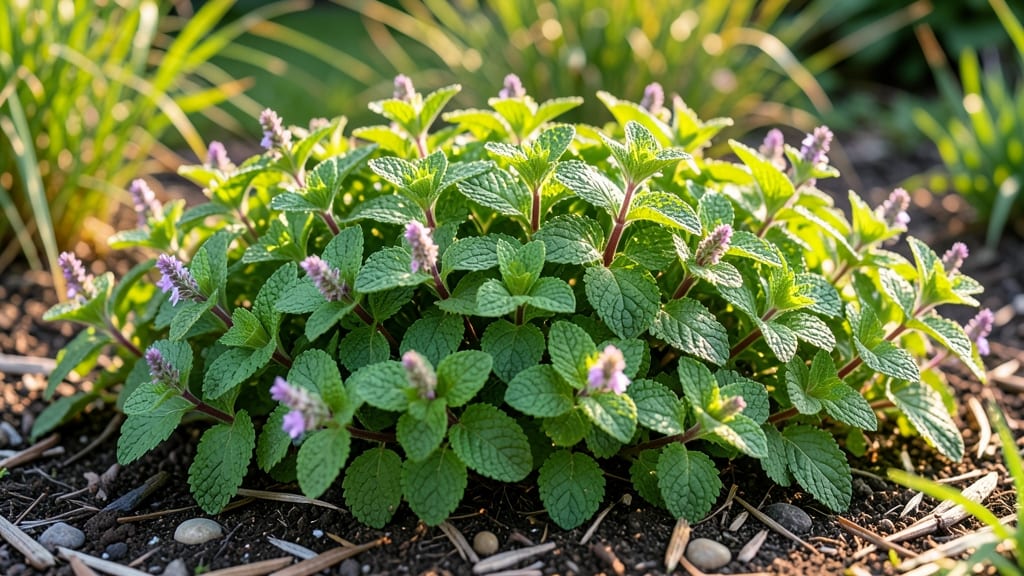
Mojito mint behaves as a perennial in warm USDA zones 9-11 but dies back annually in colder climates, often returning from its roots when given winter protection or replanting. Its survival hinges on soil insulation and frost-free conditions.
Mojito mint's perennial status depends entirely on where you live. In warmer climates like Florida or Southern California, it thrives year-round, sending up fresh growth each spring from the same root system. 🌱 However, in frost-prone areas like the Midwest or Northeast, it typically acts as a tender perennial—meaning it survives winter only if you protect the roots with thick mulch or move pots indoors.
Many gardeners in zones 8 and below treat it as an annual, replanting fresh starts each spring since the roots often don't survive harsh freezes without intervention.
What's fascinating is how mojito mint adapts: even when the tops die back, the roots can remain dormant for months, ready to burst back to life when temperatures rise.
This makes it more resilient than many people realize—with the right care, you can coax it through multiple growing seasons even in marginal climates.
💡 In This Article
- Mojito Mint’s Perennial Nature in Different Climates
- Winter Care Tips to Extend Mojito Mint’s Lifespan
Mojito mint’s perennial nature in different climates
Mojito mint, scientifically known as Mentha × piperita 'Mojito', exhibits true perennial behavior only in USDA hardiness zones 9-11 where winter temperatures rarely drop below 20°F.
In these frost-free regions, the plant establishes a robust root system that remains active year-round, producing fresh growth from the same underground network each spring. The roots can extend 12-18 inches deep, storing carbohydrates that fuel regrowth after winter dormancy—similar to how spearmint behaves in ideal conditions.
The key difference emerges when temperatures fall below 28°F for prolonged periods. While the above-ground stems may blacken and collapse, the root crown often survives if protected by at least 3-4 inches of organic mulch (like straw or shredded leaves).
This root survival mechanism explains why many gardeners in zones 8 and below can successfully regrow mojito mint from cuttings or divisions each spring, even when the previous year's plants died back completely. 🌱 The plant's ability to regenerate from roots makes it more resilient than many annual herbs.
What's particularly interesting is the plant's dormancy cycle. During cold snaps, mojito mint enters a state of physiological dormancy where metabolic processes slow dramatically, conserving energy.
Studies show that mint varieties can tolerate soil temperatures down to 15°F as long as the roots remain unfrozen—a threshold that explains why mulching becomes critical in marginal zones.
The plant's natural cold-hardiness is comparable to lemon balm (Melissa officinalis), which also thrives in zones 4-9 with proper winter care.
In colder climates, the distinction between perennial and annual behavior becomes blurred.
While mojito mint technically has perennial genetics, its practical cultivation often mirrors annual herbs because:
- The roots may not survive multiple freeze-thaw cycles without protection, and
- The regrowth from old roots is often less vigorous than fresh spring plantings.
This is why many commercial growers in zones 7 and below treat it as an annual, starting new plants each season rather than attempting overwintering.
Consider this comparison: In Florida (zone 10), mojito mint grows continuously with minimal care, while in Chicago (zone 5), it requires either winter mulching or container cultivation to survive.
The plant's adaptability makes it unique among mints—where spearmint might die back completely in zone 5, mojito mint's roots often persist if given proper insulation. This resilience explains why it's so popular in container gardening for colder climates.
The science behind this involves the plant's ability to produce secondary growth from lateral buds at the base of stems. Even when the main stems die, these basal buds can remain viable for months, ready to sprout when conditions improve.
This regenerative capacity is what allows mojito mint to "cheat" its perennial classification in marginal zones—behaving more like a hardy annual than a true tender perennial.