
Companion Plants
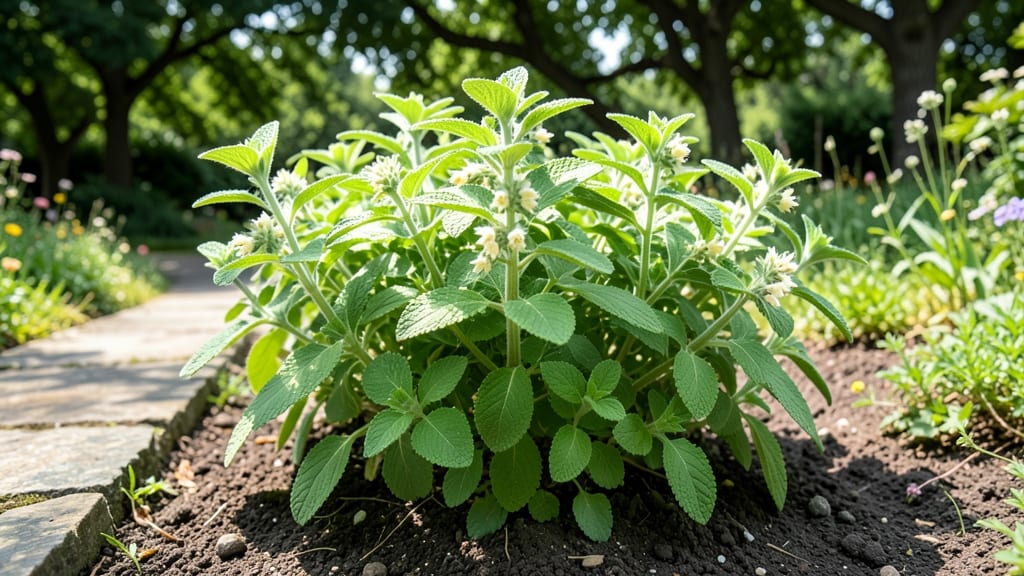
Yes, lemon balm is a perennial herb that thrives in USDA hardiness zones 4 through 9, returning year after year with proper care, though it may die back in winter only to regrow in spring. Cold-hardy varieties can survive frost with mulch protection.
Lemon balm's perennial nature means it establishes a robust root system that lets it bounce back each spring, often even after winter dormancy.
Unlike annual herbs like basil, which must be replanted yearly, lemon balm's deep roots store energy underground, fueling regrowth when conditions warm up. 🌱 In colder zones, its foliage may brown and collapse under frost, but the roots remain alive and ready to push new growth once temperatures rise above 40°F.
This hardiness makes it a low-maintenance choice for gardeners seeking long-term flavor and fragrance.
What sets lemon balm apart is its adaptability—it can handle partial shade and even light freezes, though extreme cold (-20°F) may require extra protection like thick mulch or row covers.
Many gardeners swear by harvesting leaves in fall to encourage bushier regrowth, while others let it go dormant naturally. The key is avoiding heavy pruning in late summer, which can stimulate tender new growth vulnerable to frost.
💡 In This Article
- Lemon Balm’s Perennial Growth Cycle Explained
- Overwintering Lemon Balm: Zone-Specific Tips
Lemon balm’s perennial growth cycle explained
Lemon balm (Melissa officinalis) earns its perennial status thanks to its fibrous, shallow root system that spreads horizontally just below the soil surface. These roots store carbohydrates during the growing season, fueling regrowth when temperatures rise in spring.
Unlike annual herbs like basil, which rely on seed germination each year, lemon balm’s roots survive winter dormancy, often pushing new shoots within 2-4 weeks of last frost when soil reaches 50°F.
This hardiness explains why it thrives in zones 4-9—its roots can endure temperatures down to -15°F with proper protection.
The plant’s growth cycle follows a clear pattern: vigorous spring growth (March-May), flowering in summer (June-August), and gradual dormancy as days shorten.
What’s fascinating is how lemon balm’s leaves actually become more potent in flavor as they mature—this is due to increased essential oil production (like citral and citronellal) as the plant prepares for dormancy. 🌿 The trade-off?
Over-mature leaves can become slightly bitter, which is why many gardeners prefer harvesting before flowering begins. This perennial behavior contrasts sharply with annual herbs that complete their entire life cycle in one season.
What makes lemon balm uniquely resilient is its ability to regenerate from both roots and stem cuttings. Even if winter kills the foliage, the roots remain viable for years, producing new shoots from lateral buds.
This is why you’ll often see lemon balm spreading aggressively—it’s not invasive in the traditional sense, but rather opportunistic in its regrowth. The plant’s natural dormancy period is triggered by shorter daylight hours and cooler temperatures, which signal the roots to conserve energy until spring.
One common misconception is that lemon balm’s winter dieback means it’s not truly perennial. In reality, the above-ground growth simply enters a state of senescence (programmed cell death) to conserve resources, while the roots remain metabolically active.
This is similar to how peonies or hostas behave—they may look dead in winter but are actually storing energy underground. The key difference is that lemon balm’s roots are more shallow, making them slightly more vulnerable to temperature fluctuations than deeper-rooted perennials.
Gardeners in colder zones (4-6) often report that lemon balm’s winter survival improves with age—older plants develop more robust root systems that can better withstand frost. Young plants, however, may need extra protection during their first winter.
The plant’s natural hardiness is also why it’s often recommended for pollinator gardens—its flowers attract bees even in early spring when few other plants are blooming. This dual benefit of hardiness and pollinator support makes lemon balm a standout perennial for both culinary and ecological gardens.
For those comparing lemon balm to other mint family members, its perennial nature is more reliable than spearmint (which can be biennial) but less aggressive than mint itself. The key to managing its spread is regular harvesting—pinching back stems encourages bushier growth rather than long, trailing runners.
This balance between hardiness and manageability is what makes lemon balm such a practical choice for gardeners seeking a low-maintenance, long-lived herb.