
Flowers
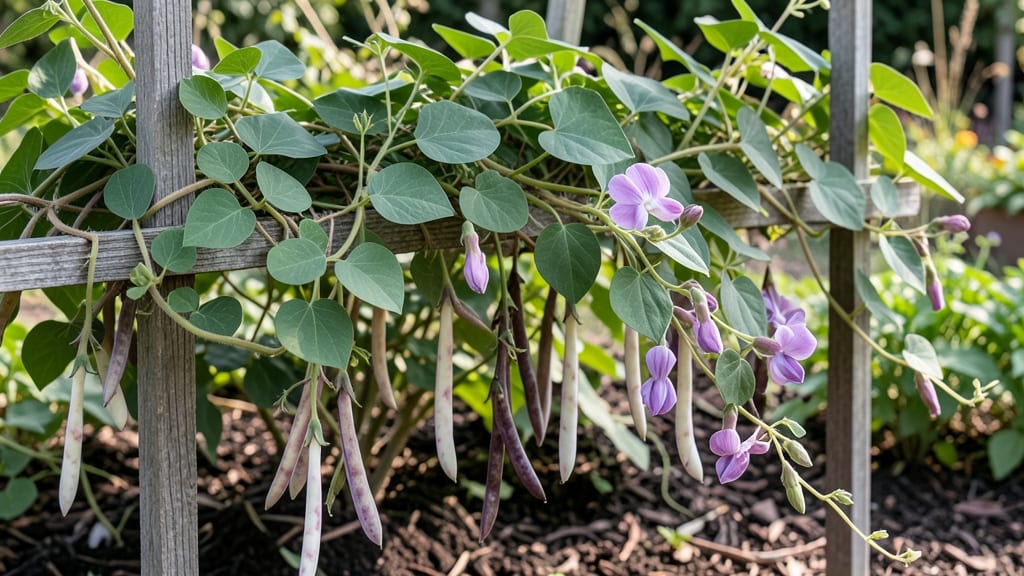
Deciding whether to treat your hyacinth bean vine as an annual or perennial depends on your climate: in frost-free zones, it thrives as a perennial, while colder regions require annual replanting. Its roots can survive winter dieback, but cold snaps will kill the foliage unless you take protective measures.
This vine's growth habit is all about temperature sensitivity. 🌱 In warmer climates where winter temps stay above 30°F, the plant naturally persists year-round, producing stunning purple flowers season after season. However, in colder zones, the above-ground parts freeze back completely, but the roots often remain dormant until spring.
I've seen gardeners successfully overwinter these vines by mulching heavily or even digging up containers and storing them indoors during harsh winters.
The key difference between treating it as an annual versus a perennial lies in your local frost patterns. True perennials like wisteria or clematis handle freeze-thaw cycles better, but hyacinth beans need consistent warmth.
If you're in Zone 9 or higher, you can count on it returning reliably each year with minimal care. For cooler climates, replanting annually becomes the practical choice—though many gardeners still try overwintering with mixed success.
💡 In This Article
- Why Hyacinth Bean Vines Die Back in Winter
- How to Extend Hyacinth Bean Vine Growth Beyond One Season
Why hyacinth bean vines die back in winter
The hyacinth bean vine's winter dieback stems from its tropical origins—it evolved in warm climates where temperatures rarely drop below 40°F. When exposed to freezing conditions (28°F or lower), the plant's above-ground tissues experience cytoplasmic freezing, where ice crystals form inside cells, rupturing their membranes.
This is why you'll see the entire vine turn brown and crispy overnight during early frosts. 🌡️
What makes this vine unique is its root system: while the foliage dies back completely, the roots often remain viable if protected.
Studies show hyacinth bean roots can survive soil temperatures as low as 20°F for short periods, thanks to natural antifreeze proteins that prevent ice crystal formation in root cells.
This hardiness explains why gardeners in Zone 8 sometimes see regrowth in spring without intervention, while colder climates (Zone 5 or lower) require more aggressive protection.
Comparing it to true perennials like wisteria reveals key differences: wisteria's woody stems contain lignin, which provides structural support against freeze-thaw cycles, while hyacinth bean vines are herbaceous with minimal protective tissue.
The vine's growth strategy prioritizes rapid above-ground expansion during warm months over winter survival—similar to sweet potatoes, which sacrifice frost tolerance for summer vigor. 🌱
Temperature thresholds matter most: in Zone 9+, where winters rarely drop below 35°F, the vine behaves as a true perennial, producing flowers year after year. But in Zone 7, even a single 25°F night can kill the foliage, forcing gardeners to treat it as annual.
This explains why southern gardeners often see their vines return reliably while northern growers must replant annually.
The vine's leaves also contain chlorophyll breakdown compounds that accelerate during cold exposure, causing the distinctive yellowing before death. This physiological response conserves energy by recycling nutrients back into the roots—a survival mechanism that works until temperatures become lethal.
Understanding this process helps explain why some gardeners see partial regrowth after mild winters, while others get nothing without intervention. 🌿
What most people overlook is how soil moisture affects winter survival: dry soil accelerates root damage, while consistently moist conditions (from mulch or irrigation) can extend root viability by 2-4 weeks in marginal climates. This is why heavy mulching—especially with straw or leaves (6-8 inches deep)—becomes crucial in borderline zones.