
Watering
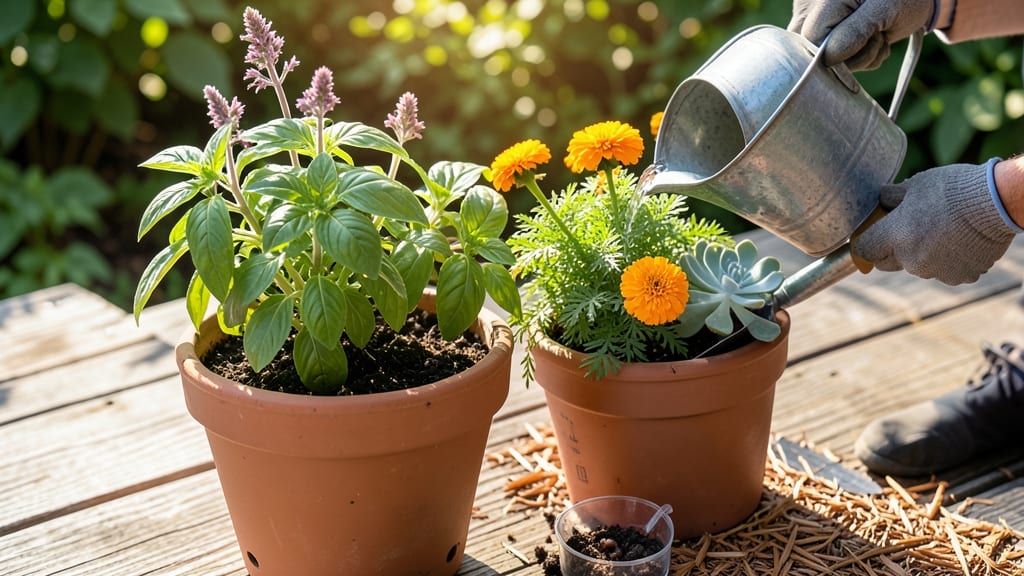
To determine how often you should water your plants, check soil moisture first: most need water when the top 1-2 inches feel dry, typically every 1-3 days for container plants and 1-2 weeks for established garden plants. Overwatering causes root rot, while underwatering stresses foliage.
Your watering schedule should adapt to your plants' specific needs rather than following a rigid timeline. 💧 For instance, succulents thrive with water every 2-3 weeks, while leafy greens like spinach may need daily moisture in hot climates.
The key is observing your plants—drooping leaves often signal thirst, while yellowing or mushy stems warn of overwatering. I've found that morning watering reduces evaporation and fungal risks, giving roots time to absorb moisture before nightfall. For container plants, smaller pots dry out faster than larger ones, so adjust accordingly.
Seasonal changes also play a critical role. During summer, plants may need watering every other day, while winter slows growth and reduces watering needs. Always consider your local climate—humid areas retain moisture longer than dry, arid regions.
Testing soil moisture with your finger (up to 2 inches deep) is the simplest way to gauge when to water without relying on guesswork.
💡 In This Article
- Factors That Determine Plant Watering Frequency
- Soil Test Tricks to Perfect Your Watering Routine
Factors that determine plant watering frequency
Soil composition is the foundation of your watering routine. Sandy soils drain water quickly—think of it like a colander—while clay holds moisture like a sponge.
For example, a pot with sandy soil may need watering every 2 days in summer, whereas the same plant in clay soil might only require water every 5-7 days.
This difference comes down to porosity: sandy soils have larger particles with more air space, causing water to evaporate faster, while clay's tiny particles trap moisture but also restrict airflow to roots. 🌱
Humidity levels create another critical variable. In high-humidity environments like tropical greenhouses, plants lose water slower through transpiration, reducing their need for frequent watering. Conversely, dry climates or indoor heating systems increase evaporation rates, meaning you might need to water 30-50% more frequently.
I've noticed ferns in my humid bathroom stay moist for 10 days, while the same fern on a sunny windowsill wilts within 4 days. Seasonal changes amplify this effect—winter's cooler air reduces evaporation, while summer's heat can dry soil twice as fast.
Plant species bring their own unique requirements to the equation. Succulents like snake plants store water in their leaves, allowing them to go 3-4 weeks without water, while tropical plants such as calatheas need consistently moist soil to prevent leaf scorch.
The root depth also matters: shallow-rooted herbs like basil have roots in the top 6 inches of soil, so they need frequent, light watering, while deep-rooted trees like oak trees can survive weeks without surface water because their roots tap into deeper moisture reserves.
Container size and material further complicate the picture. Terracotta pots breathe through their porous walls, causing soil to dry 20-30% faster than plastic containers that trap moisture. A 6-inch pot may need watering every 3 days in summer, while a 12-inch pot might last 10 days between waterings.
This is why I always check pot size before buying plants—it's one of the easiest ways to adjust your watering schedule without guesswork. The material also affects temperature regulation: dark-colored pots absorb more heat, increasing evaporation rates.
Don't overlook the role of mulch either. Organic mulches like straw or wood chips can reduce soil moisture loss by up to 50% by blocking sunlight and slowing evaporation. In my garden, mulched beds stay moist 2-3 days longer than unmulched ones.
This natural insulation also protects roots from temperature extremes, creating a more stable growing environment. For container plants, a layer of 1 inch of mulch on top of the soil can make a noticeable difference in water retention, especially in hot, dry conditions.
Finally, consider your water quality. Hard water with high mineral content can leave deposits that alter soil structure over time, reducing its ability to retain moisture. If you notice white crusts on your pot surfaces or soil that repels water, your water source might be contributing to the problem.
In such cases, distilled or rainwater can help maintain healthier soil moisture levels. The bottom line? Your watering frequency isn't just about how often you water—it's about understanding how all these factors interact to create the perfect balance for your specific plants. 💧