
How To
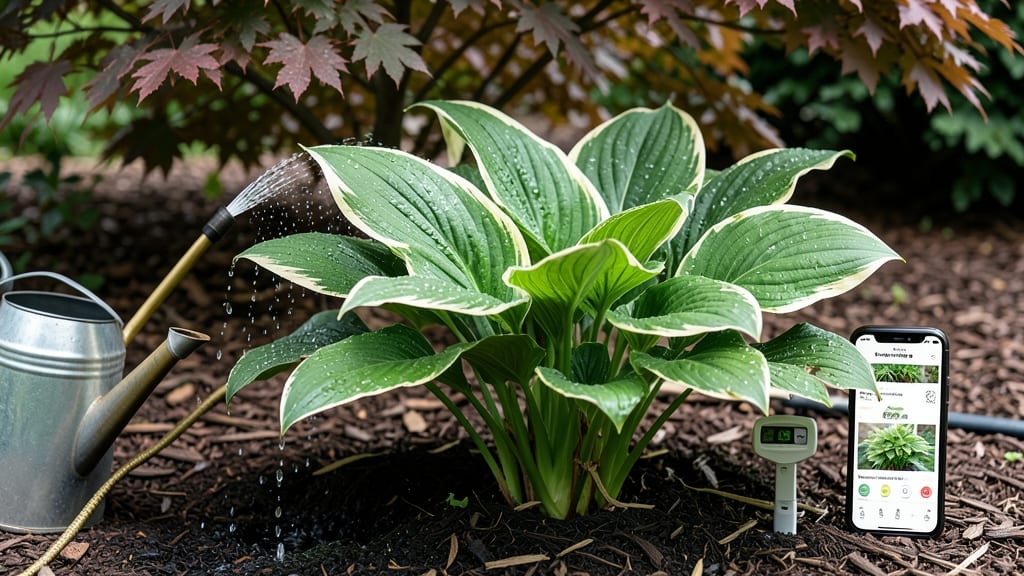
To determine how often hostas should be watered, check when the top 1-2 inches of soil feel dry to the touch, usually every 1-2 weeks based on your climate, soil type, and season. Deep watering strengthens roots and builds drought tolerance.
Watering hostas isn't about sticking to a rigid schedule—it's about understanding your garden's specific conditions. 🌱 Sandy soils dry out faster than clay, so plants in those areas may need water every 5-7 days during summer, while clay soils might hold moisture for 2 weeks.
I've learned that morning watering reduces evaporation and fungal risks, giving roots time to absorb moisture before the heat of the day. Container-grown hostas dry out quicker than in-ground plants, so check their soil daily in hot weather.
Seasonal shifts matter too. Newly planted hostas in spring need consistent moisture to establish roots, while established plants handle summer drought better with deep weekly watering. In autumn, reduce frequency as temperatures drop, and winter watering is rarely needed unless you're in a dry climate.
The key is always that soil test—stick your finger in and feel for dryness before reaching for the hose.
💡 In This Article
- Factors Affecting Hosta Watering Frequency
- Seasonal Hosta Watering Guide for Optimal Growth
Factors affecting hosta watering frequency
Soil composition is the single biggest factor in how often you'll need to water hostas. Clay soil holds moisture like a sponge, keeping roots hydrated for 10-14 days between waterings, while sandy soil drains quickly, requiring water every 5-7 days in summer.
The difference comes down to particle size—clay's tiny particles create tiny air pockets that trap water, while sand's large particles allow water to drain through almost instantly. 🌱 I've seen hostas in my own garden struggle in pure sand unless I mulch heavily to slow evaporation.
Sunlight exposure dramatically alters water needs too. Hostas in full shade may only need water every 2-3 weeks because cooler, shaded soil retains moisture longer. In contrast, those basking in morning sun (which is ideal for most hostas) can dry out in just 5-7 days during heatwaves.
The rule of thumb is: more sun equals more frequent watering. Temperature plays a similar role—when daytime highs hit 85°F+, evaporation rates double, forcing me to check soil moisture twice weekly instead of weekly.
Humidity levels create another layer of complexity. In dry climates like the Pacific Northwest during summer, hostas may need watering 3 times per week, while in humid regions like the Southeast, once weekly might suffice.
The key is observing your plants: drooping leaves or crispy leaf edges signal underwatering, while yellowing leaves often mean overwatering.
Container-grown hostas face unique challenges—their small root systems dry out 2-3 times faster than in-ground plants, so I've taken to weighing my pots: a 5% weight loss means it's time to water.
Root health is directly tied to watering consistency. Deep watering—soaking the soil until water runs out the drainage holes—encourages roots to grow downward in search of moisture, creating a stronger plant. Shallow watering leads to weak, surface roots that can't handle drought.
I've noticed hostas with deep roots bounce back from dry spells much faster than those with shallow root systems. The ideal watering method is slow, deep soakings rather than frequent light sprinkles.
One surprising factor is mulch thickness. A 3-inch layer of organic mulch (like shredded bark or straw) can reduce watering needs by 30-50% by slowing evaporation and keeping soil temperatures stable.
In my own garden, mulched hostas require watering once every 10 days in summer, compared to every 7 days for unmulched plants. The mulch also prevents soil crusting, which can suffocate roots and reduce water absorption.