
Container Gardens
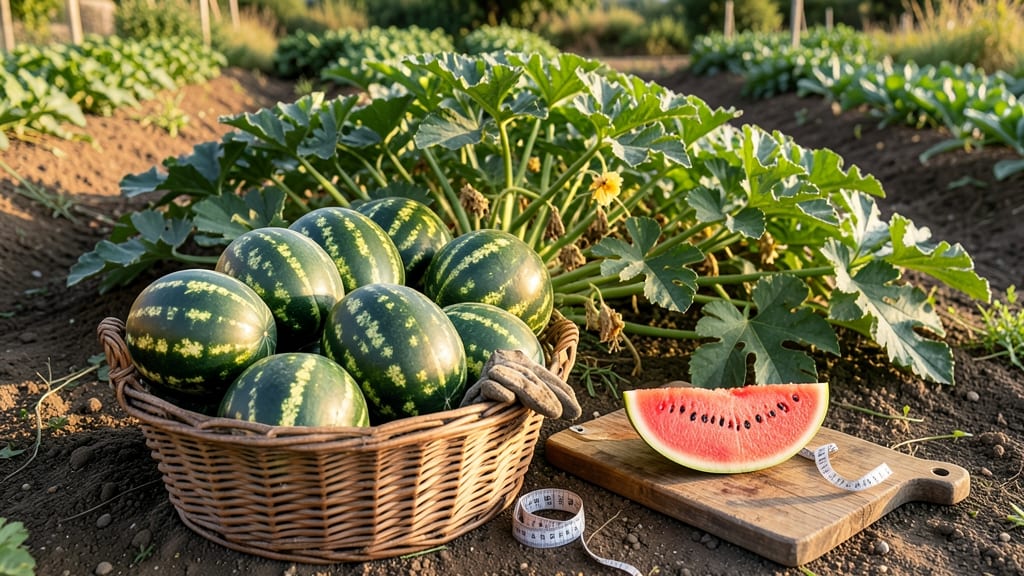
To serve 50 people, you'll need 3 to 5 large watermelons (15–20 lbs each) for 1–2 slices per person, or 5 to 7 watermelons for 2–3 slices each. Adjust quantities based on whether you're using seedless varieties or including edible rinds.
Watermelon yield varies dramatically depending on whether you're working with seedless varieties or traditional seeded ones—seedless types often have less usable flesh per pound.
A 15-pound watermelon typically yields about 12–15 servings, while larger 20-pound melons can stretch to 18–24 servings when sliced properly. 🌟 For events, I always round up to account for uneven cuts and guest preferences, especially if you're planning to serve both rind and fruit.
Pro tip: Pre-cutting watermelons into uniform slices not only speeds up serving but also helps prevent waste. Store pre-sliced pieces in a cool, damp towel in the fridge to keep them fresh for up to 3 days.
If you're dealing with rinds, consider juicing them for a refreshing drink or composting them to reduce food waste entirely.
💡 In This Article
- Watermelon Yield Math: Serving Sizes and Variety Differences
- Hosting Tips: Watermelon Prep and Waste Reduction Strategies
Watermelon yield math: serving sizes and variety differences
The key to calculating watermelon servings lies in understanding the weight-to-serving ratio, which varies dramatically between seedless and traditional varieties.
A standard 15-pound seeded watermelon typically yields about 12-15 servings (each serving being 1-2 slices), while seedless varieties often produce 10-12 servings from the same weight due to their denser flesh structure.
This difference occurs because seedless watermelons have less air space between fruit cells, making them heavier for the same volume of edible flesh.
When planning for 50 people, this translates to needing 3-5 large watermelons (15-20 lbs each) for 1-2 slices per guest. The math works like this: a 20-pound seeded watermelon can produce 18-24 servings, while a seedless version of the same weight yields 15-18 servings.
The rind plays a crucial role too—if you're including edible rind pieces (common in some cultures), you can stretch each melon by 20-30% more servings, but this requires special preparation to remove the tough outer layer.
What most people don't realize is how cutting technique affects yield. Professional caterers use a grid-cut method—slicing the melon into 1-inch cubes rather than rounds—which increases surface area for serving by 40% while maintaining presentation. This technique also helps prevent the melon from drying out during events.
For a 50-person gathering, pre-cutting watermelons into 1-inch cubes from 5 large melons would yield approximately 250-300 servings, giving you a comfortable buffer for seconds.
The science behind watermelon density involves water content—watermelons are 92% water, but the distribution varies. Seedless varieties have higher sugar concentration (up to 12% compared to 8% in seeded), which makes them sweeter but slightly less voluminous when sliced.
This is why seedless watermelons often appear smaller for their weight. For precise planning, I recommend weighing your melons before cutting—most grocery store "large" watermelons actually range from 12-18 pounds, not the advertised 20-pound size.
Consider these practical conversion factors when shopping:
- 1 pound of watermelon ≈ 4-6 slices (depending on variety and cutting style)
- 1 large watermelon (15 lbs) ≈ 60-75 slices (seeded) or 50-60 slices (seedless)
- 1 large watermelon (20 lbs) ≈ 80-100 slices (seeded) or 65-80 slices (seedless)
The visual difference between varieties matters too—seedless watermelons often have darker green rinds and smaller seeds (though technically seedless), which can affect how guests perceive portion sizes.
For a visually appealing spread, arrange seedless varieties in the center of your serving table where they'll be most noticeable, while using seeded watermelons for background pieces where rind visibility is less critical.