
Featured
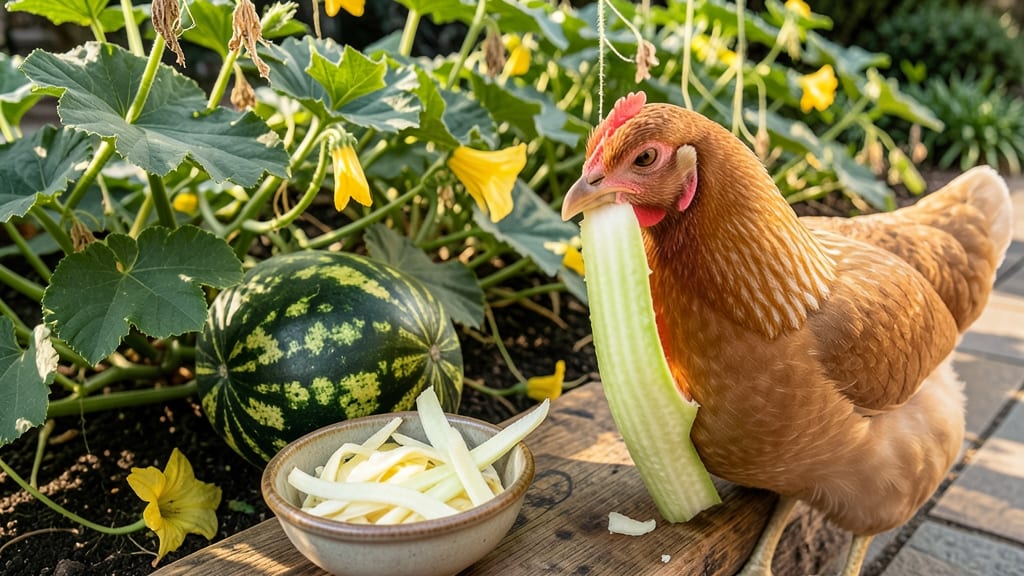
Yes, chickens can eat watermelon rind in moderation, as it is safe and provides hydration, but remove seeds and cut into small pieces to prevent choking or digestive blockages. Feed sparingly due to sugar content and potential laxative effects.
Watermelon rind is packed with vitamin C and potassium, which support your flock's immune system and muscle function. 🌿 The thick outer layer also contains more fiber than the juicy flesh, helping digestion—but too much can cause loose stools.
I always wash the rind thoroughly to remove any pesticide residue before offering it as a treat. Think of it as a refreshing, low-calorie snack when balanced with their regular feed.
For best results, limit portions to 1-2 tablespoons per chicken daily and always remove the hard seeds first. The rind's high water content makes it hydrating, but the natural sugars mean it should never replace their balanced diet.
If you notice your chickens acting lethargic or having runny droppings, cut back immediately.
💡 In This Article
- Nutritional Value of Watermelon Rind for Chickens
- Safe Feeding Guidelines for Watermelon Rind in Chicken Diets
Nutritional value of watermelon rind for chickens
The watermelon rind is a nutritional powerhouse for chickens, offering benefits that go beyond simple hydration. It contains vitamin C (about 22.7 mg per 100g), which boosts their immune system and helps fight infections—a critical advantage during cold seasons.
The rind also packs vitamin A (around 540 IU per 100g), essential for maintaining healthy vision and skin, while the flesh contains only about 30 IU per 100g. This makes the rind a more concentrated source of these nutrients compared to the juicy interior.
One of the rind’s standout features is its potassium content (around 170 mg per 100g), which supports muscle function and nerve signaling—vital for active chickens. It also provides magnesium (about 15 mg per 100g), which aids in bone health and energy metabolism.
The fiber content in the rind (around 0.4g per 100g) is higher than in the flesh, promoting gut health and preventing digestive issues like impaction. However, this fiber can also act as a mild laxative, which is why moderation is key.
When comparing watermelon rind to other poultry-safe fruits, it stands out for its low sugar content relative to its nutritional density.
For example, apple peels contain more fiber but also higher sugar levels, while citrus peels (like orange) offer vitamin C but lack the potassium and magnesium found in watermelon rind.
The rind’s high water content (90% moisture) makes it an excellent hydrating treat, especially during hot weather when chickens are more prone to dehydration.
Here’s what happens when chickens consume the rind: The natural sugars provide a quick energy boost, while the fiber and vitamins support long-term health. The texture of the rind—firm yet slightly spongy—is easy for chickens to peck and swallow once cut into manageable pieces.
The rind’s slightly bitter taste (due to its cucurbitacin compounds) may take some getting used to, but most chickens adapt quickly once they realize it’s a tasty, hydrating snack.
To maximize these benefits, always pair the rind with other nutrient-rich treats like leafy greens or mealworms. For instance, offering watermelon rind alongside kale (high in calcium) or pumpkin seeds (rich in zinc) creates a balanced snack that covers multiple dietary needs.
This combination ensures your flock gets a well-rounded boost without overloading on any single nutrient.
The rind’s nutritional profile makes it a standout treat, but its benefits are best realized when integrated thoughtfully into their diet. Think of it as a refreshing, vitamin-packed supplement rather than a staple—ideal for days when you want to add variety without compromising their balanced nutrition.