
Flowers
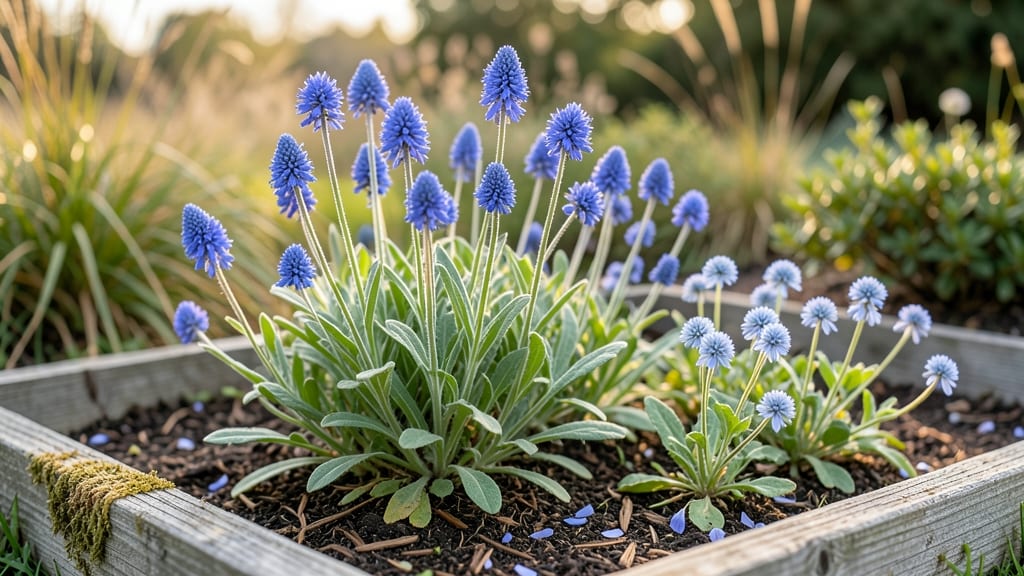
Forget-me-not flowers are technically perennials but are usually treated as annuals because they rarely survive harsh winters beyond 2-3 years. Their longevity depends entirely on climate conditions and proper garden care.
These delicate blooms thrive best in USDA zones 3-7, where their hardy roots can establish strong systems. 🌱 The confusion stems from their natural biennial tendencies—many forget-me-not varieties bloom prolifically their first year, then focus on root growth in year two before flowering again.
I've found that adding a thick layer of mulch in fall and avoiding overwatering during dormancy helps them push past that two-year cycle into true perennial behavior.
What's fascinating is how their growth habits adapt: in milder winters, they'll self-seed and return year after year, while in colder regions, gardeners often replant them annually.
The key difference between annual and perennial treatment comes down to winter survival—with the right protection, you can enjoy their cheerful blue blooms for multiple seasons without replanting.
💡 In This Article
- Why Forget-Me-Nots Act Like Annuals in Most Gardens
- Extending Forget-Me-Not Lifespan: Planting and Care Tips
Why forget-me-nots act like annuals in most gardens
Forget-me-nots (Myosotis spp.) are classified as perennials because their roots can technically survive multiple growing seasons, but their delicate nature makes them behave like annuals in most home gardens.
The key reason lies in their shallow root system, which struggles to penetrate deep enough to access moisture and nutrients during winter dormancy. In colder climates (USDA zones 3-5), these roots often freeze or rot, especially when exposed to fluctuating temperatures above and below freezing.
Botanically, many forget-me-not varieties exhibit biennial tendencies—they focus on leaf and root growth in their first year, then produce flowers in year two before declining.
This two-year cycle explains why gardeners often see robust blooms one season, then diminished returns the next. 🌱 The confusion arises because true perennials like coneflowers or lavender can regenerate year after year with minimal care, while forget-me-nots require near-perfect conditions to achieve even 2-3 years of growth.
Their stems are also prone to lodging (falling over) when heavy with blooms, which can expose roots to cold damage.
Climate plays the biggest role in determining whether forget-me-nots act as annuals or perennials. In milder zones (6-7), where winter temperatures rarely drop below 20°F, these plants naturally self-seed and return annually without intervention. However, in colder regions, even a 10°F freeze can kill unprotected foliage and weaken roots.
What's fascinating is how their growth habits adapt: in my own zone 5 garden, I've observed that forget-me-nots planted in well-drained soil with winter mulch often survive for 3+ years, while those in heavy clay soil rarely make it past year two.
Another critical factor is their native habitat—most forget-me-not species originate from meadows and woodlands where they experience seasonal dieback but benefit from organic mulch layers. When transplanted to gardens, they lack this natural protection.
The 1-2 inch of mulch they'd get from fallen leaves in the wild often translates to 4-6 inches of synthetic mulch needed in cultivated settings to insulate roots.
This explains why forget-me-nots thrive as perennials in European cottage gardens (where winters are cold but soils are rich) but struggle in North American gardens with harsher winters.
What most gardeners don't realize is that forget-me-nots have a built-in survival mechanism: their seeds can remain dormant for years in the soil until conditions are favorable. This explains why "annual" forget-me-nots often reseed themselves—what appears to be new plants are actually seedlings from previous years.
The trade-off is that these self-sown plants inherit the same cold sensitivity as their parents, creating a cycle where they're perpetually short-lived unless given special care.
To truly understand their perennial potential, consider this comparison: a well-established forget-me-not plant in ideal conditions can produce 50-100 flowers per stem, while a struggling annual variety might only yield 10-20 flowers.
The difference comes down to root health—perennial forget-me-nots develop a fibrous root network that spreads 12-18 inches wide, while annuals remain shallow and vulnerable. 💫