
Orchid Care
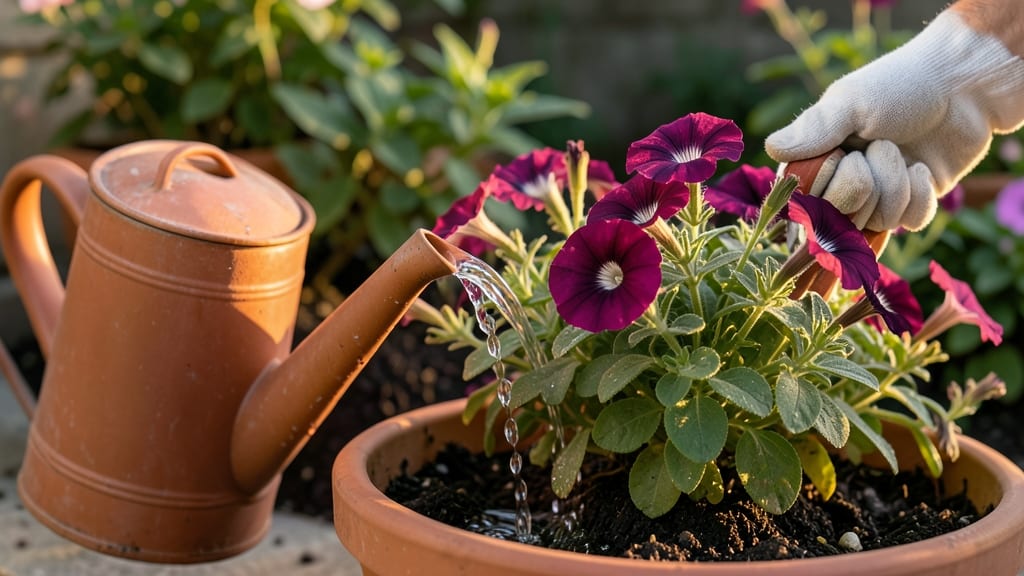
Petunias don't like a lot of water—they prefer soil that stays evenly moist but never soggy, watering only when the top inch feels dry to the touch. Too much water causes root rot and yellowing leaves, while too little makes them wilt and stop blooming.
Petunias actually evolved in South America's dry regions, so they're adapted to handle brief dry spells better than constant dampness. 🌱 The key is mimicking their natural environment—think of their soil like a well-wrung sponge: damp but never dripping.
I've found that watering in the morning gives the plants time to absorb moisture before evening humidity sets in, which helps prevent fungal issues. For container-grown petunias, I recommend checking soil moisture daily during hot spells, as they dry out faster than garden beds.
What many gardeners overlook is how mulch changes the game. A 2-inch layer of organic mulch helps retain moisture while preventing soil compaction, which is especially critical in summer.
If you notice the leaves turning yellow or the stems feeling mushy, that's your plant screaming for help—it's already too late to fix root rot at that stage. The good news? With the right balance, your petunias will reward you with vibrant blooms all season long.
💡 In This Article
- Why Overwatering Kills Petunias: Root Rot Science
- Perfect Watering Schedule for Petunias: Seasonal Adjustments
Why overwatering kills petunias: root rot science
Petunias evolved in South America's semi-arid regions, where they adapted to handle brief dry spells better than constant moisture. Their root systems thrive in well-drained soil that mimics their natural habitat—think of a sponge that's damp but never saturated.
When you overwater, you're essentially suffocating these roots by displacing the oxygen they need to breathe. 🌱 Roots require oxygen for cellular respiration, and when soil stays waterlogged, the roots can't absorb it, leading to a slow, silent death.
The real damage happens when excess moisture creates anaerobic conditions in the soil. Without oxygen, beneficial soil microbes that help break down organic matter die off, while harmful pathogens like Phytophthora and Pythium fungi flourish. These fungi attack the roots, causing them to rot and turn brown or black.
You'll often see yellowing leaves or stems that feel soft and mushy—these are classic signs of root rot. The fungus Phytophthora alone can reduce root growth by up to 70% within just 7-10 days of overwatering.
Petunias also have shallow root systems that spread horizontally rather than growing deep. This means they're highly sensitive to soil compaction and poor drainage. When water pools around the roots, it creates a perfect environment for bacterial infections.
The roots can't expand properly, which stunts the plant's ability to absorb nutrients and water—even when you're watering it! This is why petunias in containers dry out faster than those in garden beds: the soil has less capacity to hold moisture without becoming waterlogged.
Here's what's happening at the cellular level: Overwatering triggers a process called hypoxia, where root cells lack oxygen. This forces the plant to switch to anaerobic respiration, which produces toxic byproducts like ethanol.
While this might sound like something from a chemistry lab, it's exactly what causes those telltale signs of wilting or stunted growth. The plant is essentially poisoning itself from the inside out. 💀
Contrast this with their natural environment, where petunias experience intermittent rainfall followed by dry periods. This cycle strengthens their roots and encourages them to grow deeper in search of moisture.
When you mimic this pattern in your garden—watering deeply but infrequently—you're helping your petunias develop robust root systems that can handle occasional dry spells. The key is to water only when the top 1 inch of soil feels dry, allowing the roots to breathe and the soil to aerate properly.
One common misconception is that petunias need frequent watering to keep their blooms vibrant. In reality, the opposite is true: consistent overwatering weakens the plant, leading to fewer and smaller flowers.
I've seen petunias in hanging baskets wither within 2 weeks of being watered daily, while those watered every 3-4 days (with proper drainage) produced blooms for 3 months straight. The difference comes down to giving the roots the breathing room they need to thrive.