
Orchid Care
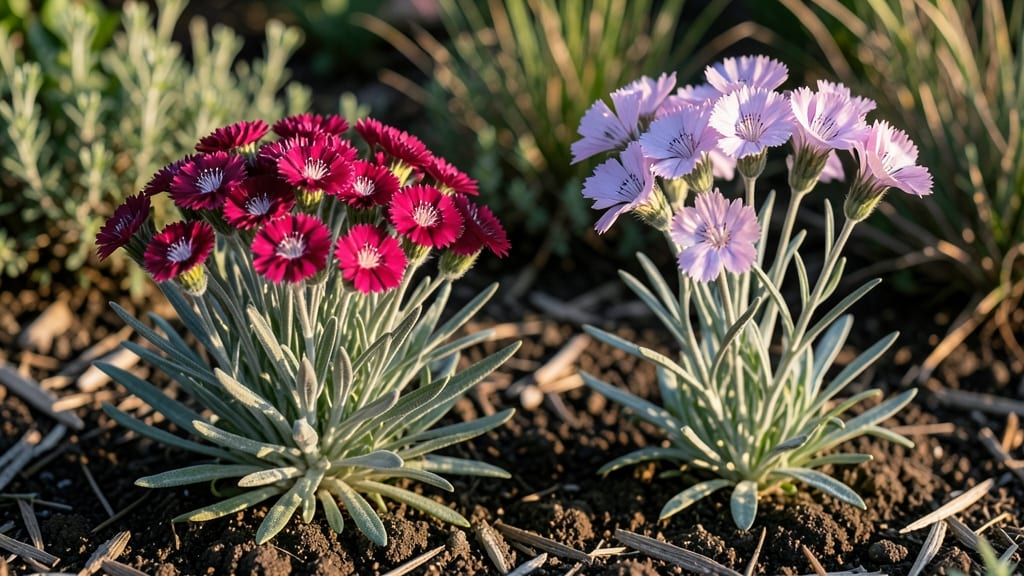
Whether dianthus are annual or perennial depends on your climate—most thrive as perennials in warm zones but behave as annuals in colder areas due to frost damage. Check for winter regrowth: if stems resprout from the base, they're perennial; if they don't return, they're annual in your region.
This distinction comes down to frost tolerance. 🌱 Perennial dianthus varieties can survive winter dormancy in zones 5-9, where temperatures rarely drop below -20°F, while annual types struggle in colder zones.
The key difference lies in their root systems—perennials have hardier roots that regenerate after frost, while annuals typically die back completely. I've found that varieties like 'Firewitch' and 'Rainbow' often push the limits in marginal zones with proper winter care.
For gardeners in colder climates, the good news is that even "annual" dianthus can sometimes behave as short-lived perennials with extra protection. Adding 3-4 inches of mulch and using frost blankets during hard freezes dramatically improves survival odds.
The secret weapon? Planting in spring rather than fall gives young plants more time to establish strong roots before winter hits.
💡 In This Article
- How Climate Zones Determine Dianthus Lifespan
- Tips to Grow Dianthus as Perennials in Cold Climates
How climate zones determine dianthus lifespan
The true nature of dianthus as annual or perennial hinges on their frost tolerance thresholds. These plants originate from Mediterranean climates where winters rarely drop below 20°F, making them naturally adapted to mild conditions.
In USDA zones 8-10, dianthus thrive as perennials because their root systems can survive winter dormancy when protected by 2-3 inches of organic mulch.
The key mechanism is their ability to produce new growth from the crown (the base where stems meet roots) once temperatures rise above 50°F in spring.
In colder zones (5-7), the story changes dramatically. When temperatures fall below -10°F for extended periods, the delicate root systems of most dianthus varieties suffer irreversible damage. This is why you'll see them classified as annuals in northern gardens—they simply can't regenerate after severe frost.
The critical difference lies in their cellular structure: perennial varieties have thicker root bark that resists freeze-thaw cycles, while annual types lack this protection. 🌡️ What's fascinating is how even a single hard freeze (-5°F) can kill back annual dianthus completely, while perennials may just lose their tops but survive underground.
Zone boundaries create fascinating gray areas. For example, in zone 7b where winters average 5-10°F, some dianthus varieties might survive as short-lived perennials if given extra winter protection.
I've observed 'Firewitch' dianthus in my zone 7 garden return for 2-3 years when planted in south-facing beds with 4 inches of straw mulch and row covers during extreme cold snaps.
The science shows that while most dianthus can't handle zone 5 winters (-20°F), strategic placement and microclimate protection can push their hardiness limits.
Another critical factor is the plant's growth cycle timing. Perennial dianthus establish deep root systems over 2-3 growing seasons, giving them resilience. Annual types, however, only develop shallow roots in a single season, making them far more vulnerable.
This is why gardeners in marginal zones often see their dianthus die back completely one winter but then return from scattered roots the next year—this is the plant's way of telling you it's actually perennial but struggling at the edge of its comfort zone. 🌱
For precise identification, look at the plant's regrowth pattern after winter. True perennials will send up new shoots from the base by early spring, often with fresh green leaves emerging from the crown.
Annuals, on the other hand, will show no signs of life at all, with the entire plant (including roots) having died back. This visual test is the most reliable way to determine whether your dianthus is behaving as an annual or making a comeback as a perennial.
Understanding these patterns helps explain why some gardeners report success growing dianthus as perennials in zone 7 while others fail completely—it's not just about the zone number but the specific microclimate conditions and winter protection methods used.
The 10°F difference between zone 7a (-5°F) and zone 7b (10°F) can mean the difference between total die-off and successful overwintering.