
Plants
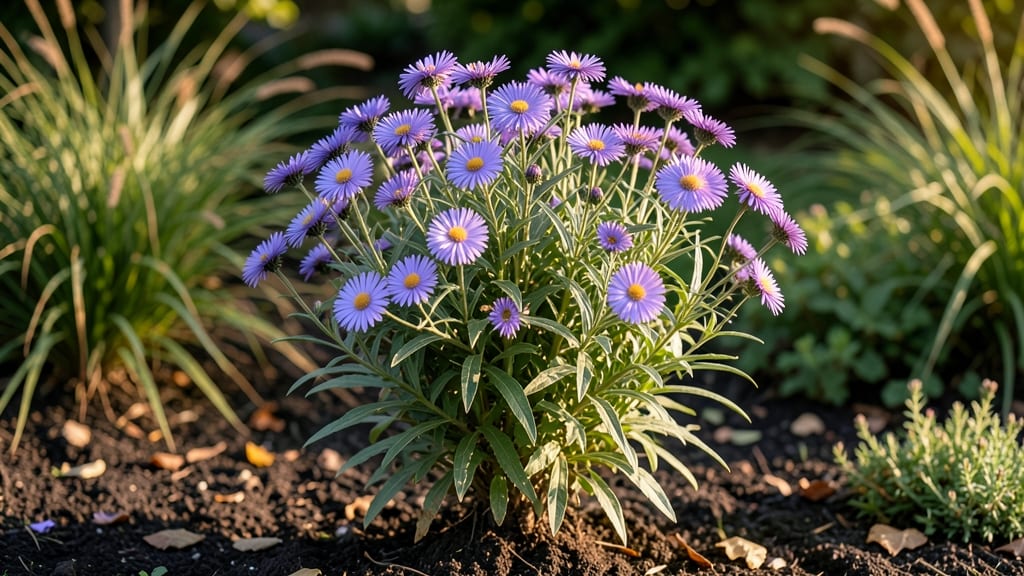
Asters in Zone 6 are indeed perennials, but they go dormant in winter, losing their foliage before regrowing from deep roots each spring. Most varieties thrive for 3-5 years before needing division to maintain vigor.
Asters survive Zone 6 winters through a clever adaptation: their deep root systems store energy until spring. 🌱 The foliage yellows and dies back when temperatures drop, but the roots stay alive underground.
This dormancy cycle is why they're classified as perennials—even though they look dead in winter, they're just conserving energy for next year's blooms.
What sets asters apart is their ability to bounce back stronger after winter. Unlike annuals that complete their life cycle in one season, asters store nutrients in their roots, allowing them to push through the soil faster in spring.
This resilience makes them a favorite for gardeners in colder climates who want long-lasting color without annual replanting.
The 3-5 year lifespan comes into play when their root systems become overcrowded. When this happens, dividing the clumps every few years gives each section more space to thrive, extending their productive bloom time.
This simple maintenance step can turn what might seem like a short-lived plant into a garden workhorse.
💡 In This Article
- Why Asters Die Back in Cold Climates Like Zone 6
- Zone 6 Asters Care Guide: Extending Perennial Lifespan
Why asters die back in cold climates like Zone 6
Asters enter winter dormancy through a process called deciduous perennation, where above-ground growth shuts down to protect the plant's core. The key lies in their fibrous root systems, which extend 12-18 inches deep and store carbohydrates as starches.
These roots act like a natural battery, converting sunlight energy from summer into stored fuel that sustains the plant through -10°F to -20°F temperatures common in Zone 6 winters. 🌱
The foliage yellowing and dying back isn't a sign of death—it's a survival strategy. As temperatures drop below 40°F, asters trigger a hormonal response that causes chlorophyll breakdown while preserving the root system. This process, called senescence, redirects nutrients back to the roots where they're safest.
What's fascinating is how this mirrors deciduous trees, but on a smaller scale—asters simply "shed" their leaves while keeping their underground energy reserves intact.
What makes this adaptation remarkable is the root crown structure, located just below the soil surface. This 1-2 inch thick zone contains dormant buds that remain protected by insulating soil. These buds contain meristem cells capable of regenerating the entire plant when temperatures rise.
The insulation provided by mulch (like 3-4 inches of shredded leaves) can raise soil temperatures by 5-10°F, making this critical survival difference in harsh winters.
However, not all asters handle Zone 6 winters equally. New England asters (Symphyotrichum novae-angliae) are particularly hardy, while China asters (Callistephus chinensis) are annuals that won't survive winter. The difference lies in their native climates—native species have evolved deeper root systems and more efficient nutrient storage mechanisms over centuries.
This is why choosing Zone 6-hardy varieties is crucial for reliable winter survival.
The timing of dieback is also significant. Most asters begin their dormancy cycle when nighttime temperatures consistently drop below 50°F in fall. This usually occurs between late September and early November in Zone 6, with foliage completely browned by December.
What appears dead is actually in a state of suspended animation, with root respiration rates dropping to just 1-2% of summer levels to conserve energy.
This dormancy cycle explains why asters often appear dead in winter but return with vigor. The roots continue slow metabolic processes, maintaining cell viability through antifreeze proteins that prevent ice crystal formation.
When spring arrives, these proteins degrade, allowing normal growth processes to resume within 2-4 weeks after consistent 50°F+ temperatures. 🌿