
Plants
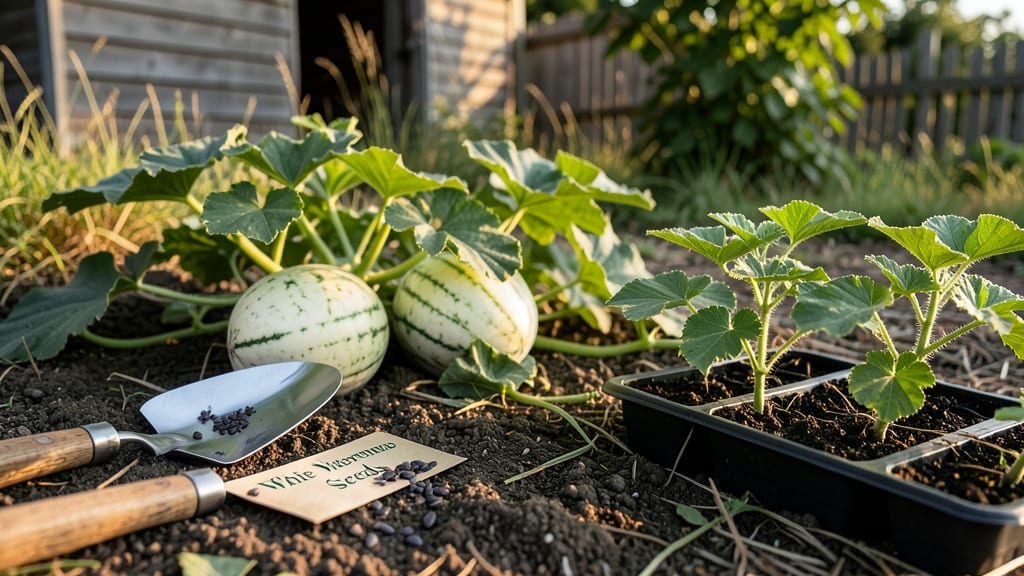
You can plant white watermelon seeds, and they'll grow into fruit with white or pale yellow flesh and rind identical to the parent plant. These varieties maintain their color reliably when grown from saved seeds, though flavor intensity may vary slightly depending on the specific cultivar and growing conditions.
White watermelon seeds produce fruit that stays true to its pale color because these varieties are typically heirloom or true-breeding hybrids, meaning their genetics don't change easily through cross-pollination.
The lack of red pigment (anthocyanins) in white-fleshed types ensures consistent color year after year. 🌱 What's fascinating is how these melons often develop unique patterns like 'Moon and Stars'—where green stripes appear on the rind—while keeping their signature white interior.
For best results, plant seeds in well-draining soil with full sun exposure and maintain consistent moisture during the growing season to maximize sweetness.
Unlike red-fleshed varieties that sometimes develop inconsistent coloring when grown from store-bought seeds, white watermelons offer more predictable results. This makes them ideal for gardeners who want reliable color traits while still enjoying the refreshing, crisp texture these varieties are known for.
Just remember that while the color stays true, flavor can be subtly influenced by growing conditions and soil quality.
💡 In This Article
- How White Watermelon Seed Genetics Affect Fruit Color
- Best White Watermelon Varieties for Planting and Growing Tips
How white watermelon seed genetics affect fruit color
The white or pale yellow color in watermelons comes from a genetic absence of anthocyanins, the pigments responsible for red, purple, and deep pink hues in most fruit varieties.
These pigments form through a complex biochemical pathway where enzymes like UDP-glucose flavonoid 3-O-glucosyltransferase (UFGT) convert colorless precursors into vibrant red compounds.
White-fleshed watermelons lack this enzyme activity, leaving their flesh naturally pale. 🌱 This genetic trait is dominant in many heirloom varieties, meaning if both parent plants carry the white-flesh gene, their offspring will consistently produce white fruit.
Cross-pollination poses the only real threat to color consistency. If a white-fleshed watermelon plant is pollinated by a red-fleshed variety within a 5-mile radius, the resulting seeds may produce fruit with mixed pigmentation—sometimes resulting in striped or patchy flesh.
This is why serious seed-savers isolate white varieties by at least 100 feet from red-fleshed plants or use row covers during flowering. The rind patterns (like 'Moon and Stars') are controlled by separate genes and remain stable even if the flesh color shifts slightly.
What makes white varieties so reliable is their true-breeding nature. Unlike many hybrid watermelons that require specific parent plants to maintain traits, white-fleshed heirlooms like 'Moon and Stars' produce seeds that will grow into identical fruit generation after generation. This consistency is why gardeners favor them for seed-saving projects.
The flavor difference stems from lower sugar content in white varieties—typically measuring 8-10 Brix (a measure of sweetness) compared to 12-14 Brix in red-fleshed types, though some white varieties like 'White Wonder' can reach comparable sweetness with proper care.
Temperature also plays a subtle role in pigment development. Cooler growing seasons (70-80°F) can enhance the pale yellow tones in white-fleshed melons by slowing down any potential background pigment formation, while hotter conditions (> 90°F) may slightly darken the flesh.
This is why gardeners in southern climates often report their white watermelons develop a creamier hue. The rind's green patterns, however, remain unaffected by temperature variations.
For the most predictable results, always source seeds from reputable suppliers or save seeds from fruit you've personally grown and inspected. Store seeds in a cool, dry place (below 40°F) to maintain viability for up to 5 years.
When planting, use well-draining soil with a pH of 6.0-6.8 and provide 1-2 inches of water per week—consistent moisture prevents bitterness while supporting even color development throughout the fruit.
One fascinating exception is the 'Crenshaw' variety, which produces white flesh but often develops pink streaks when grown in certain soil conditions.
This occurs due to a secondary pigment pathway that activates under specific mineral compositions, proving that even "true" white varieties can show subtle variations when environmental factors interact with their genetics. 💫