
Planting
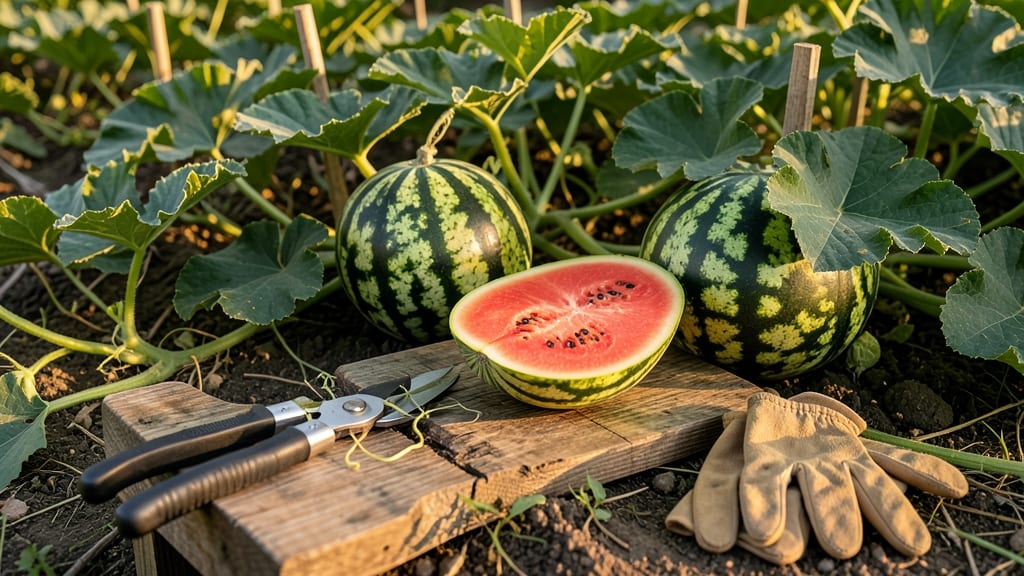
How many watermelons per plant can you expect? A single watermelon plant typically produces 1 to 2 large watermelons per season, depending on variety, growing conditions, and pruning. Vining types may yield slightly more with proper care, while bush varieties are more consistent at 1 per plant.
Watermelon yield varies more than most gardeners realize—it's not just about the plant type but also how you nurture it. 🌱 Vining varieties like 'Crimson Sweet' can stretch up to 20 feet and produce 2-3 fruits if given enough space and nutrients, while compact bush types like 'Sugar Baby' focus their energy on 1-2 smaller melons.
The key difference? Vine types spread out, allowing more fruit development, while bush types conserve energy for fewer but often sweeter melons.
What really boosts production is proper care: consistent watering, balanced fertilization, and strategic pruning to redirect energy. I've seen gardeners double their yield by training vines vertically or removing early blooms to encourage larger fruit later in the season.
Even in small gardens, these techniques can turn one plant into a surprisingly productive mini-orchard!
💡 In This Article
- Watermelon Varieties and Their Yield Potential
- Maximizing Watermelon Production in Limited Space
Watermelon varieties and their yield potential
The number of watermelons per plant starts with genetics—specifically, whether the variety is a sprawling vine or a compact bush.
Vine types like 'Crimson Sweet' or 'Charleston Gray' can produce 2-3 fruits per season when grown in ideal conditions, thanks to their extensive root systems that absorb more nutrients and water. These varieties spread 10-20 feet, allowing multiple vines to develop separate fruits.
In contrast, bush varieties like 'Sugar Baby' or 'Black Diamond' focus their energy on 1-2 smaller melons (typically 5-10 pounds each), as their limited growth habit conserves resources.
Size matters too—larger varieties like 'Carolina Cross' (weighing 20-30 pounds) prioritize a single massive fruit, while smaller types like 'Sugar Baby' (5-8 pounds) may produce 2-3 fruits per plant. The trade-off?
Larger melons often require more space and nutrients, which can reduce the plant's ability to develop additional fruits. 🌱 What's fascinating is how watermelon plants allocate energy: they'll abort smaller fruits if larger ones are present, ensuring fewer but bigger harvests.
This is why 'Carolina Cross' plants might yield just one 25-pound monster while 'Sugar Baby' plants produce three 6-pound melons.
Here's where pruning comes into play—removing early blooms or side vines can redirect the plant's energy toward fewer but larger fruits. I've seen gardeners increase their single-fruit yield by 30-50% by pruning aggressively, though this reduces total fruit count.
The key is balance: vine types benefit from selective pruning to encourage 2-3 high-quality melons, while bush types rarely need intervention beyond basic maintenance. Soil fertility also shifts the equation—plants in nutrient-rich soil with pH 6.0-6.8 can produce 10-20% more fruit than those in poor conditions.
Climate plays a surprising role too. In hot, dry regions, watermelon plants may produce fewer but sweeter melons due to stress-induced sugar concentration, while cooler climates might yield more fruits but with less intense flavor.
The ideal growing zone for maximum yield is USDA Zones 4-10, where consistent warmth and humidity support vigorous vine growth. Even within these zones, nighttime temperatures below 65°F can stunt fruit development, reducing potential yield by up to 40%.
Consider these yield comparisons between popular varieties:
- Vine Types: 'Crimson Sweet' (2-3 fruits, 15-25 lbs each), 'Charleston Gray' (2 fruits, 20-30 lbs each)
- Bush Types: 'Sugar Baby' (2-3 fruits, 5-10 lbs each), 'Black Diamond' (1 fruit, 15-20 lbs)
- Hybrid Types: 'Carolina Cross' (1 fruit, 20-30 lbs), 'Yellow Doll' (1-2 fruits, 8-12 lbs)
What most gardeners overlook is how plant spacing affects yield. Vine types need 3-6 feet between plants to prevent competition, while bush types thrive with 2-3 feet spacing.
Crowding reduces air circulation, increasing disease risk and lowering fruit quality—so proper spacing isn't just about yield, it's about healthier, sweeter melons too. 💫