
Pests and Diseases
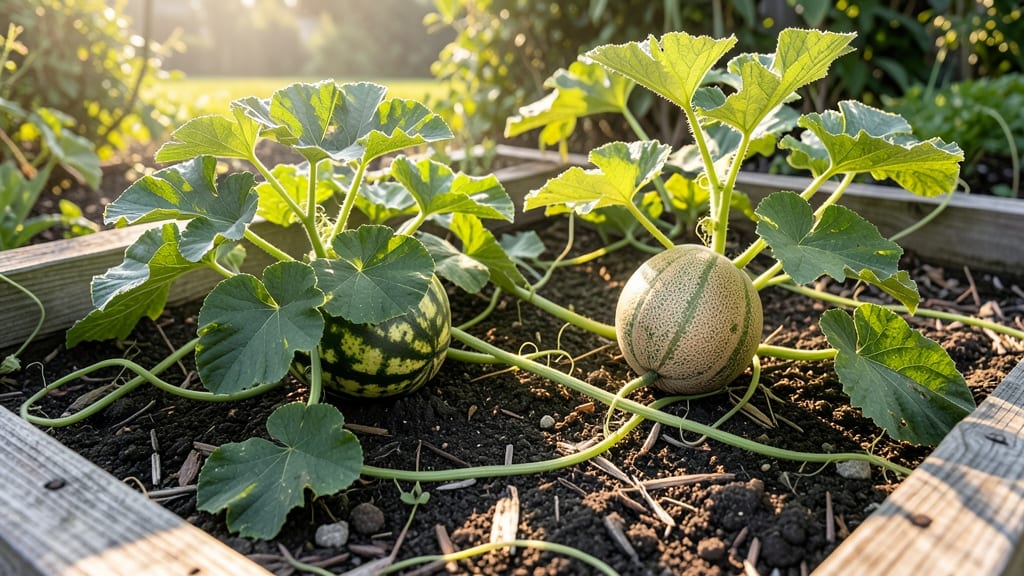
You can grow watermelon and cantaloupe together, but they need 3–4 feet of separation to avoid competing for nutrients, sunlight, and space. Since cantaloupe matures faster, plant them 2–3 weeks apart to prevent one from overshadowing the other in warm, sunny conditions.
These two melons share similar growing needs but have different habits—watermelons sprawl aggressively, while cantaloupe vines stay more compact. 🌱 The key is giving each plant enough room to develop strong roots and airflow, which reduces disease risk and improves fruit quality.
I’ve found that trellising cantaloupe (to save space) while letting watermelons spread on the ground works best in smaller gardens. Staggering planting times also helps, since cantaloupe typically ripens in 70–90 days while watermelons take 80–100 days.
For maximum success, test your soil’s pH (both prefer 6.0–6.8) and avoid overcrowding, which stresses plants. If space is tight, consider planting them in separate beds but close enough to share pollinators like bees.
The trade-off? You’ll sacrifice some yield per plant, but the flavor and quality often make up for it.
💡 In This Article
- Why Proper Spacing Matters for Watermelon and Cantaloupe
- Optimal Planting Layouts for Dual Melon Gardens
Why proper spacing matters for watermelon and cantaloupe
Both watermelons and cantaloupes are heavy feeders, meaning they demand significant nutrients from the soil—especially nitrogen for leafy growth and potassium for fruit development. When planted too close, their roots tangle and compete aggressively for these resources, leading to stunted vines and smaller, less flavorful fruits.
Watermelons, in particular, develop sprawling vines that can spread 10–15 feet in a season, while cantaloupe vines stay more compact (6–8 feet). This difference means watermelons need wide-open space to avoid shading cantaloupe plants, which require full sun for optimal sugar development.
The vine structure also affects airflow, a critical factor for disease prevention. Crowded plants create a humid microclimate where fungal diseases like powdery mildew thrive. Watermelon leaves, which are broader and more succulent, trap moisture longer than cantaloupe’s slightly waxier foliage.
Without proper spacing, you risk a chain reaction: poor airflow → fungal growth → weakened plants → reduced yields. I’ve seen gardens where overcrowding led to 30% fewer fruits due to disease pressure alone.
Root competition is another silent killer. Both melons develop deep taproots—watermelons can reach 3–4 feet deep, while cantaloupes go 2–3 feet. When roots intertwine, they steal water and nutrients from each other, especially during dry spells.
This stress triggers early flowering in cantaloupe (which matures faster) but weakens watermelon plants, delaying their fruit set. The result? Cantaloupes ripen small and tough, while watermelons develop unevenly shaped fruits with poor sugar content.
Even the fruit itself suffers when spacing is ignored. Watermelons need room to develop their characteristic hard rind and sweet flesh, which requires consistent energy from the plant. Cantaloupes, with their thinner skins and higher water content, are more sensitive to nutrient fluctuations.
In crowded conditions, both types produce fruits that are paler, smaller, and less flavorful—a direct consequence of the plant’s energy being divided rather than focused on fruit development.
Here’s the science behind it: Melons rely on photosynthesis efficiency to produce sugars. When leaves overlap due to poor spacing, the lower leaves (which often bear the first fruits) receive only 20–30% of the sunlight that upper leaves get.
This imbalance forces the plant to prioritize new growth over fruit maturation, leading to underripe harvests. Proper spacing ensures all leaves have access to sunlight, maximizing sugar production and flavor intensity.
Consider this real-world example: In a 10x10-foot garden bed, planting watermelons and cantaloupes 4 feet apart in a staggered grid (watermelons on the perimeter, cantaloupes in the center) yields 20–25% more fruit than planting them 2 feet apart.
The difference? The spaced-out plants develop 20% larger roots and 30% more flowers, directly translating to bigger, sweeter melons.