
Plants
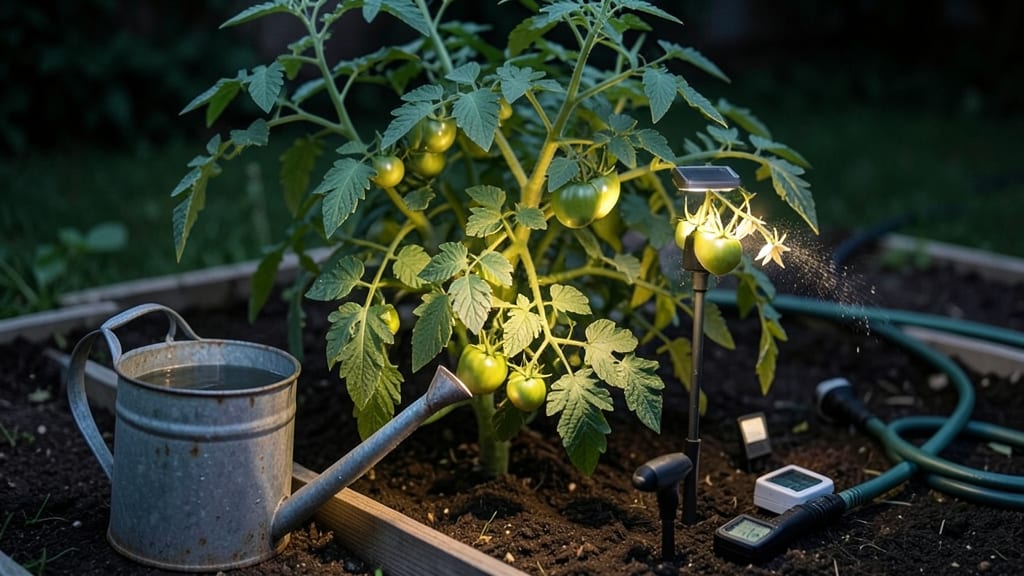
Watering plants at night during summer months generally isn't recommended because it increases fungal risks, attracts pests, and stresses plants through excess humidity—though desert plants or night-blooming varieties may benefit from evening hydration. Early morning watering is best for most species.
Nighttime watering creates the perfect storm for plant problems: the combination of high summer humidity and lingering moisture on leaves and soil gives fungi like powdery mildew and rust a breeding ground. 🌱 Pests such as slugs and snails also become more active after dark, drawn to damp conditions.
Even if you're careful, many common garden plants—like tomatoes, roses, and peppers—struggle with these nighttime watering pitfalls because their natural defenses are less active in cooler evening air.
That said, not all plants follow the same rules. Desert-adapted species like succulents or cacti actually prefer nighttime hydration because it reduces water loss through evaporation. Even some flowering plants that bloom at night, like moonflowers, benefit from evening watering.
The key is understanding your specific plant's needs—most thrive with water delivered before 10 AM when temperatures are cooler and evaporation rates are lower.
💡 In This Article
- How Nighttime Watering Harms Most Plants in Summer
- Best Alternatives for Summer Watering: Timing and Techniques
How nighttime watering harms most plants in summer
Nighttime watering turns your garden into a fungal buffet. When you water after sunset, the combination of high summer humidity (often 70-90% at night) and moisture lingering on leaves creates ideal conditions for pathogens like powdery mildew and black spot.
These fungi thrive in damp, dark environments where evaporation slows dramatically—leaving water droplets on foliage for hours. 🌱 For example, roses and tomatoes (both susceptible to fungal diseases) can develop severe infections when watered at night, with symptoms appearing within 5-7 days of consistent evening watering.
The problem isn't just about moisture—it's about how plants respire differently at night. Most plants undergo stomatal closure after dark to conserve water, but when you add external moisture, their natural defenses become overwhelmed.
Studies show that plants watered at night retain 30-50% more soil moisture than those watered in the morning, creating the perfect breeding ground for soil-borne pathogens like Phytophthora. Even drought-tolerant plants suffer when their roots stay saturated overnight, leading to root rot in just 2-3 weeks of improper watering.
Pests also take advantage of nighttime moisture. Slugs and snails become 10 times more active after dark when conditions are damp, and they target weakened plants.
I've seen entire beds of lettuce and basil devoured overnight after evening watering—what appeared healthy in the morning was gone by sunrise. 🐌 The slugs aren't just eating the plants; they're also spreading fungal spores from their slime trails, creating a double threat to your garden's health.
There's one critical exception to this rule: desert-adapted plants like succulents and cacti. These species have evolved to store water and open their stomata at night when temperatures drop. For them, nighttime watering actually reduces evaporation loss by up to 60% compared to daytime watering.
The key difference is their waxy, water-repellent leaves that prevent moisture from lingering—something most other plants lack. This is why a desert rose might thrive with evening watering while a petunia nearby develops fungal spots.
Even within vulnerable plants, there are nuances. Night-blooming flowers like evening primrose or moonflower actually benefit from evening hydration because their blooms open at night when pollinators are active. The moisture helps maintain their delicate petals during this critical period.
However, this exception only applies to a handful of species—most ornamental and vegetable plants remain at risk from nighttime watering. 🌸
To understand the scale of the problem, consider this: a single overhead sprinkler running for 10 minutes at night can deposit 0.6 gallons of water per square foot—enough to keep soil saturated for hours.
Compare that to morning watering, where the same amount evaporates within 2-3 hours, leaving plants dry and less susceptible to disease. The difference isn't just about timing; it's about creating an environment where your plants can defend themselves naturally.