
Plants
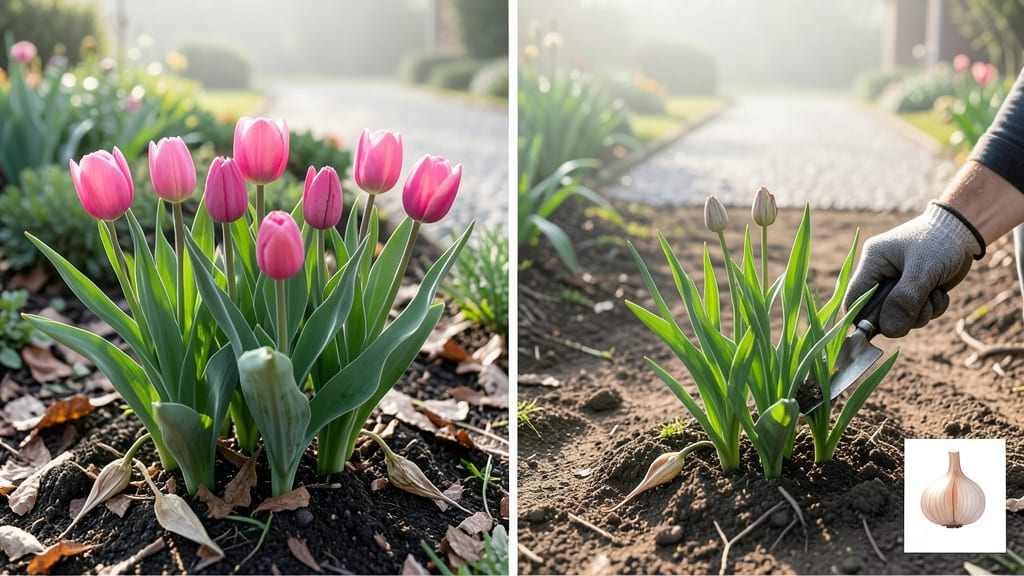
Tulips are perennial plants that technically live multiple years, but they often act like annuals in most growing zones by dying back after blooming and regrowing from their underground bulbs each spring.
This behavior comes down to their bulb biology—tulips store energy underground during dormancy, allowing them to push new growth when conditions are right. 🌱 In colder climates, they naturally enter a resting phase after flowering, only to reemerge when temperatures drop again.
The key difference between true perennials and tulips is that most perennials keep foliage year-round, while tulips rely completely on their bulbs for survival.
What makes this fascinating is how these bulbs act like nature's time capsules. They absorb nutrients during the growing season and store them for next year's blooms, which is why proper soil health and seasonal care make all the difference in getting those vibrant flowers back year after year.
The misconception comes from their above-ground cycle—since they disappear after flowering, many gardeners assume they're annuals, when in reality, their underground systems are just biding their time.
💡 In This Article
- How Tulip Bulbs Survive Underground Each Season
- Tips to Make Tulips Return Year After Year
How tulip bulbs survive underground each season
Tulip bulbs are nature's survival engineers, designed to store energy and nutrients in a compact underground structure. Each bulb contains layers of modified leaves called scales, packed with starches and sugars that serve as fuel for regrowth.
Think of them like a biological battery—when temperatures drop below 50°F after flowering, the bulb triggers dormancy, halting top growth while preserving its energy reserves. This process is called vernalization, where cold exposure actually signals the bulb to prepare for spring regrowth.
The magic happens in the bulb's basal plate, a porous network that absorbs water and minerals from the soil. During dormancy, this plate becomes semi-permeable, allowing the bulb to absorb moisture while preventing nutrient loss.
Studies show that tulip bulbs can survive with as little as 10-15% moisture content during winter, a remarkable adaptation that explains why they thrive in regions with freezing temperatures. The outer bulb layers also contain quercetin, a natural antioxidant that protects against cellular damage from cold stress.
Temperature acts as the master switch for tulip regrowth. Most varieties require 12-16 weeks of temperatures below 40°F to break dormancy—a process called chilling requirement. Without this cold period, bulbs may produce weak or no flowers.
This is why tulips grown in warm climates often need artificial chilling or specific varieties that require shorter cold periods. The bulb's meristem (growth center) remains dormant until soil temperatures rise to 50-55°F, when it activates to push new shoots upward.
What's fascinating is how tulip bulbs reproduce themselves. Each year, the bulb produces offsets—small daughter bulbs that form around the parent bulb. These offsets contain their own energy stores and can eventually separate to form new plants.
This natural propagation explains why a single tulip bulb can create a cluster of flowers over several years, provided it receives proper care. The offsets also help explain why some gardeners find tulips "disappearing"—often, the parent bulb has sent out offsets that aren't yet visible above ground.
Light exposure plays a subtle but crucial role too. While tulips don't require light during dormancy, they do need 6-8 hours of daylight in spring to trigger flowering. This photoperiod sensitivity works in tandem with temperature cues, creating a two-pronged system that ensures blooms appear at the optimal time.
The combination of cold-induced dormancy and light-triggered growth explains why tulips in northern climates often bloom earlier than those in southern regions, despite both experiencing winter.
Consider this: A single tulip bulb can live for 5-10 years with proper care, though its flowering vigor typically declines after 3-4 years. This is why gardeners often replace bulbs—what appears to be annual behavior is actually the bulb conserving energy for future seasons.
The trade-off between immediate blooms and long-term survival is built into the plant's DNA, making tulips a perfect example of nature's efficiency in resource management.