
Planting
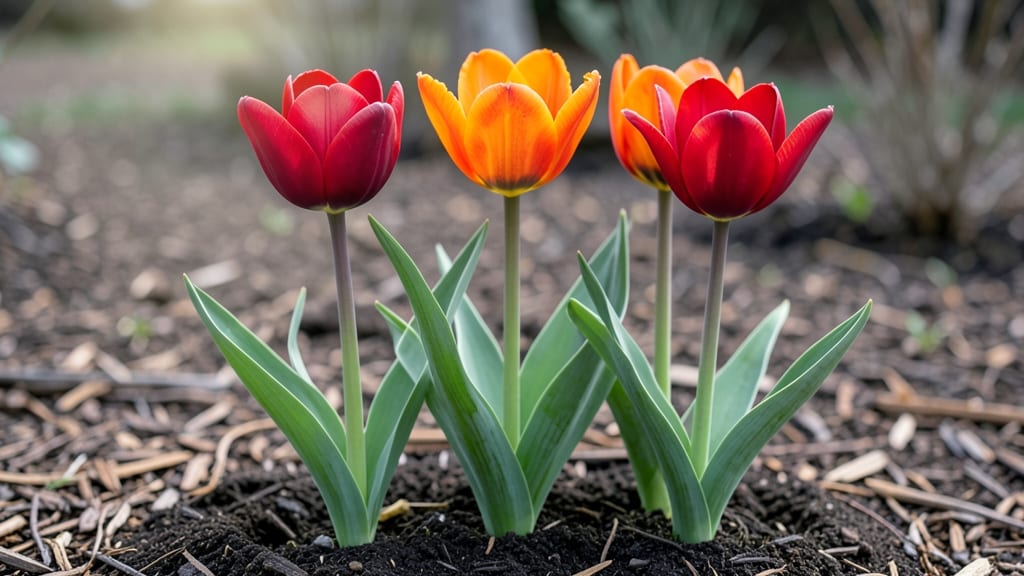
Perennial tulips in Zone 7 need careful planting—bury bulbs 6 to 8 inches deep in well-draining soil—to return reliably each year. Top performers like 'Darwin Hybrid' and 'Fosteriana' handle the climate's freeze-thaw cycles best.
Zone 7's winter chill can be tricky for tulips, but the right depth keeps bulbs safe from freezing and rotting. 🌱 Planting deeper than 6 inches shields them from temperature swings while allowing roots to establish before spring.
I've found that adding compost to the soil mix improves drainage and gives these hardy varieties a head start in colder winters.
Once established, these tulips reward you with bold blooms year after year. The key is choosing varieties bred for resilience—like 'Darwin Hybrid' which thrives in heat and humidity, or 'Fosteriana' which blooms early and handles Zone 7's unpredictable springs beautifully.
Just remember: mulch lightly after planting to protect bulbs without smothering them.
💡 In This Article
- Why Planting Depth Matters for Zone 7 Perennial Tulips
- Top Zone 7 Perennial Tulip Varieties for Long-Term Success
Why planting depth matters for Zone 7 perennial tulips
The 6-8 inch planting depth for Zone 7 tulips isn't arbitrary—it's a precise balance between protection and growth. Tulip bulbs have a delicate root system that needs insulation from winter's freeze-thaw cycles.
When planted too shallow (4 inches), the bulb's base can freeze and rot during Zone 7's 10-20°F winters, while planting deeper than 8 inches can smother root development.
The ideal depth creates a microclimate where soil temperatures remain stable, shielding the bulb's basal plate (where roots emerge) from temperature fluctuations.
Here's what happens under the soil: Tulip bulbs store energy in their scales, which convert to roots and shoots during dormancy. When planted at 6-8 inches, the bulb sits just below the frost line while allowing roots to spread horizontally in the top 2-3 inches of soil.
This positioning prevents the bulb from heaving out of the ground during freeze-thaw cycles—a common problem in Zone 7's variable winters. 🌱 The deeper you plant, the more insulation you provide against temperature swings that can damage emerging shoots in early spring.
Different tulip types have varying cold hardiness, but all benefit from this depth. Darwin Hybrid tulips, for example, have thicker stems and larger bulbs that naturally require deeper planting (7-8 inches) to support their height.
Meanwhile, Fosteriana varieties, which bloom early, need this depth to survive Zone 7's late winter cold snaps. The rule of thumb is: plant to a depth equal to 3 times the bulb's diameter—this ensures consistent blooms year after year.
Soil composition plays a critical role too. Zone 7's clay-heavy soils can become waterlogged, leading to bulb rot if drainage isn't improved. Amending the planting hole with sand or compost creates pockets of air around the bulb, preventing suffocation while maintaining moisture.
Without proper drainage, even the hardiest varieties like 'Red Emperor' will struggle to establish roots. The key is mimicking the bulb's natural habitat—well-draining, slightly acidic soil with organic matter.
What most gardeners overlook is the mulch layer above the soil. A 2-3 inch layer of straw or shredded leaves after planting insulates the soil without smothering the bulb.
This extra protection helps maintain stable soil temperatures during winter's most extreme fluctuations. 🌡️ In my experience, this simple step can mean the difference between tulips that bloom reliably and those that fail to return year after year.
Consider this comparison: A tulip planted at 4 inches depth in Zone 7 may survive one winter, but its roots won't establish deeply enough to anchor it through subsequent freeze-thaw cycles.
Meanwhile, a bulb planted at 7 inches develops a robust root system that can withstand temperature swings and still produce vibrant blooms. The depth isn't just about survival—it's about setting up your tulips for long-term success in your garden.