
Flowers
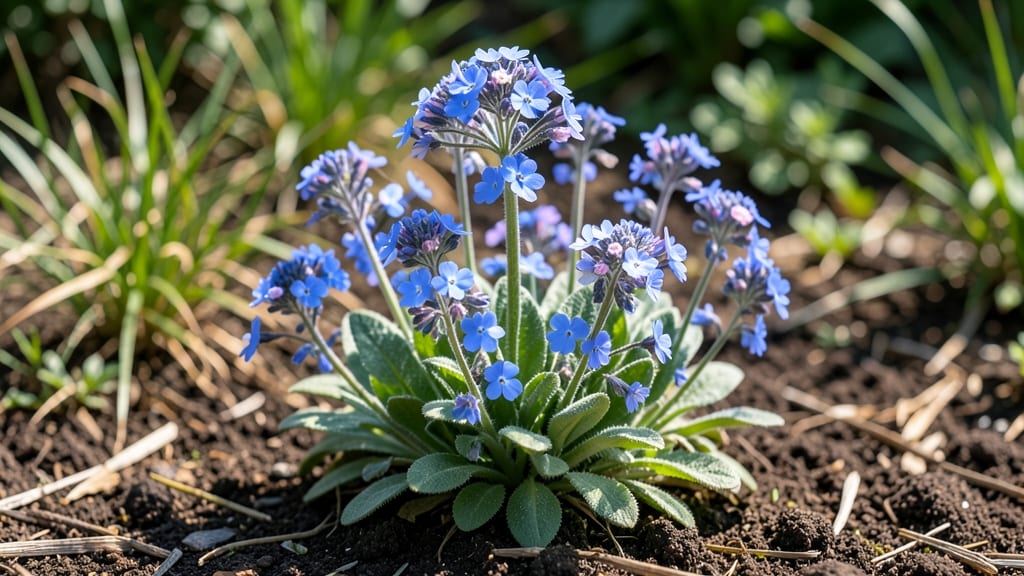
Forget-me-not flowers are not true perennials in most climates—they typically behave as annuals or biennials, dying back completely in winter unless planted in zones 3-7 with winter protection. Many gardeners notice they return yearly through self-seeding rather than regrowing from the same roots.
These delicate blooms thrive in cool spring weather but struggle with freezing temperatures, which is why they disappear in colder regions each winter. 🌱 The key to keeping them around longer lies in understanding their natural growth cycle—most varieties complete their life cycle in just one or two seasons unless they reseed themselves.
If you live outside zones 3-7, growing them in containers lets you move them indoors during winter, preserving their roots for next year's blooms.
What makes forget-me-nots so popular despite their short-lived nature is their ability to self-sow, creating a naturalizing effect over time. This habit often gives the illusion of perennial behavior, especially in milder climates where they can survive light frosts.
For gardeners in colder areas, selecting hardier varieties like Myosotis sylvatica and providing winter mulch can significantly improve their chances of returning year after year.
💡 In This Article
- Why Forget-Me-Nots Die Back in Cold Climates
- How to Extend Forget-Me-Not Blooms Year After Year
Why forget-me-nots die back in cold climates
Forget-me-nots (Myosotis spp.) are classified botanically as hemicryptophytes, meaning they survive winter by keeping their growing points just below the soil surface. Their shallow root systems—typically only 3-6 inches deep—lack the insulating mass to withstand prolonged freezing.
When temperatures drop below 20°F, the delicate stems and leaves freeze and die, leaving only the roots vulnerable to winter kill if not protected.
The real issue lies in their cold sensitivity during dormancy. Unlike true perennials with deep taproots or woody stems (like peonies or hostas), forget-me-nots rely on a fibrous root network that stores minimal energy reserves.
A single hard frost (28°F or lower) can rupture cell membranes in these roots, leading to irreversible damage. This explains why they disappear completely in zones 8 and below—their entire structure lacks the hardiness to endure winter without intervention.
Hardiness zones 3-7 offer the best chance for survival because these regions experience milder winters with fewer sub-zero nights. In zone 7, for example, forget-me-nots may survive winters with 2-4 inches of mulch (straw or shredded leaves), which insulates roots by maintaining soil temps above 25°F.
The critical threshold is 15°F: below this, even mulched plants risk frost damage to their crowns.
What most gardeners overlook is the timing of dormancy. Forget-me-nots enter dormancy in late fall but can still be damaged by early-season frosts (October-November) if not established.
Their thin stems lack the vascular resilience to transport nutrients back to roots quickly, making them particularly vulnerable compared to hardy perennials like heuchera or sedum, which can withstand -10°F temperatures.
Here’s the science: Their anthocyanin-rich foliage (the blue pigments) actually helps protect leaves from UV damage in spring, but this same compound makes them photosensitive to cold. When exposed to freezing temps, these pigments can crystallize within cells, disrupting membrane integrity—a process called cryoinjury.
This is why even light frosts (30°F) can stunt regrowth in the following season.
One exception is Myosotis sylvatica (wood forget-me-not), which has slightly deeper roots (6-8 inches) and better cold tolerance (zone 4 hardiness). However, even this variety requires snow cover or mulch to survive zone 4 winters without protection.
The bottom line: forget-me-nots aren’t built for harsh winters—they’re spring ephemerals that thrive on fleeting cool weather.